

On This Day in Business: May 5, 1921
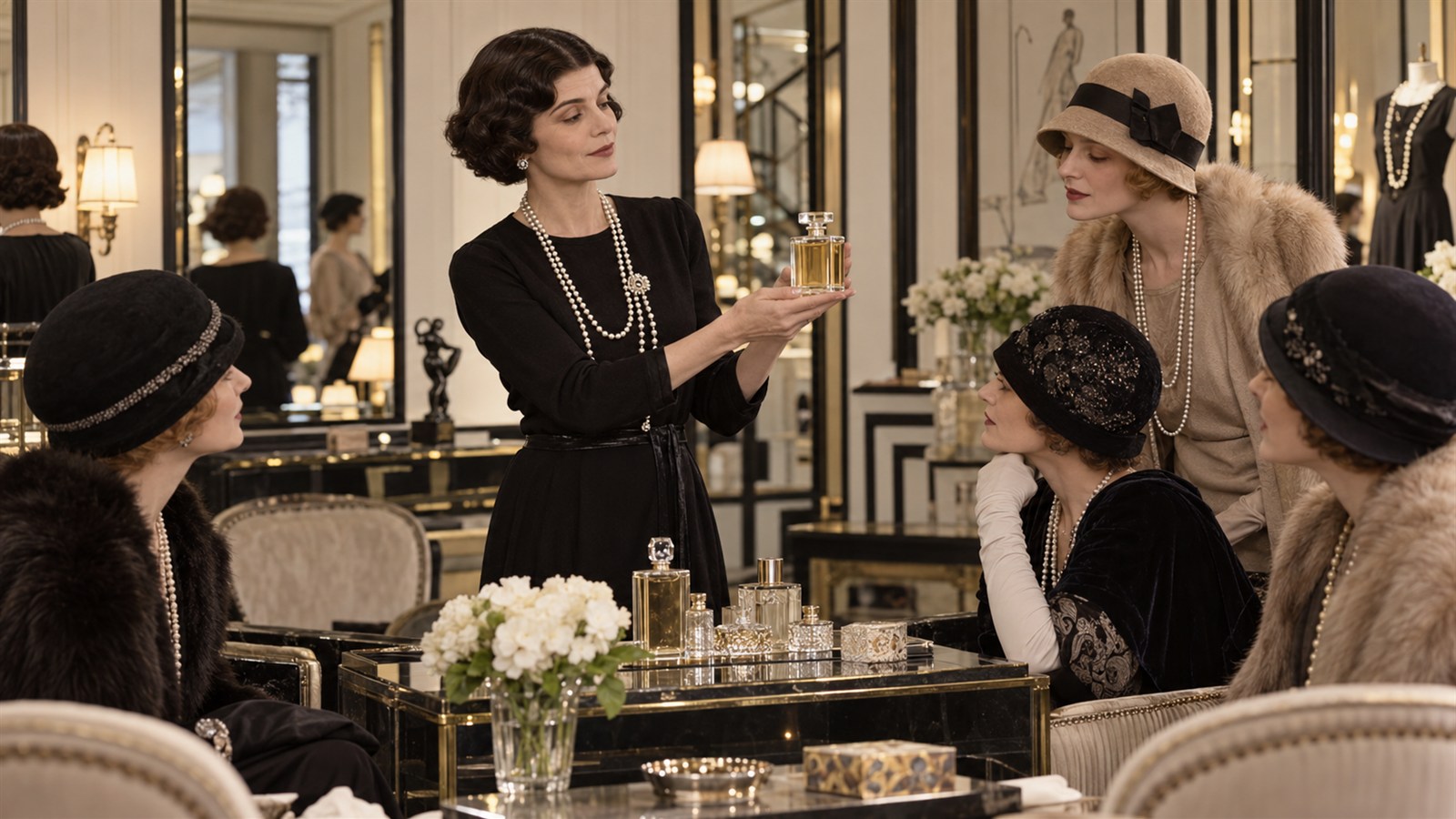
On May 5, 1921, Gabrielle “Coco” Chanel introduced the fragrance that became Chanel No. 5. Working with perfumer Ernest Beaux, Chanel selected the fifth sample from a series of compositions that blended floral materials with aldehydes. The formula did not simply reproduce one recognizable flower; it created an abstract scent suited to Chanel’s modern fashion identity. The launch extended a couture name into a product that could reach customers who might never buy a custom garment. Its date, name, bottle, and presentation formed one disciplined system, making the fragrance easy to recognize while leaving the scent itself difficult to imitate.
Perfume gave a fashion house unusually attractive economics. A bottle used costly ingredients and careful manufacturing, but it could be produced and distributed at far greater scale than made-to-measure clothing. The simple rectangular flacon and plain label contrasted with the ornate bottles common in the market, turning restraint into a signal of sophistication. Chanel initially cultivated exclusivity through her boutique and personal network. Demand then required industrial partners with expertise in production and international distribution, bringing the Wertheimer family into the business through Parfums Chanel.
That partnership created both growth and a long dispute over control and profits. Chanel’s name and creative authority generated demand, while her partners supplied capital, manufacturing, and routes to market. The arrangement demonstrated how licensing and equity can turn a designer’s reputation into a global consumer product, but also how ownership terms signed during expansion may shape bargaining power for decades. Advertising later reinforced the fragrance’s mystique through carefully chosen imagery and celebrity association, allowing one formula and one bottle silhouette to remain commercially relevant across changing generations.
The launch matters because Chanel No. 5 helped define the modern luxury-brand extension. It translated an intangible house identity into a repeatable object that retailers could stock and customers could repurchase. Success depended on more than scent: product design, scarcity, storytelling, distribution, trademarks, and partnership governance all contributed to value. The business also shows why consistency can become an innovation strategy. Rather than redesigning the core presentation every season, Chanel protected recognizable elements and refreshed the surrounding message. A fashion collection disappears quickly; a signature fragrance can compound awareness for a century, creating a durable entry point into a brand whose highest-priced products remain inaccessible to most customers. Retail placement reinforced that discipline. Department-store counters could introduce the fragrance to new customers, but displays, service, and price had to support the house's prestige. Wide availability without controlled presentation risked making the product ordinary. Luxury scale therefore required selective distribution: enough reach to grow, yet enough consistency to preserve the meaning that justified a premium.
Coco Chanel asked Ernest Beaux for a modern fragrance and chose the fifth sample from his series of compositions.
Aldehydes and blended florals produced an abstract scent rather than a literal imitation of a single flower.
The restrained rectangular bottle and numerical name turned simplicity into a recognizable luxury code.
Perfume let the Chanel name reach a broader market than custom clothing while preserving an aura of exclusivity.
Manufacturing and distribution partners accelerated growth but created a long contest over ownership and returns.
No. 5 endured because the company protected a stable product identity while continually renewing its cultural story.
Explore more of "On This Day ..."
Discover more events from the same date across news, politics, technology, sports, and other fields. Each link highlights significant moments that shaped history on different fronts.