

On This Day in Business: May 19, 2006
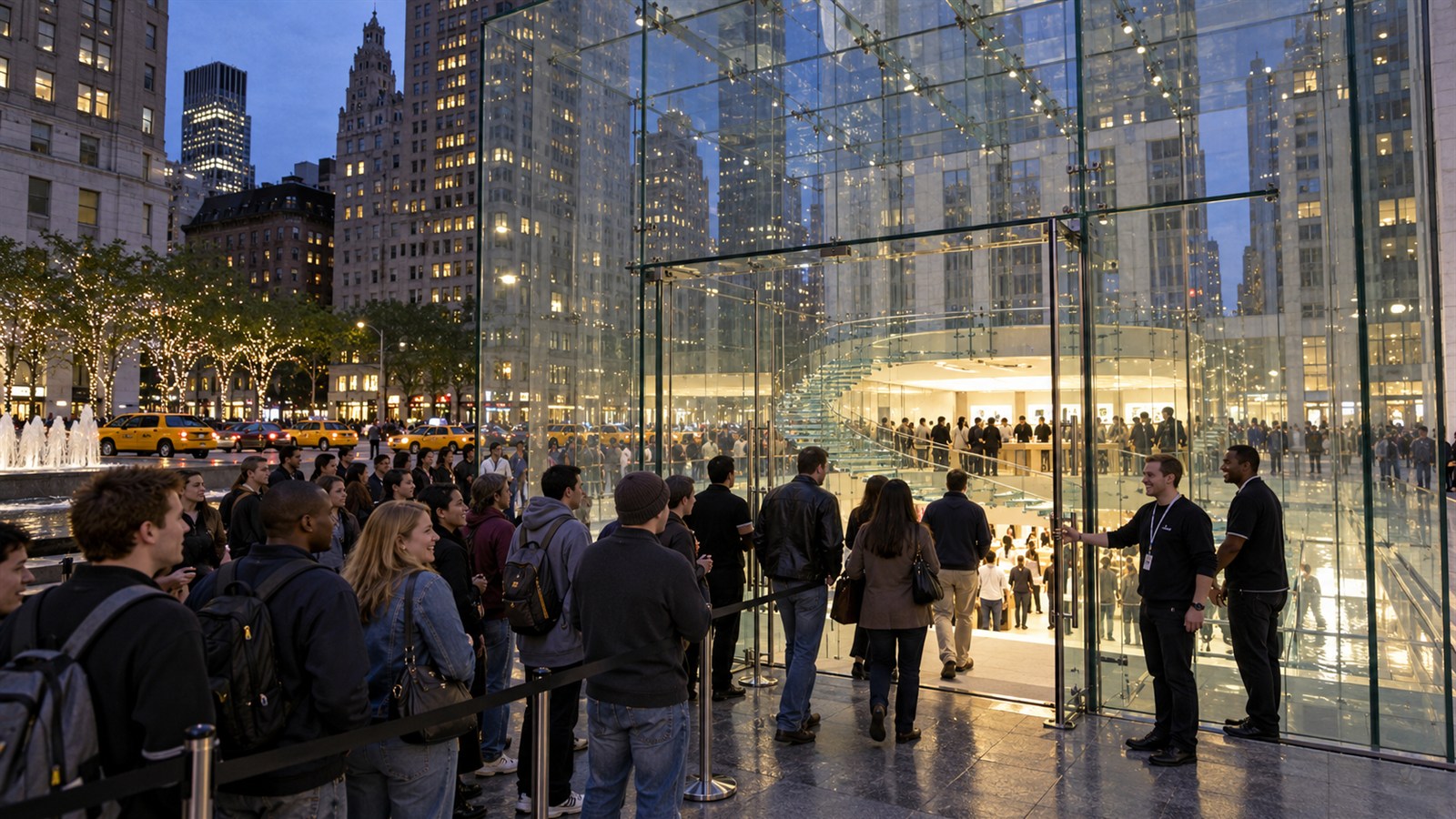
On May 19, 2006, Apple opened its Fifth Avenue retail store in New York City. Customers entered through a transparent glass cube in the plaza of the General Motors Building and descended to the store below. Apple promoted the location as continuously open, turning it into both a shopping destination and a visible landmark on one of the world’s best-known retail corridors. The cube reduced the street-level structure to a simple portal, while the underground sales floor offered computers, iPods, accessories, technical support, and space for customers to handle products before buying.
The store represented a strategy Apple had begun in 2001. Rather than relying entirely on electronics chains, the company built direct retail environments where it controlled presentation, employee training, demonstrations, inventory, and service. Sparse tables and working devices encouraged exploration. The Genius Bar joined sales with support, addressing the anxiety that could accompany complicated consumer technology. Prime real estate was expensive, but high traffic and strong product economics allowed prominent stores to function as advertising, customer research, and distribution at the same time.
Fifth Avenue intensified the model through architecture and operating hours. The cube gave passersby a recognizable symbol without crowding the plaza, and its transparency communicated openness around a technically complex product line. Launch crowds and media coverage created an event larger than an ordinary store opening. Over time, Apple revised the cube and expanded the below-ground space, confirming that the location was a long-term brand asset. Other technology companies followed with flagships and experience centers, though few matched Apple’s integration of product, software, service, and store design.
The opening matters because it showed that physical retail could become more important in a digital business, not less. Apple used stores to remove friction from trial, setup, repair, and education—tasks that websites and third-party shelves handled poorly. Direct contact also produced information about customer questions and product use. The business case extended beyond sales per square foot to lifetime relationships and brand confidence. Fifth Avenue made that strategy visible in glass: a costly urban site could justify itself by serving shoppers, tourists, owners needing help, and people encountering the brand for the first time, all within one controlled experience. Staffing completed the design. Tables full of working devices would have been less useful without employees able to explain, configure, and repair them. Apple invested in roles and rituals that made service feel consistent with the hardware. Physical space and human capability were one product. Competitors copying only the glass and furniture missed much of the operating advantage.
Apple’s early retail strategy sought direct control over product presentation, customer education, and technical support.
A glass cube created a street-level landmark while preserving an open plaza above the underground store.
The Fifth Avenue location opened on May 19, 2006, with hands-on products, trained staff, and round-the-clock access.
Prime real estate functioned as sales channel, service center, advertisement, and source of customer insight.
Architecture made a complicated technology company feel simple, transparent, and approachable.
The flagship demonstrated that digital products can gain value from carefully designed physical experiences.
Explore more of "On This Day ..."
Discover more events from the same date across news, politics, technology, sports, and other fields. Each link highlights significant moments that shaped history on different fronts.