

On This Day in Business: June 10, 1947
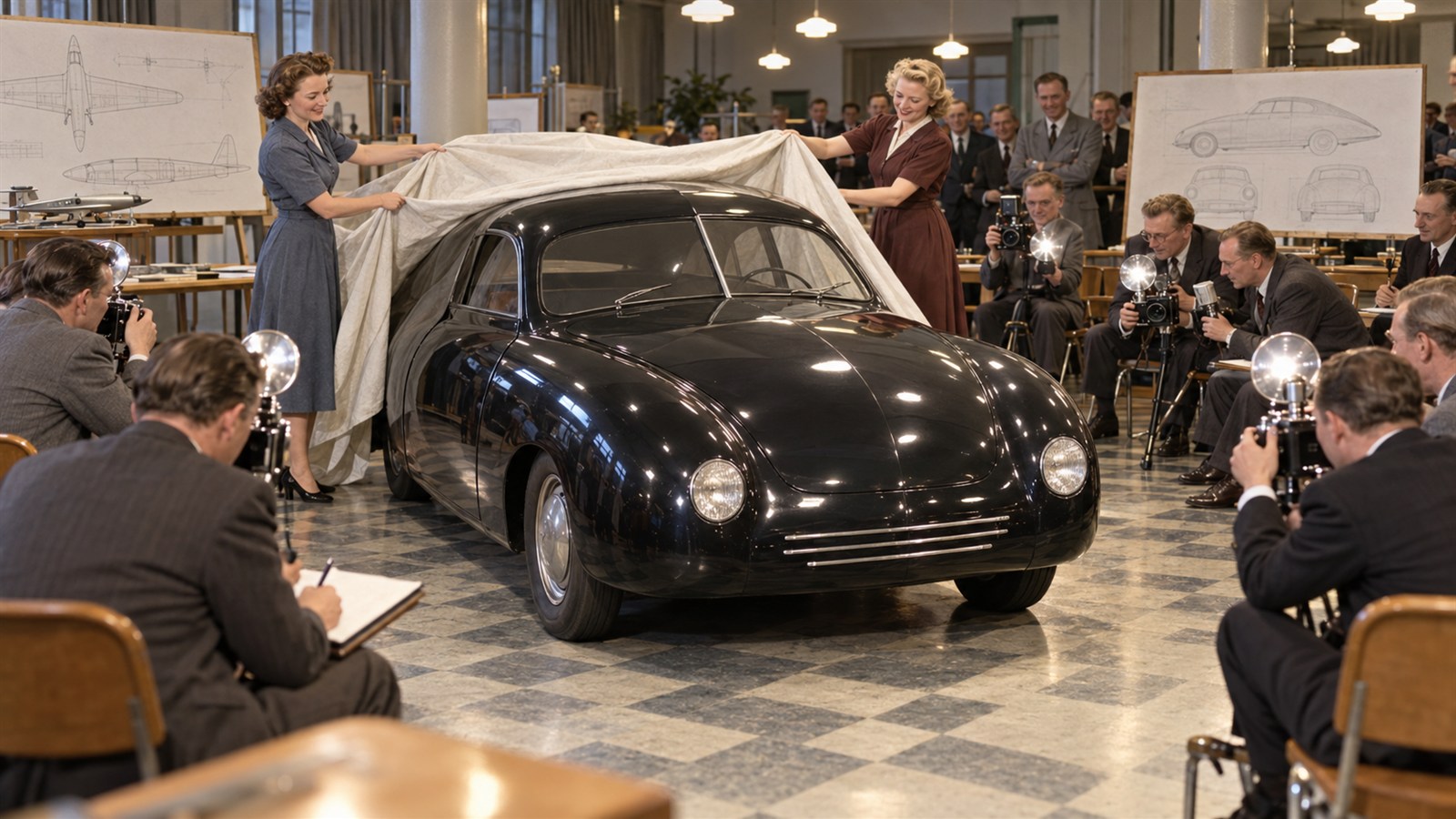
On June 10, 1947, Swedish aircraft manufacturer Saab presented its first automobile to journalists in Linköping. The company had entered car development as military aircraft demand declined after World War II. A small team, many without prior automotive experience, designed a streamlined front-wheel-drive vehicle shaped by aerodynamic knowledge from aviation. The dark prototype, later associated with the Saab 92 program, had a smooth body, covered wheel openings, and a compact two-cylinder engine. The press presentation did not place a finished product immediately in showrooms, but it announced that an aerospace company intended to build a civilian transportation business.
Diversification required translating capability rather than merely reusing equipment. Aircraft engineers understood weight, drag, testing, and structural efficiency, yet a family car also needed low cost, serviceability, comfort, cold-weather reliability, and volume production. Saab tested prototypes extensively on Swedish roads and refined the body and mechanical systems before series production began in 1949. The vehicle's aerodynamic form was not decoration; it helped a modest engine deliver useful performance. That coherence gave the product a recognizable identity and allowed the company to compete through engineering character rather than by imitating larger established manufacturers.
The move also demanded a different commercial system. Aircraft contracts involved governments and limited production runs, while automobiles required dealers, parts inventories, warranties, consumer advertising, and repeat manufacturing at consistent quality. Saab had to forecast demand and support vehicles long after sale. Its aviation heritage became a marketing asset, suggesting technical rigor and unconventional design. Over time, safety features, rally performance, turbocharging, and a loyal customer base reinforced that position. The car division faced many ownership and scale challenges in later decades, but the first program demonstrated how a company could redirect specialized knowledge toward a mass civilian product.
The unveiling matters because postwar reinvention is rarely a simple switch from one item to another. The transferable asset was not an airplane part; it was a way of solving problems through aerodynamics, lightweight structures, and disciplined testing. Saab combined that knowledge with capabilities it did not yet possess and accepted a long development period before commercial production. Organizations entering adjacent markets often overestimate what their existing strengths cover. The better approach is to identify the principle that transfers, then build the distribution, service, cost, and customer knowledge around it. Saab's first car made an unfamiliar market credible by expressing genuine engineering inheritance in a product designed for different buyers. The first car also gave employees a shared postwar mission. A visible consumer product could retain technical talent and convert a defense-oriented organization toward peacetime demand. Strategic renewal often depends on such identity work: people need to see how the new market uses their expertise without pretending the old business and the new one are identical.
Falling military demand pushed Saab to seek a civilian product that could use its engineering staff and manufacturing experience.
The June 10 presentation introduced a streamlined, front-wheel-drive prototype shaped by the company's knowledge of aerodynamics.
Road testing and refinement continued for more than two years before regular Saab 92 production began in 1949.
Entering automobiles required dealers, parts, warranties, consumer marketing, and repeat manufacturing beyond aircraft-contract practices.
Aviation heritage gave Saab a credible identity built around technical rigor, efficiency, safety, and unconventional design.
The project shows that diversification succeeds when transferable expertise is paired with new customer and operating capabilities.
Explore more of "On This Day ..."
Discover more events from the same date across news, politics, technology, sports, and other fields. Each link highlights significant moments that shaped history on different fronts.