

On This Day in Business: June 12, 1994
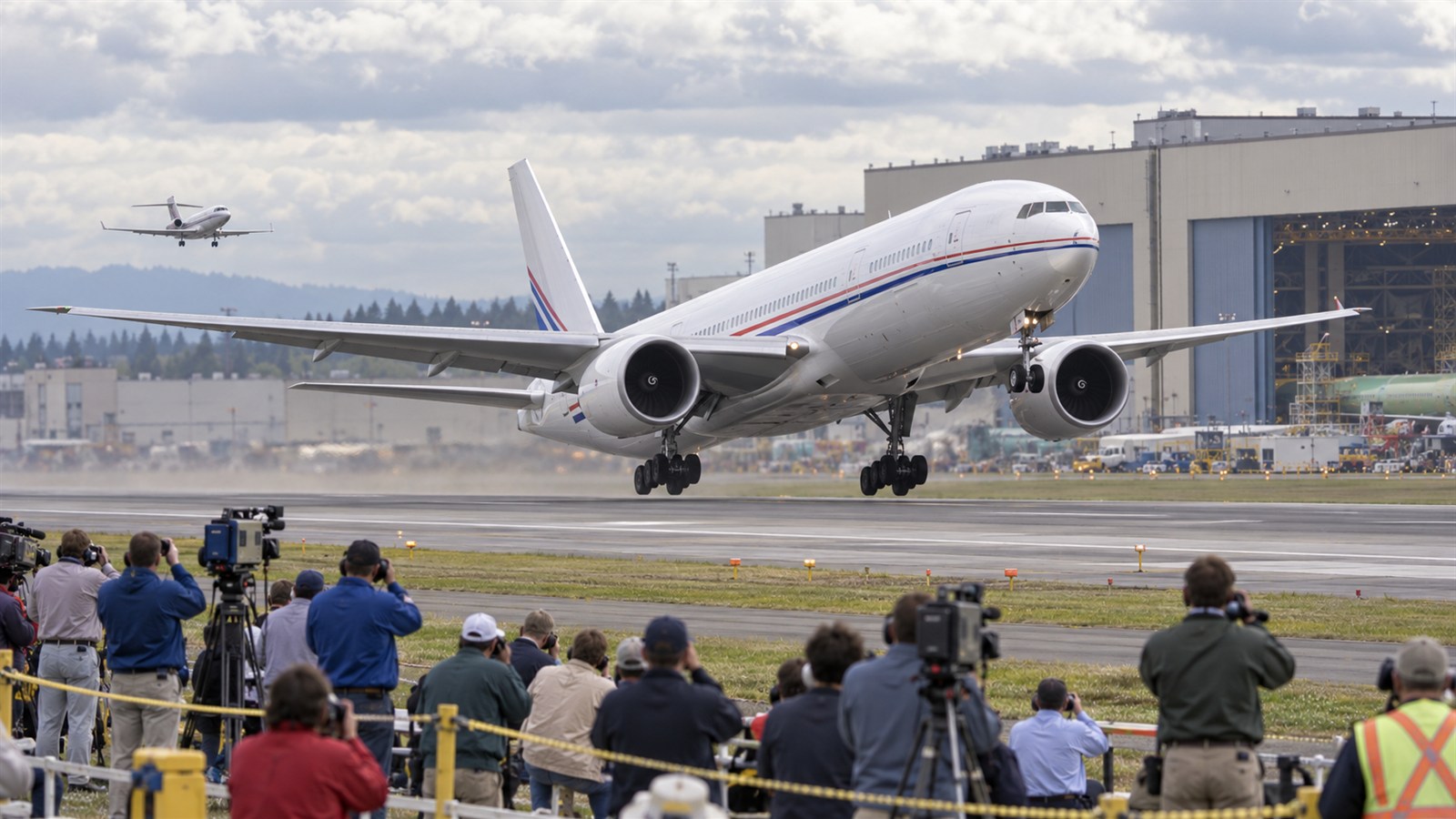
On June 12, 1994, the first Boeing 777 lifted off from Paine Field in Everett, Washington, for its maiden flight. The wide-body twinjet represented Boeing's first entirely new commercial airplane in more than a decade. It was also the company's first jetliner designed completely with three-dimensional computer graphics, allowing teams to assemble and test digital representations before committing to physical tooling. Chief test pilot John Cashman and his crew began a flight-test program that would examine handling, systems, performance, and reliability. The takeoff converted years of design decisions and billions of dollars in development spending into a machine that had to perform in the real atmosphere.
Boeing changed the development process by involving airline customers more directly. Representatives from carriers worked with designers through a group known as Working Together, contributing requirements for cabins, maintenance, controls, and operations. The approach aimed to reduce late changes and produce an aircraft that fit airline economics from entry into service. Digital design improved coordination among thousands of parts and suppliers, while large twin engines promised long-range capability with fewer engines to maintain than older wide-body jets. Those choices had to satisfy passengers, pilots, mechanics, regulators, financiers, and airport operators at once.
The first flight began an extensive certification campaign rather than ending development. Multiple test aircraft accumulated hours across normal and extreme conditions. Regulators examined structures, systems, evacuation, and engine-out performance, while Boeing and engine manufacturers resolved issues uncovered in testing. The 777 entered commercial service with United Airlines in 1995 and later grew into a family of passenger and cargo variants. Its efficiency and range supported long nonstop routes, and airline confidence in long-range twin-engine operations expanded. Program economics depended on decades of deliveries, upgrades, spare parts, training, and support, not only the sale of the first airframes.
The milestone matters because complex products are systems of collaboration before they are objects. Digital tools reduced errors, but their greater value came from helping engineering groups, suppliers, and customers work from a shared representation. Early airline participation treated operating knowledge as design input rather than post-sale feedback. Flight testing then confronted that coordinated plan with reality. The lesson extends to any capital-intensive program: involve users before choices harden, model interactions across the whole system, and reserve time and resources for evidence that only real operation can provide. The 777's first flight was a public moment built on an organizational innovation as significant as the aircraft itself.
The first 777 departed Paine Field on June 12, 1994, beginning the test program for Boeing's newest wide-body twinjet.
Three-dimensional computer design allowed teams to coordinate the aircraft digitally and reduce reliance on a full-scale mock-up.
Airline representatives contributed operating, cabin, maintenance, and cockpit requirements through the Working Together process.
Long-range twin-engine economics depended on fuel efficiency, high reliability, and confidence in extended operations over remote routes.
Certification required multiple aircraft, extreme tests, regulatory evidence, and fixes beyond the achievements of the first flight.
The program demonstrates how shared digital models and early customer involvement can improve the design of a complex physical system.
Explore more of "On This Day ..."
Discover more events from the same date across news, politics, technology, sports, and other fields. Each link highlights significant moments that shaped history on different fronts.