

On This Day in Business: June 22, 1984
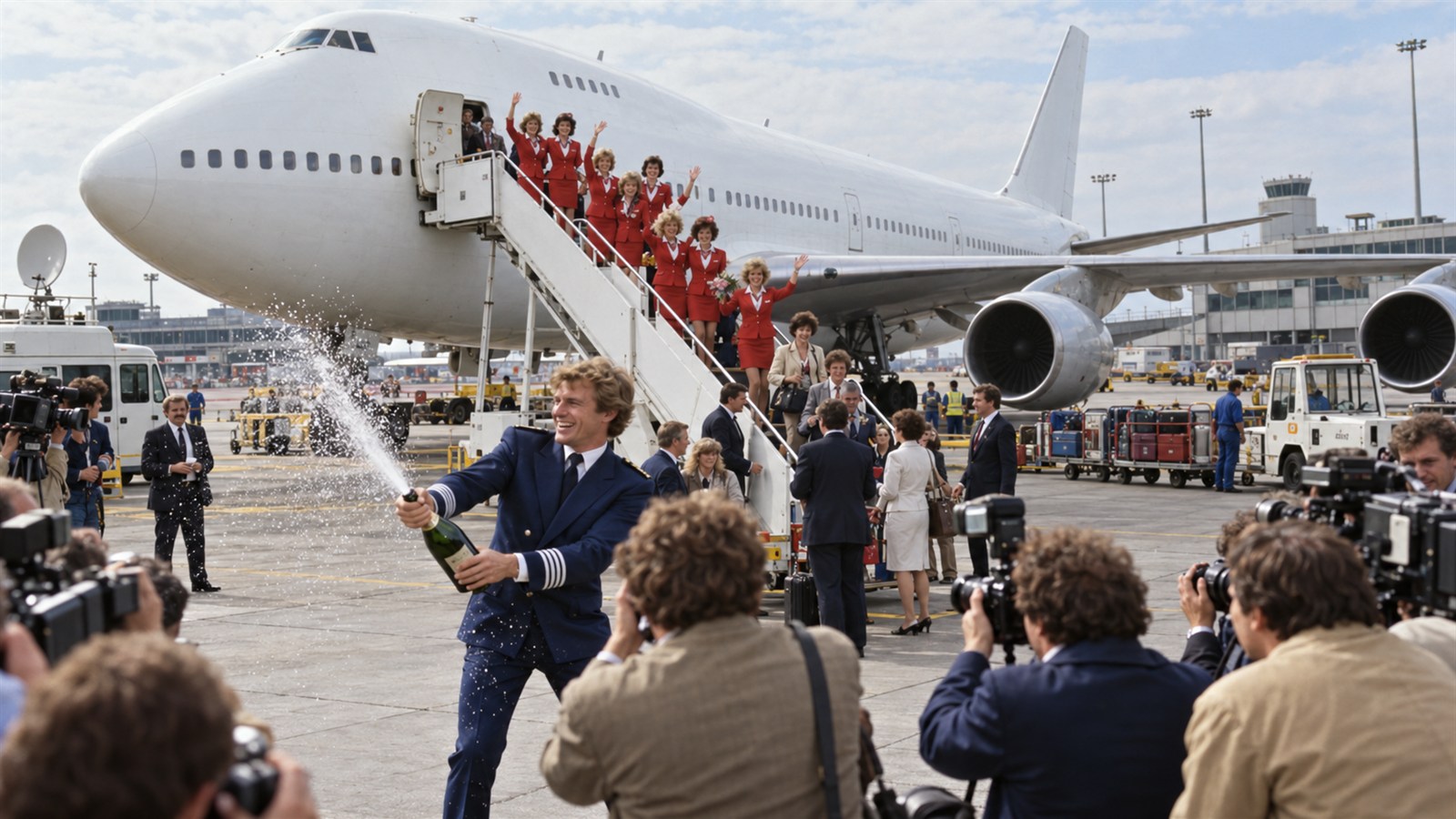
On June 22, 1984, Virgin Atlantic operated its first commercial flight from London Gatwick to Newark, New Jersey. The startup entered one of aviation's most competitive long-haul markets with a single leased Boeing 747-200 named Maiden Voyager. Richard Branson's Virgin brand was already known in music and retail, but scheduled international aviation required a different level of capital, regulation, safety, and operational discipline. The inaugural flight carried paying passengers, invited guests, and intense press attention. It announced a challenger built around competitive fares, entertainment, and a more playful service style than passengers expected from established transatlantic carriers.
Virgin used existing brand assets to reduce the disadvantages of starting small. Record stores could sell tickets, music relationships supplied publicity, and Branson attracted coverage that a conventional airline launch could not afford. The old wide-body aircraft still needed trained crews, maintenance, airport slots, catering, reservation systems, and government approval. A distinctive cabin experience meant little unless the airplane departed safely and reliably. The business therefore combined spectacle at the edge with conservative competence at the core. A recognizable consumer brand opened the door, while aviation professionals had to deliver the regulated service behind it.
The airline expanded routes and added innovations such as seatback entertainment, premium cabins, lounges, and onboard social spaces. Those features differentiated the journey rather than competing only on the advertised fare. Long-haul economics remained unforgiving: fuel, aircraft financing, labor, airport charges, and demand cycles created large fixed commitments. Partnerships and later ownership changes supplied scale, while the Virgin identity continued to frame the airline as a challenger. Success did not come from ignoring industry rules; it came from finding parts of the customer experience that incumbents had treated as fixed and redesigning them without compromising the invisible operating requirements.
The first flight matters because brand extension works when reputation is translated into a credible new experience rather than pasted onto an unrelated product. Virgin brought informality, entertainment, and publicity skills from music, but it also recruited the aviation capabilities it lacked. The single aircraft made the launch fragile, yet it focused attention on a clear route and proposition. Modern companies often enter regulated markets believing customer enthusiasm will overcome operational complexity. Virgin Atlantic's debut offers a more balanced lesson: a challenger can make an industry feel different, but novelty must sit on top of safety, reliability, compliance, and economics that customers may never see. The route choice was equally important. Gatwick-to-Newark offered access to the valuable London-New York market while differentiating the airports from the most obvious incumbent pattern. Challengers often enter through an edge that appears secondary but still connects a large pool of demand.
A leased Boeing 747-200 carried Virgin Atlantic's first commercial customers from Gatwick to Newark on June 22, 1984.
Virgin's music and retail network supplied publicity, ticket access, and a challenger identity before the airline had operating scale.
Professional crews, maintenance, slots, reservations, catering, and regulation formed the conservative core beneath the launch spectacle.
Entertainment, premium cabins, lounges, and social spaces later differentiated the journey instead of relying on fare alone.
Aircraft, fuel, labor, airports, and demand cycles kept long-haul economics difficult despite strong brand awareness.
The launch shows that successful brand extension pairs transferable customer insight with serious investment in unfamiliar operating capabilities.
Explore more of "On This Day ..."
Discover more events from the same date across news, politics, technology, sports, and other fields. Each link highlights significant moments that shaped history on different fronts.