

On This Day in Business: July 5, 1946
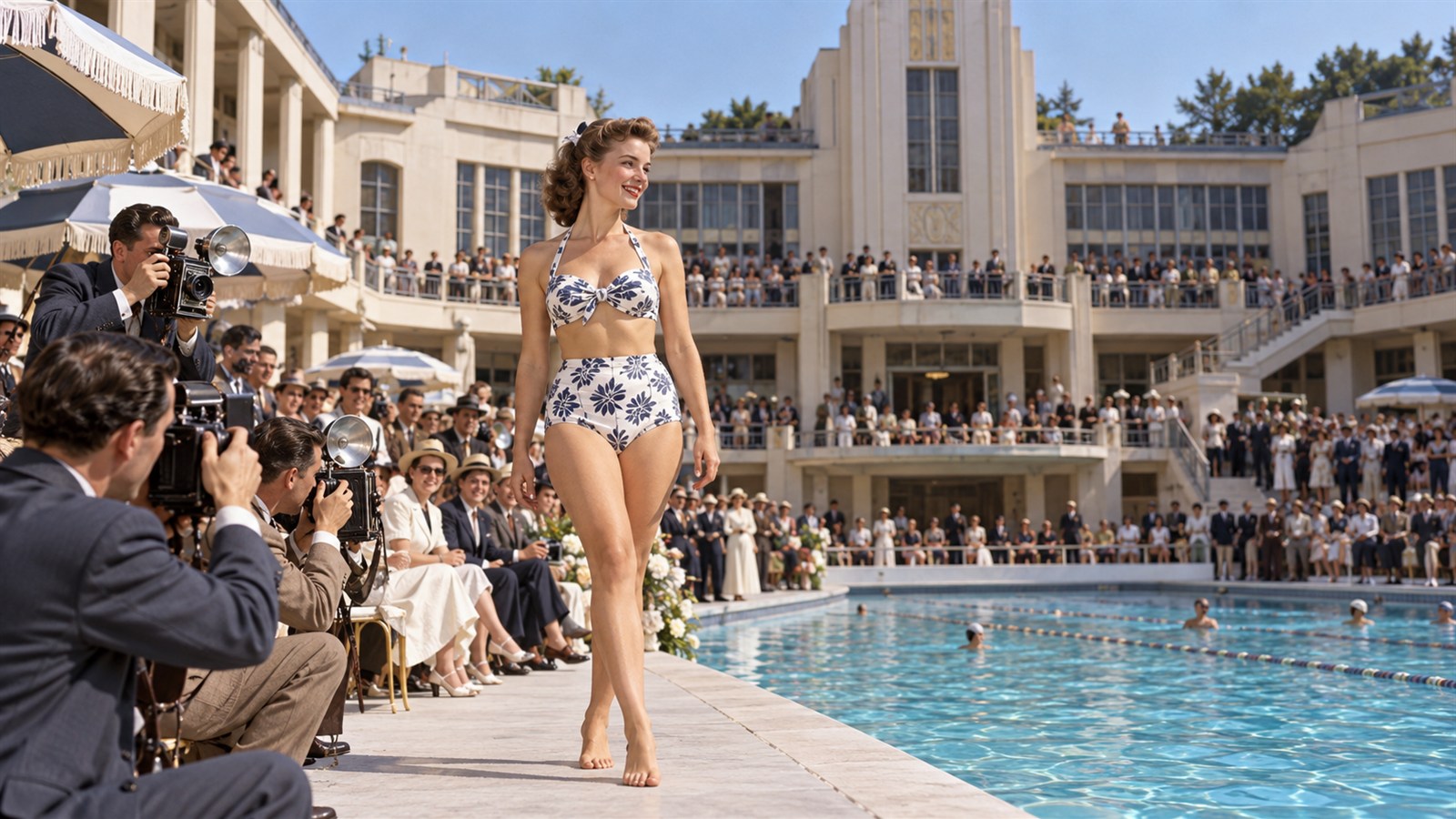
On July 5, 1946, French engineer and clothing designer Louis Réard presented a revealing two-piece swimsuit at Paris's Piscine Molitor. He named it the bikini after Bikini Atoll, where an American atomic test had recently drawn worldwide attention. Because established fashion models reportedly declined to wear the design, Réard hired Micheline Bernardini, an adult nude dancer, to present it. The suit used remarkably little fabric and exposed the navel, making the launch controversial even in a market already moving toward smaller swimwear. Photographers and newspapers transformed the poolside event into international publicity.
Réard did not invent the two-piece swimsuit, but he pushed the category beyond prevailing social boundaries and packaged the difference with a memorable name. The launch connected product design, spectacle, and topical language in a way that demanded coverage. Immediate adoption was limited. Many beaches, institutions, and cultural authorities rejected the style, while consumers had practical and social reasons to choose more conservative designs. The controversy nevertheless created recognition that a conventional advertising budget might not have purchased. The product's scarcity and provocation became part of its commercial identity.
Over the following years, film stars, magazines, tourism, and changing attitudes toward leisure and the body expanded the market. Manufacturers developed many variations in cut, material, support, and price, allowing the bikini to move from shock item to broad category. Postwar growth in travel, swimming pools, synthetic fabrics, and disposable income supported the transition. The garment also remained contested, revealing how fashion businesses depend on cultural permission as much as manufacturing capability. What can be produced profitably is not necessarily what retailers, regulators, media, or customers are ready to accept.
The Paris debut matters because attention can be a launch asset when it clarifies a real product difference. Réard selected a name already circulating in the news, staged a visually unmistakable event, and accepted that early rejection would accompany awareness. That strategy carried reputational risk and cannot substitute for a usable product, but it gave the design a durable place in public language. The longer business lesson is that markets often change through a sequence of provocation, imitation, normalization, and segmentation. A once-radical item can become ordinary when culture, distribution, and product variety catch up with the initial idea. Réard reinforced the launch with claims that a genuine bikini should be small enough to pass through a wedding ring, a memorable line that converted minimal fabric into a testable identity. The phrase illustrates how positioning can define category boundaries. Competitors could copy a garment, but the name and the launch story helped Réard's version dominate the language of the market.
Louis Réard introduced an extremely small two-piece swimsuit at Piscine Molitor in Paris on July 5, 1946.
He borrowed the name Bikini from a current atomic-test story, tying the launch to a word already commanding attention.
When established models declined, adult performer Micheline Bernardini presented the design before photographers and spectators.
Publicity was immediate, but bans, social resistance, and limited consumer acceptance slowed early adoption.
Film, tourism, new fabrics, rising leisure spending, and many design variations later expanded the category.
The launch demonstrates how a controversial distinction can generate awareness while culture and distribution determine lasting demand.
Explore more of "On This Day ..."
Discover more events from the same date across news, politics, technology, sports, and other fields. Each link highlights significant moments that shaped history on different fronts.