

On This Day in Business: July 6, 1928
On July 6, 1928, Lights of New York opened in New York as the first feature-length motion picture in which all dialogue was synchronized with recorded sound. Warner Bros. produced the crime drama as a relatively inexpensive project using the Vitaphone system, which played sound from discs linked to the projector. The studio had already found success with sound sequences in The Jazz Singer, but an all-talking feature tested whether audiences would sit through continuous recorded dialogue. Reviews were mixed, yet public curiosity helped the film earn far more than its production cost.
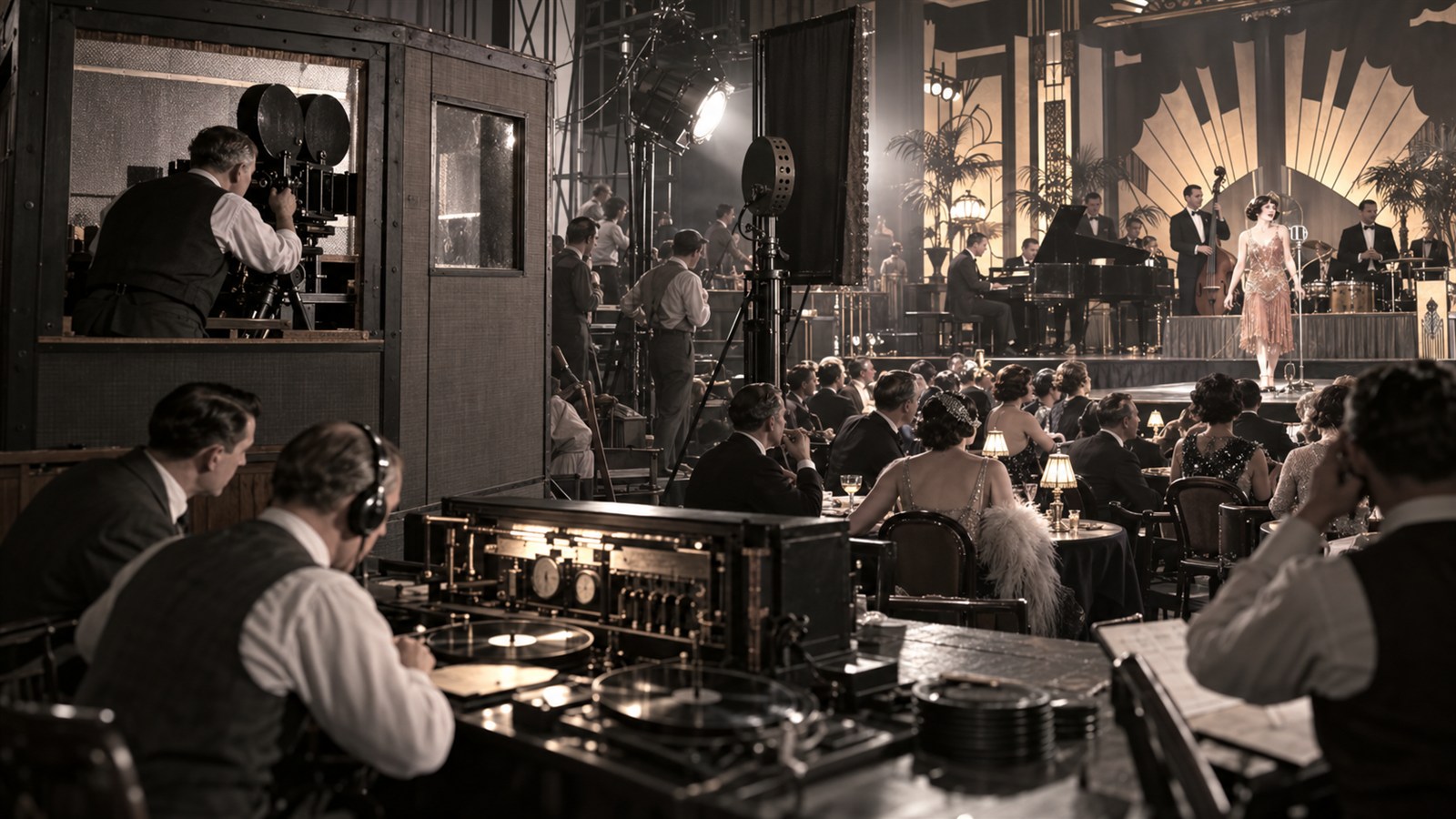
Sound changed film production from script to theater. Cameras had to be enclosed or isolated so their noise did not reach microphones. Actors remained near fixed microphones, sets absorbed unwanted echoes, and technicians synchronized fragile discs with projected images. Dialogue required writers, vocal coaching, and performers whose voices suited the new medium. Studios needed sound stages and new equipment, while theaters had to purchase and install compatible playback systems. A successful release therefore depended on coordinated investment across production, distribution, and exhibition rather than on a single invention.
The financial response accelerated the industry's transition. Warner Bros., initially smaller than the dominant studios, used sound to attract audiences and strengthen its competitive position. Rivals expanded their own talking-picture programs, equipment companies competed over technical standards, and theater owners faced pressure to modernize quickly. Silent films did not disappear overnight, especially in markets lacking wired theaters, but the value of a synchronized release network rose with every conversion. New genres, stars, and production practices emerged as filmmakers learned to make sound expressive rather than merely novel.
The premiere matters because technology adoption can become irreversible before the technology is elegant. Lights of New York was technically constrained and artistically modest, but its revenue provided market evidence that continuous speech could sell tickets. Once studios and theaters committed capital, they had incentives to create and demand more sound content. The film's business legacy lies in that coordination problem: producers, venues, talent, and equipment suppliers all had to move together. A breakthrough product often wins not by being perfect, but by proving that an entire chain can profit from changing at the same time. The transition also stranded assets and skills. Theater musicians, silent-film performers, and owners of unequipped cinemas faced losses while dialogue writers, sound engineers, and vocal actors gained opportunities. Technology did not simply improve the same business; it redistributed bargaining power and changed which capabilities mattered. That disruption helps explain why adoption produced both excitement and resistance.
Lights of New York used synchronized Vitaphone discs to carry dialogue throughout a feature-length motion picture.
The film opened in New York on July 6, 1928, and turned modest production spending into strong box-office returns.
Sound required quiet cameras, fixed microphones, adapted sets, vocal performance, synchronization, and new technical crews.
Theaters also had to install playback equipment, making adoption a coordinated investment across the film supply chain.
Warner Bros. used audience demand for talking pictures to challenge larger studios and accelerate an industry-wide conversion.
The premiere showed that commercial proof can lock in a technology even while creators are still learning how to use it well.
Explore more of "On This Day ..."
Discover more events from the same date across news, politics, technology, sports, and other fields. Each link highlights significant moments that shaped history on different fronts.