

On This Day in Business: July 7, 1928
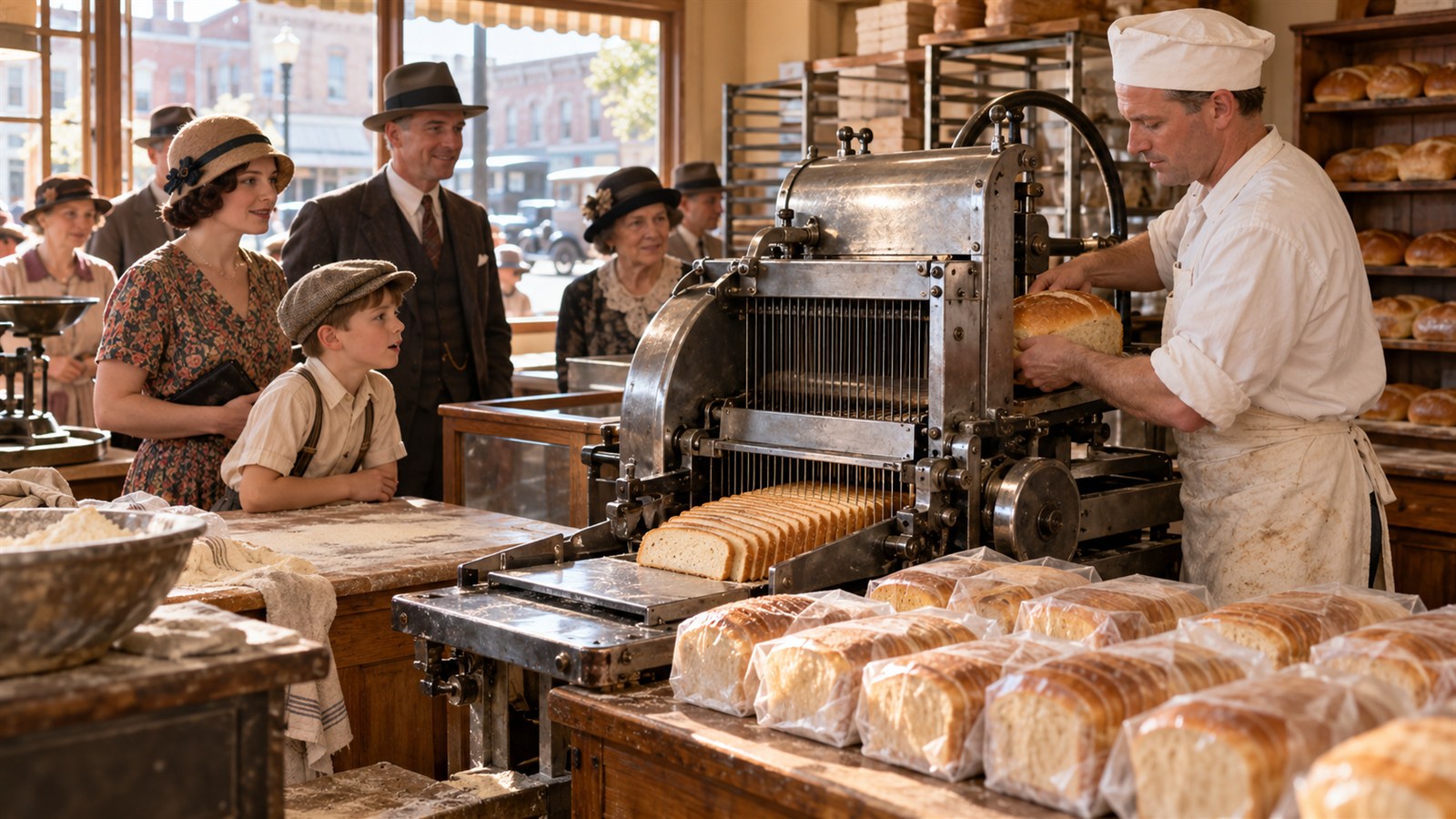
On July 7, 1928, the Chillicothe Baking Company in Missouri began selling loaves cut by Otto Frederick Rohwedder's automatic bread-slicing machine. Bakers had resisted mechanical slicing because exposed surfaces made bread dry more quickly and loose slices were difficult to package. Rohwedder spent years developing a machine that cut an entire loaf into even pieces while keeping it aligned for wrapping. After an earlier workshop fire destroyed prototypes and records, he rebuilt the project. Baker Frank Bench agreed to install the device and marketed the result as a time-saving improvement for households.
The value was simple, but the operation behind it was not. Blade spacing needed to produce useful slices without crushing soft bread, the loaf had to move safely through the machine, and packaging had to hold the pieces together while slowing staleness. A bakery also needed enough customer demand to justify unfamiliar equipment and process changes. The Chillicothe launch supplied a real retail test. Buyers could immediately understand the convenience for toast and sandwiches, making the product easier to demonstrate than the machine itself.
Demand encouraged other bakeries and equipment makers to adopt slicing and wrapping systems. In 1930, Continental Baking introduced sliced Wonder Bread nationally, helping standardize the format at large scale. The change complemented industrial bread production, branded packaging, and grocery distribution. It also shifted labor from the household into the factory, one small example of manufacturers selling preparation time along with food. During World War II, a short-lived federal ban on sliced bread revealed how deeply consumers had incorporated the convenience into daily routines.
The first sale matters because innovation often succeeds when it removes a repeated inconvenience that customers have learned to tolerate. Rohwedder's machine did not change bread's ingredients; it changed readiness, consistency, and the moment of use. Packaging and shelf-life problems were part of the invention because the customer needed intact, fresh slices rather than an impressive cutting mechanism. The episode also demonstrates the importance of an early operating partner. Bench's bakery gave the machine a market setting where performance and demand could be observed. A durable category formed when equipment, packaging, distribution, and an obvious household benefit arrived together. Sliced bread also created a quality signal. Uniform pieces suggested a controlled industrial process and made portion size predictable for restaurants and families. Yet the visible convenience depended on invisible maintenance: blades had to remain aligned and sharp, wrappers had to seal consistently, and bakers had to synchronize cooling with cutting so warm loaves did not tear or compress.
Otto Rohwedder developed a machine that cut whole loaves evenly while keeping the slices aligned for wrapping.
The Chillicothe Baking Company first sold machine-sliced bread on July 7, 1928, after baker Frank Bench installed it.
The product had to solve crushing, handling, packaging, and faster staling—not merely the act of cutting.
Customers immediately understood the convenience for toast and sandwiches, giving bakeries visible evidence of demand.
National brands and industrial bakeries later combined slicing with wrapping and large-scale grocery distribution.
The launch shows that a modest convenience can create a category when equipment, packaging, and customer benefit work together.
Explore more of "On This Day ..."
Discover more events from the same date across news, politics, technology, sports, and other fields. Each link highlights significant moments that shaped history on different fronts.