

On This Day in Business: July 13, 1937
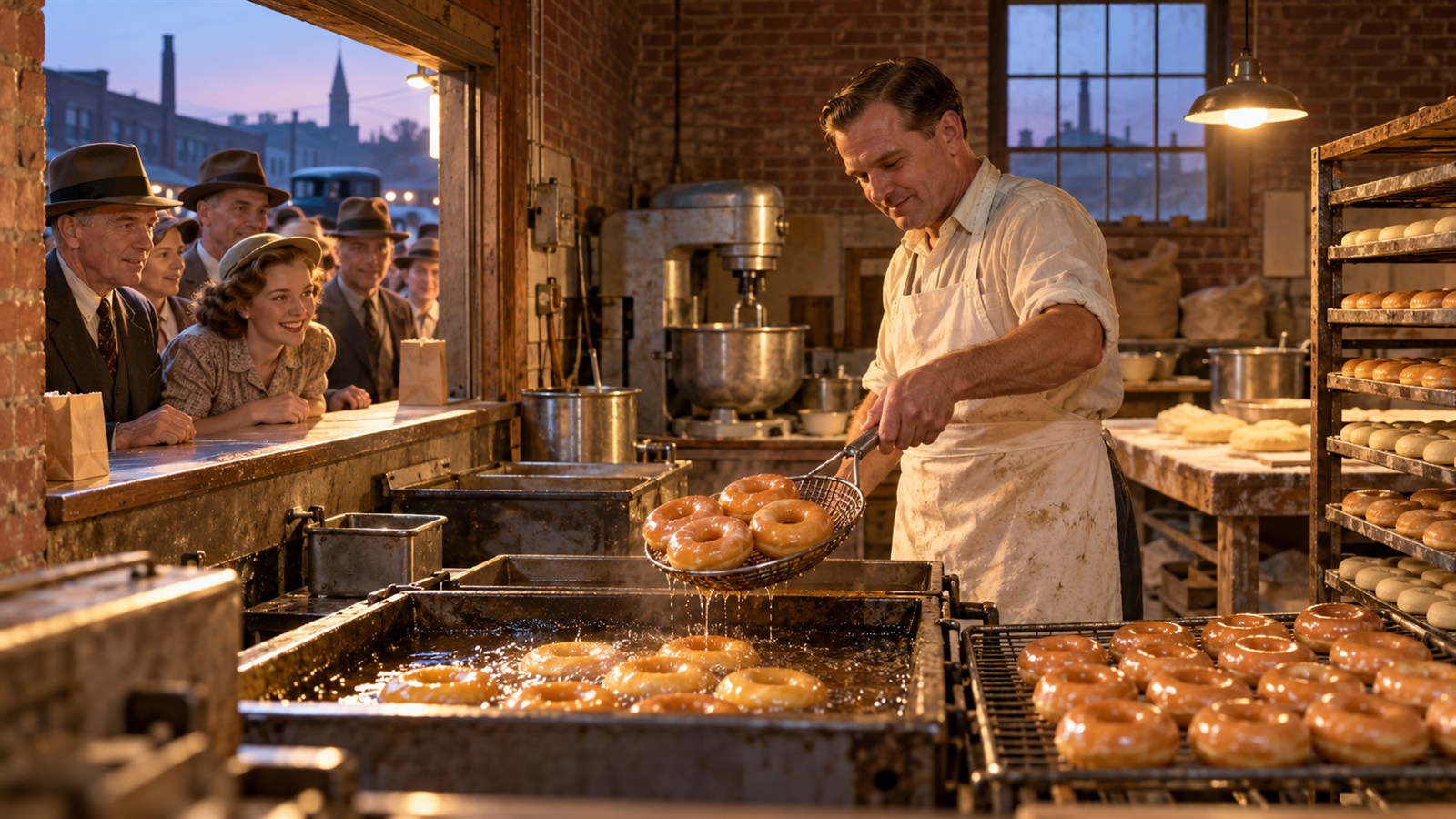
On July 13, 1937, Vernon Rudolph began producing doughnuts in a rented building in Winston-Salem, North Carolina. He had acquired a recipe and business knowledge through an earlier operation connected to his uncle. The initial plan focused on wholesale deliveries to grocery stores, but the smell of fresh doughnuts drew people to the bakery. Rudolph cut an opening through an exterior wall and sold hot doughnuts directly to passersby. That improvised service window turned production itself into advertising and added retail sales to a wholesale operation.
Freshness became the product advantage. Dough mixing, proofing, frying, glazing, and delivery had to be timed so stores and walk-up customers received a consistent experience. As the company expanded, it designed equipment and standardized procedures that reduced variation between shops. A visible production line and the promise of hot doughnuts made the process part of the brand. Customers did not merely buy a packaged sweet; they encountered aroma, motion, warmth, and immediate consumption, sensory qualities that were difficult for shelf-stable competitors to reproduce.
Krispy Kreme grew through company stores and franchising, adding geographic reach while confronting the challenge of maintaining standards across operators. Wholesale distribution increased exposure, but rapid expansion at different moments also created financial strain, channel conflict, and questions about whether easy availability weakened the special-store experience. The company's history included ownership changes, public-market cycles, international growth, and renewed emphasis on smaller formats and delivery. Its most recognizable product remained closely tied to a tightly controlled process.
The Winston-Salem start matters because customers sometimes reveal a better business model than the original plan. Rudolph responded to people gathering outside and created a retail channel with almost no distance between factory and buyer. The window also provided immediate feedback and cash. Scaling that discovery required engineering, training, supply, and quality control, not just more openings. The enduring lesson is that operations can be theater when customers value seeing and sensing production. A transparent process can make freshness credible, distinguish a simple product, and create a memory strong enough to support a brand. The hot-doughnut signal later formalized what the first service window discovered: timing could create urgency. Customers who saw that a fresh batch was available had a reason to stop immediately rather than postpone a purchase. This is a form of operational marketing in which real production status becomes the message. It works only when the promised freshness is consistently delivered. That direct signal linked production capacity with the moment of sale, helping the shop convert otherwise invisible kitchen work into immediate demand.
Vernon Rudolph began making doughnuts in a rented Winston-Salem building on July 13, 1937.
The original business supplied grocery stores, but the bakery's aroma drew people directly to the production site.
Rudolph cut a service opening in the wall and added hot retail sales to the wholesale model.
Mixing, proofing, frying, glazing, equipment, and timing were standardized as the company expanded.
Visible production turned freshness into an experience while franchising and distribution extended geographic reach.
The opening shows how customer behavior can reveal a stronger channel and make the operating process part of the brand.
Explore more of "On This Day ..."
Discover more events from the same date across news, politics, technology, sports, and other fields. Each link highlights significant moments that shaped history on different fronts.