

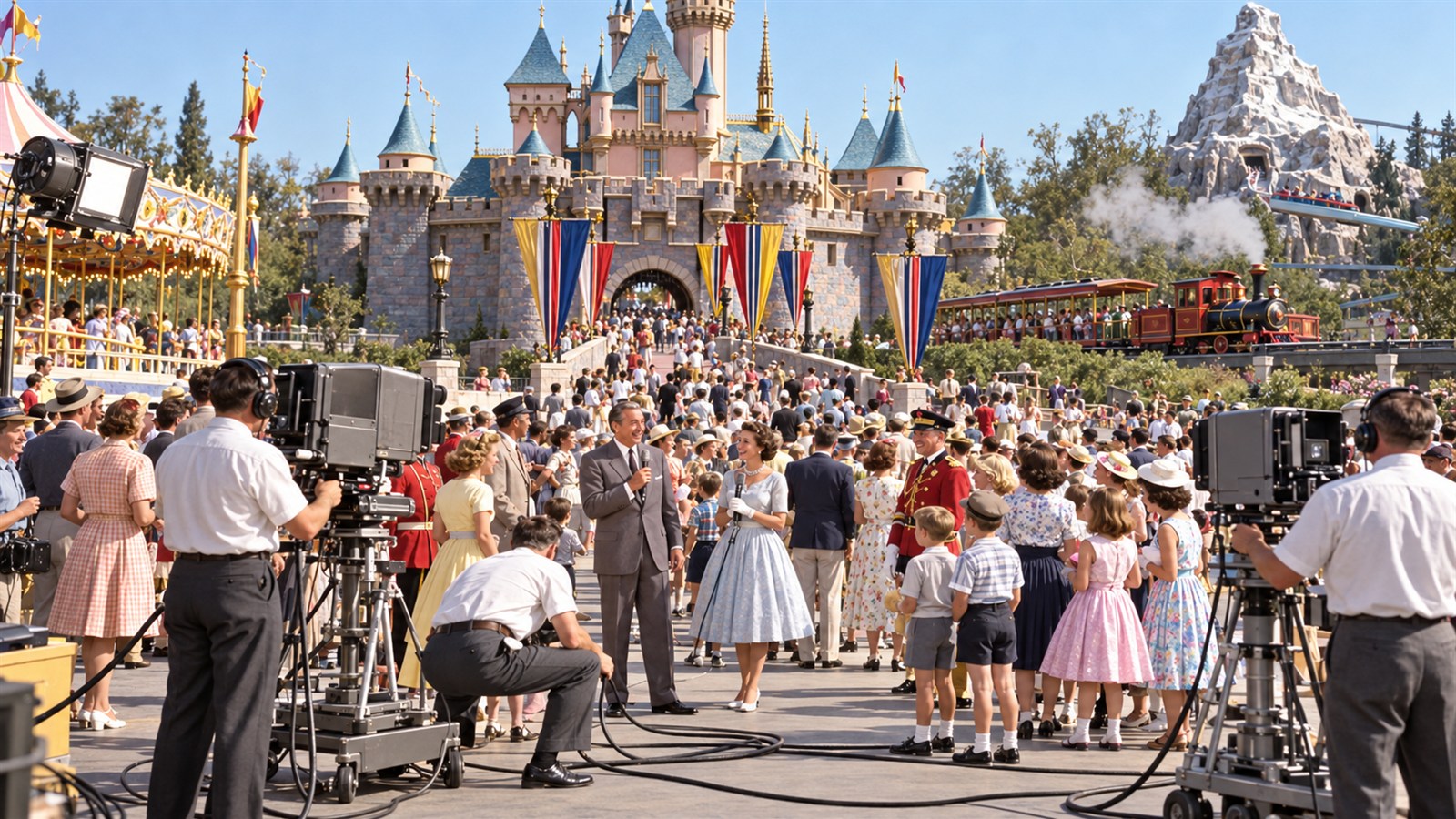
On This Day in Business: July 17, 1955
On July 17, 1955, Walt Disney dedicated Disneyland in Anaheim, California, during an invitation-only preview broadcast live on television. The park opened to paying customers the next day, but the televised event introduced the new destination to a national audience. Construction had moved from concept to opening in roughly a year on former orange groves, combining themed lands, rides, shops, food service, landscaping, transportation, and live entertainment. The preview drew more people than expected, including guests with counterfeit invitations, and exposed unfinished pavement, plumbing trouble, long lines, and other operational failures.
Disneyland represented a different business from producing films. A park could not be edited before release; it had to operate continuously while thousands of guests moved through it. Capacity planning, maintenance, safety, crowd flow, food supply, employee training, cleanliness, parking, and weather all affected the product. Disney called park employees cast members and treated architecture, costumes, music, and service as parts of a single story. Television helped finance and promote the project, showing how one medium could build demand for another.
The company corrected early problems and continued adding attractions. Admission, ride tickets, food, merchandise, sponsorships, and nearby travel spending created multiple revenue streams, while familiar stories and characters reduced the cost of explaining the experience. The park also generated new content and strengthened the value of existing intellectual property. Its success influenced amusement parks, hospitality, retail design, and place-based entertainment worldwide. Later Disney resorts used hotels, transportation, and longer stays to capture more of a visitor's trip.
The dedication matters because opening day was a beginning, not a finished product. The live broadcast created a huge deadline and powerful awareness, but it also made operating weaknesses public. Disneyland recovered by treating the park as a system that could be repaired and renewed without abandoning its core promise. The broader lesson is that an experience business coordinates many ordinary functions so tightly that customers perceive one extraordinary world. Brand value may attract the first visit, but reliability, service, and continual reinvestment determine whether the destination becomes an institution. Location was another strategic choice. Anaheim offered affordable land and highway access to a growing Southern California population, but the project still needed parking and a reason for families to travel. The park converted a destination trip into many hours of spending and attention. That made control of the physical environment central to both guest satisfaction and commercial return. Just as important, the park gathered behavioral data in real time. Queues, purchases, complaints, breakdowns, and repeat visits showed managers where the designed experience differed from actual use. Because attractions shared one controlled site, improvements could be tested without waiting for an entirely new film or venue.
Disney built a permanent themed destination that combined attractions, retail, food, landscaping, transport, and performance.
A nationally televised dedication and invitation preview introduced Disneyland on July 17, 1955.
Unexpected crowds and incomplete systems produced long lines, shortages, plumbing trouble, and visible opening-day failures.
The park treated employee behavior, architecture, cleanliness, music, and maintenance as parts of one guest experience.
Tickets, food, merchandise, sponsors, travel, and reusable stories created several reinforcing sources of value.
Disneyland showed that experience businesses win through coordinated operations and continual renewal after the first burst of attention.
Explore more of "On This Day ..."
Discover more events from the same date across news, politics, technology, sports, and other fields. Each link highlights significant moments that shaped history on different fronts.