

On This Day in Business: July 22, 1894
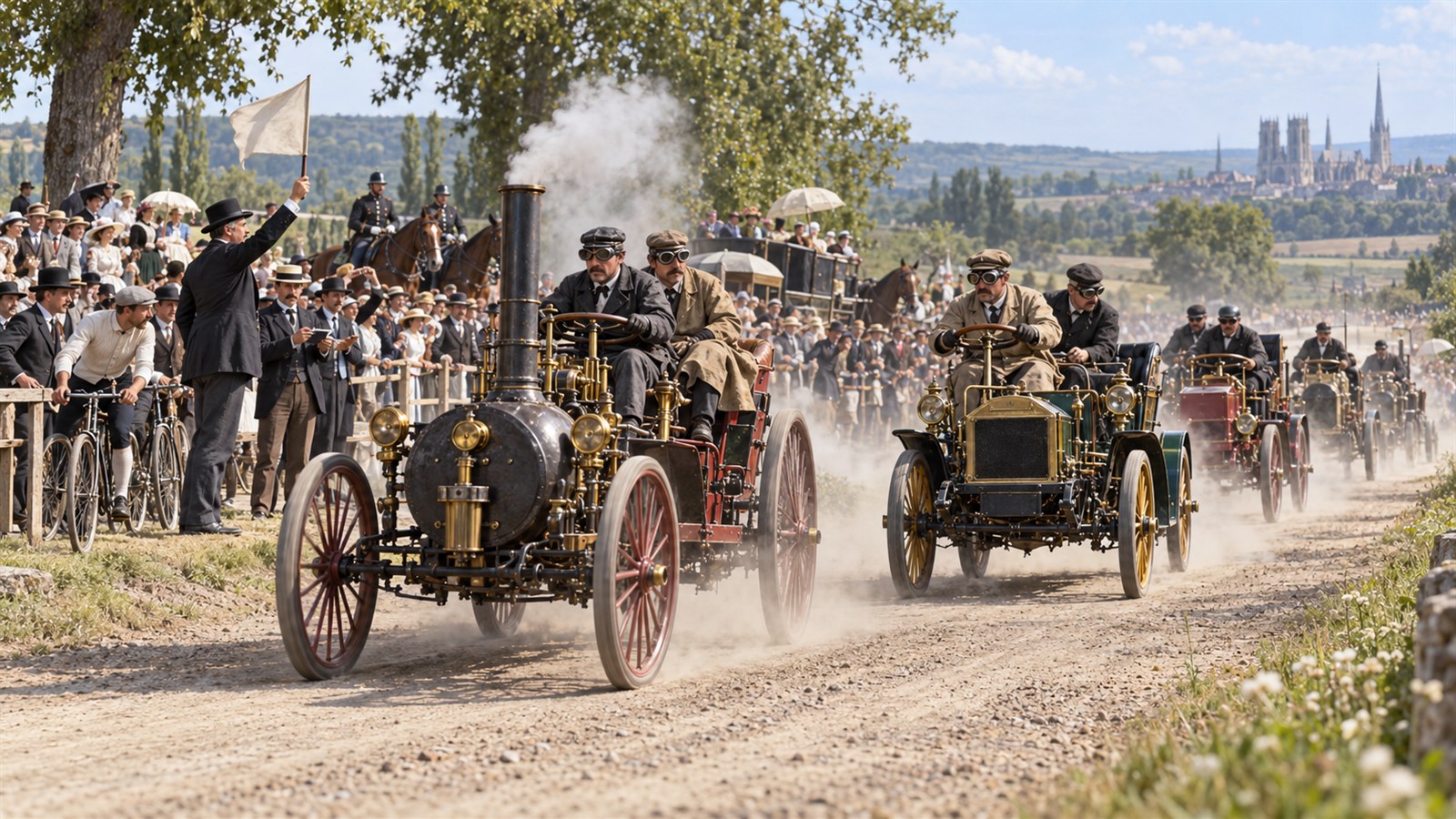
On July 22, 1894, a field of self-propelled vehicles traveled from Paris to Rouen in a contest organized by the newspaper Le Petit Journal. The event is often described as the first major motoring competition, although organizers judged vehicles on safety, ease of operation, and economy rather than speed alone. Steam, gasoline, and other designs entered preliminary trials before the road run. Crowds watched machines that many people had never seen operate over a substantial distance, turning engineering comparison into public spectacle.
The contest reduced uncertainty for builders and potential buyers. A road exposed starting difficulty, fuel needs, steering, braking, reliability, crew requirements, and the ability to handle hills and rough surfaces. Some steam vehicles performed well but needed stokers, weakening the claim that they were easy to operate. Gasoline cars built by Panhard and Levassor and Peugeot completed the route and demonstrated a more practical pattern for later automobiles. No single prize could settle the technology, but shared conditions made differences visible.
Newspaper sponsorship linked circulation with industry development. The paper gained stories, crowds, and prestige, while manufacturers received publicity and independent observation. Road competitions soon became tools for proving components, building brands, and accelerating improvement. They also revealed the need for rules, driver skill, fuel supply, maps, repair services, and safer roads. Racing and reliability trials remained important marketing laboratories as the automobile market expanded.
The Paris–Rouen run matters because markets learn faster when competing technologies face the same practical test. Laboratory claims and patents were not enough; customers needed evidence that a vehicle could complete a journey with manageable labor and cost. The event did not produce an instant winner, but it focused attention on the system qualities that mattered. Its business lesson applies well beyond transportation. A well-designed public trial can create information for buyers, feedback for producers, and attention for the platform hosting the comparison. Manufacturers also observed competitors directly. Steering geometry, engine placement, weight, tires, and crew organization could be compared after the finish, turning the route into a mobile exhibition. Spectators became an informal research panel, reacting to noise, speed, breakdowns, and appearance. The event therefore generated technical, commercial, and cultural data from the same public journey. The competition also helped distinguish invention from operation. A vehicle might contain an ingenious engine yet fail because it was difficult to start, steer, repair, or crew. Customers purchase a journey rather than a mechanism, so the strongest design is often the one that balances many adequate functions instead of maximizing one spectacular feature.
Le Petit Journal organized a road contest to identify vehicles that were safe, economical, and easy to operate.
Competitors traveled from Paris to Rouen on July 22, 1894, after qualifying trials narrowed the field.
Steam, gasoline, and other designs faced the same hills, surfaces, fuel needs, steering demands, and reliability test.
Gasoline vehicles completed the route with operating advantages that helped establish a practical design direction.
The newspaper gained circulation and prestige while manufacturers gained publicity, feedback, and visible proof.
The contest shows how common real-world tests can speed market learning when rival technologies make competing claims.
Explore more of "On This Day ..."
Discover more events from the same date across news, politics, technology, sports, and other fields. Each link highlights significant moments that shaped history on different fronts.