

On This Day in Business: August 24, 1995
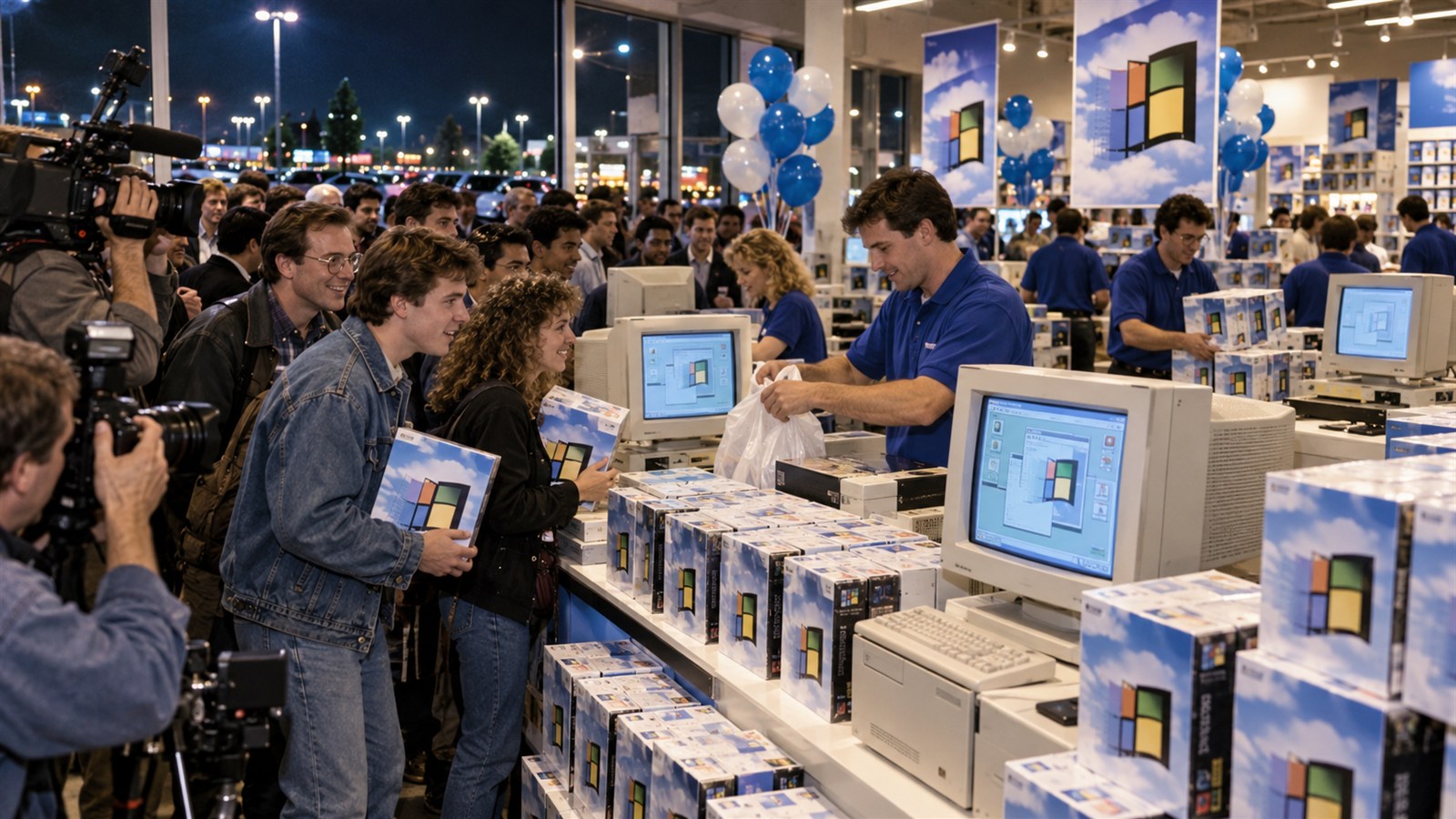
Microsoft launched Windows 95 on August 24, 1995, with midnight store openings, extensive advertising, and worldwide press coverage. The operating system introduced a Start button and taskbar, supported longer file names, expanded plug-and-play hardware installation, and gave many consumers a more approachable path into personal computing. Its launch was not merely a software release. Microsoft coordinated retailers, computer manufacturers, accessory makers, developers, and media around a single date, turning an invisible layer of technology into a mass-market product people lined up to buy.
Windows 95 sat at the center of a large ecosystem. PC manufacturers needed a common operating environment, software developers wanted access to millions of users, and customers valued compatibility across machines and applications. The larger that installed base became, the stronger the platform's attraction to developers, which in turn made it more useful to customers. Microsoft used those network effects to reinforce Windows as the default environment for personal computers. The company sold licenses directly and through new PCs, allowing hardware replacement cycles and software upgrades to support one another.
The release also accelerated the consumer internet era. Windows 95 included networking capabilities, and Microsoft soon tied Internet Explorer closely to the platform. That strategy intensified competition with Netscape and eventually led to major antitrust litigation. The episode showed both the efficiency and danger of platform power. Integrating features can simplify a product and speed adoption, but control over distribution can also disadvantage independent suppliers. For businesses building on someone else's operating system, the launch was an opportunity paired with dependency.
Microsoft reported seven million copies sold in the first five weeks, and the Start menu became a lasting interface convention. Later versions replaced Windows 95, but the launch changed expectations for how technology companies introduce products. Marketing scale, partner preparation, retail theater, and ecosystem compatibility became part of the release itself. The business lesson is that platforms win through more than technical features. They win by coordinating participants, reducing customer friction, and making a new standard feel inevitable—while accepting scrutiny over how that coordination power is used. The release also showed how a deadline can organize an ecosystem. Hardware drivers, retail inventory, training materials, technical support, and advertising all had to be ready together. That synchronization lowered uncertainty for customers and concentrated attention more effectively than a quiet, gradual rollout could have done. It also gave partners a single moment around which to plan promotions, staffing, and compatible product introductions.
Windows 95 launched worldwide on August 24, 1995.
The release introduced the Start button, taskbar, longer file names, and expanded plug-and-play support.
Retailers held midnight events, turning software into a highly visible consumer launch.
PC makers, developers, accessory suppliers, and customers reinforced the value of the Windows ecosystem.
Internet integration increased usefulness but also intensified browser competition and antitrust concerns.
The launch established a model for coordinating marketing, distribution, partners, and technical compatibility.
Explore more of "On This Day ..."
Discover more events from the same date across news, politics, technology, sports, and other fields. Each link highlights significant moments that shaped history on different fronts.