

On This Day in Business: August 23, 1904
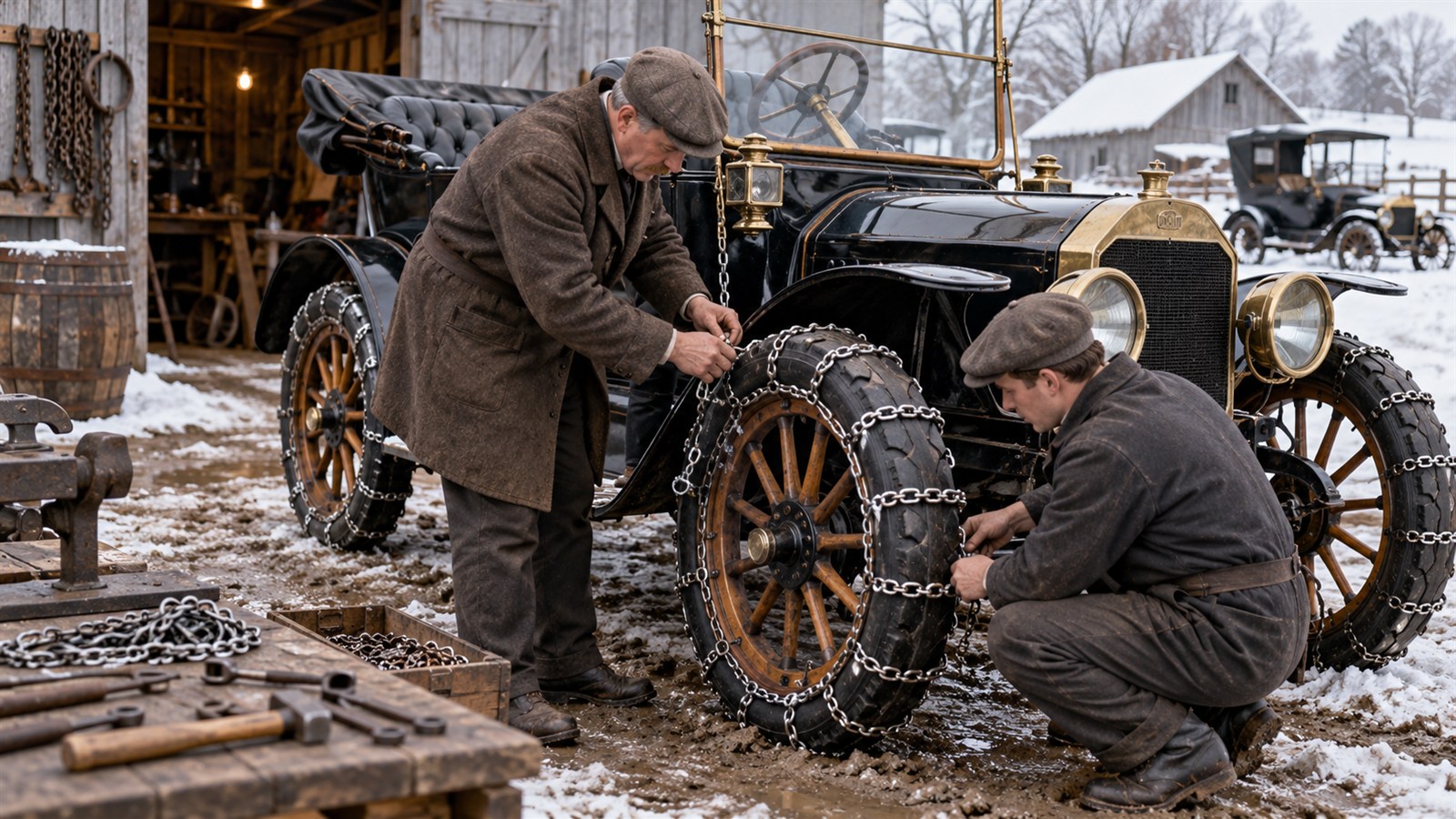
On August 23, 1904, Harry D. Weed received U.S. Patent No. 768,495 for a grip-tread for pneumatic tires. The device used cross chains secured around a wheel to improve traction on snow, ice, mud, and other difficult surfaces. Weed's idea addressed a growing problem created by the automobile itself. Early roads were often unpaved, maintenance was inconsistent, and pneumatic tires could lose grip when weather turned bad. A removable accessory allowed drivers to adapt the same vehicle to conditions that might otherwise stop travel or cause a dangerous loss of control.
The invention illustrates the market that forms around a platform product. Automobile manufacturers sold the central machine, but owners also needed fuel, tools, lamps, tires, repair services, storage, maps, and equipment for seasonal conditions. Tire chains could be produced and sold independently of the car, expanding opportunity for specialized suppliers. Their value was easy to explain: they extended vehicle usefulness into more days and places. That mattered to households, delivery firms, public services, and commercial fleets whose schedules could not simply wait for dry roads.
A successful accessory must balance performance with convenience. Chains needed to fit different tires, remain secure, survive repeated contact with the road, and be installed by ordinary users. Distribution through garages, hardware stores, and automotive dealers was therefore as important as the patent. Demonstrations and instructions reduced uncertainty, while standard tire sizes gradually simplified inventory. The product category also encouraged competition and design variation, including easier fastening systems and specialized patterns for trucks, tractors, and emergency vehicles.
Improved roads, winter tires, all-wheel drive, and modern traction controls changed the market, yet chains remain required or recommended in severe mountain conditions. Weed's patent belongs to a larger story about complements. A transformative product rarely works alone; it creates problems and use cases that secondary businesses can solve. The automobile expanded mobility, while accessories made that mobility more reliable. By converting a weather limitation into a manageable equipment choice, the tire chain increased the practical value of every compatible vehicle and helped make road transportation dependable year-round. Seasonal demand shaped production and inventory, because retailers needed chains before storms and in regions where severe weather was likely. Forecasting, regional distribution, and fit guides became commercial capabilities surrounding a deceptively simple piece of metal hardware. Fleet customers added another layer of opportunity because a missed delivery or stranded service vehicle cost far more than the accessory needed to keep it moving.
Harry D. Weed received Patent No. 768,495 on August 23, 1904.
Cross chains around a pneumatic tire improved grip on snow, ice, mud, and rough ground.
Poor early roads created a large market for equipment that extended automobile usefulness.
Chains became part of the accessory economy surrounding cars, trucks, and commercial fleets.
Fit, durability, installation, retail distribution, and instruction all affected adoption.
The product shows how complementary businesses increase the value of a major technology platform.
Explore more of "On This Day ..."
Discover more events from the same date across news, politics, technology, sports, and other fields. Each link highlights significant moments that shaped history on different fronts.