

On This Day in Business: August 28, 1937
Toyota Motor Co., Ltd. was registered on August 28, 1937, after the automotive department of Toyoda Automatic Loom Works was spun into a separate company. Kiichiro Toyoda had pursued automobile manufacturing despite the technical and financial challenge of building a domestic car industry in Japan. The new corporation began with 12 million yen in capital and broad purposes covering automobiles, machinery, steel, research, and invention. Separation gave the automotive venture its own structure, management, and resources while preserving knowledge and support from the wider Toyoda industrial group.
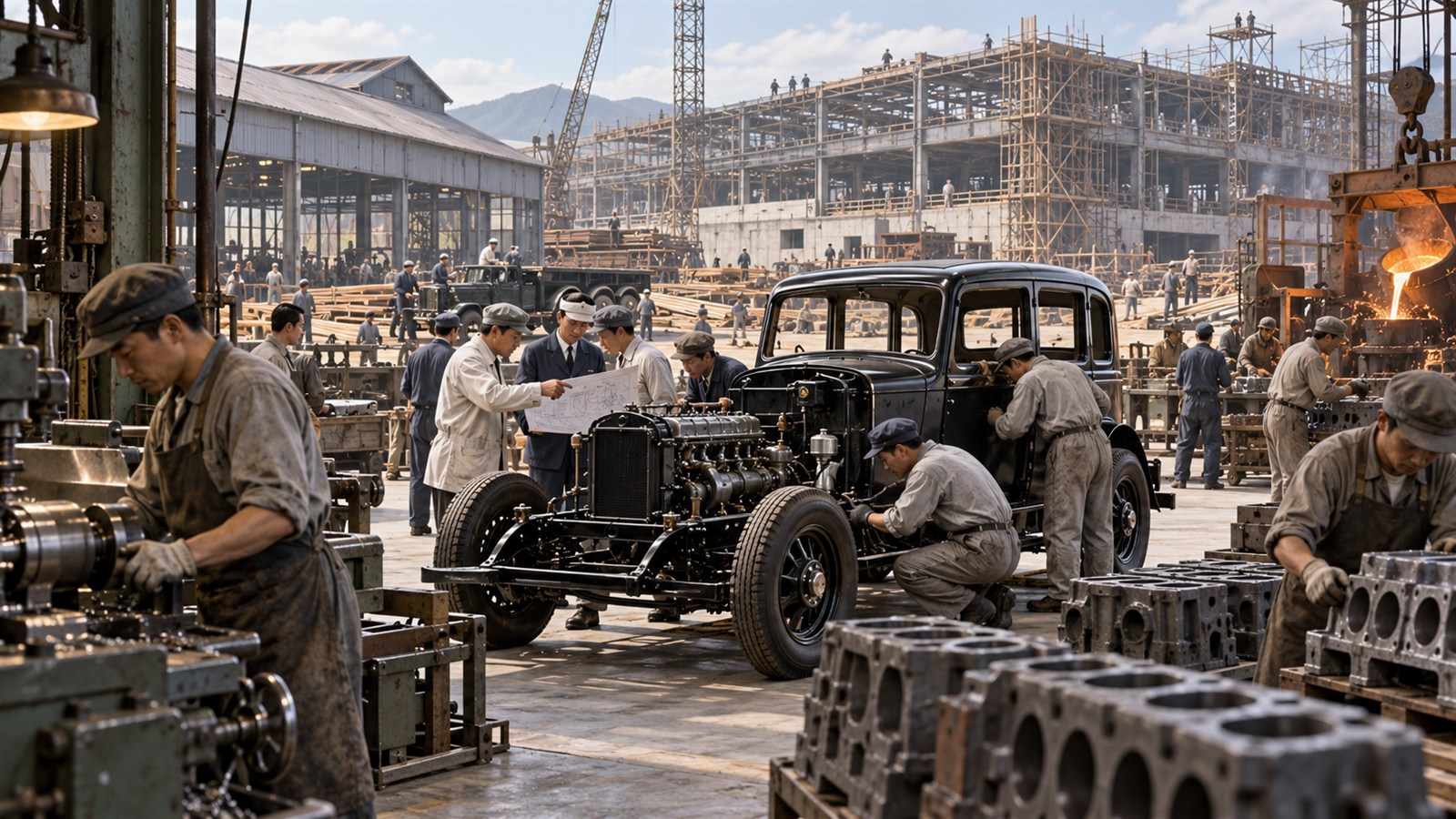
The company faced shortages, a developing supplier base, and a market dominated by foreign automakers. Building vehicles required far more than designing an engine. Toyota needed machine tools, steel, skilled labor, quality control, dealers, repair capability, and a factory organized for flow. Construction of the Koromo plant created an integrated production center and helped transform a rural area into an industrial city later renamed Toyota. The project showed how a major manufacturer can reshape both a supply chain and the geography around it.
Toyota's later production system emphasized eliminating waste, continuous improvement, close supplier coordination, and making problems visible. Those practices developed over decades and should not be projected fully onto the 1937 founding, but the new company created the institution in which they could evolve. Limited capital and materials encouraged careful attention to inventory and process. The resulting methods influenced manufacturing far beyond automobiles, becoming models for operations in factories, logistics, health care, and software development.
Toyota grew into one of the world's largest automakers, with operations and suppliers across many countries. Its history also includes wartime production, labor disputes, quality crises, environmental pressure, and the difficult transition from combustion engines toward hybrid and electric vehicles. The August registration marks the legal beginning of a company whose advantage would come from organizational learning as much as product design. It demonstrates how separating a promising venture can create focus—provided the new firm can build the capabilities, culture, and supplier relationships needed to survive at industrial scale. A separate corporation also clarified accountability. Managers could allocate capital specifically to vehicles, evaluate factory performance, and build a dedicated dealer network without forcing every decision through the priorities of the loom business. Focus turned an internal experiment into an organization expected to stand on its own economics. That expectation sharpened learning: costs, defects, sales, and capacity could be measured against one mission instead of disappearing inside a diversified parent operation.
Toyota Motor Co., Ltd. was registered on August 28, 1937.
The automotive department was separated from Toyoda Automatic Loom Works.
The new company's purposes included vehicles, machinery, steel, research, and invention.
Factory construction required an integrated network of materials, tools, workers, suppliers, and dealers.
Toyota's later production system made process improvement and waste reduction globally influential.
The founding shows how a corporate spinout can give a capital-intensive venture focus and institutional durability.
Explore more of "On This Day ..."
Discover more events from the same date across news, politics, technology, sports, and other fields. Each link highlights significant moments that shaped history on different fronts.