

On This Day in Business: September 20, 1873
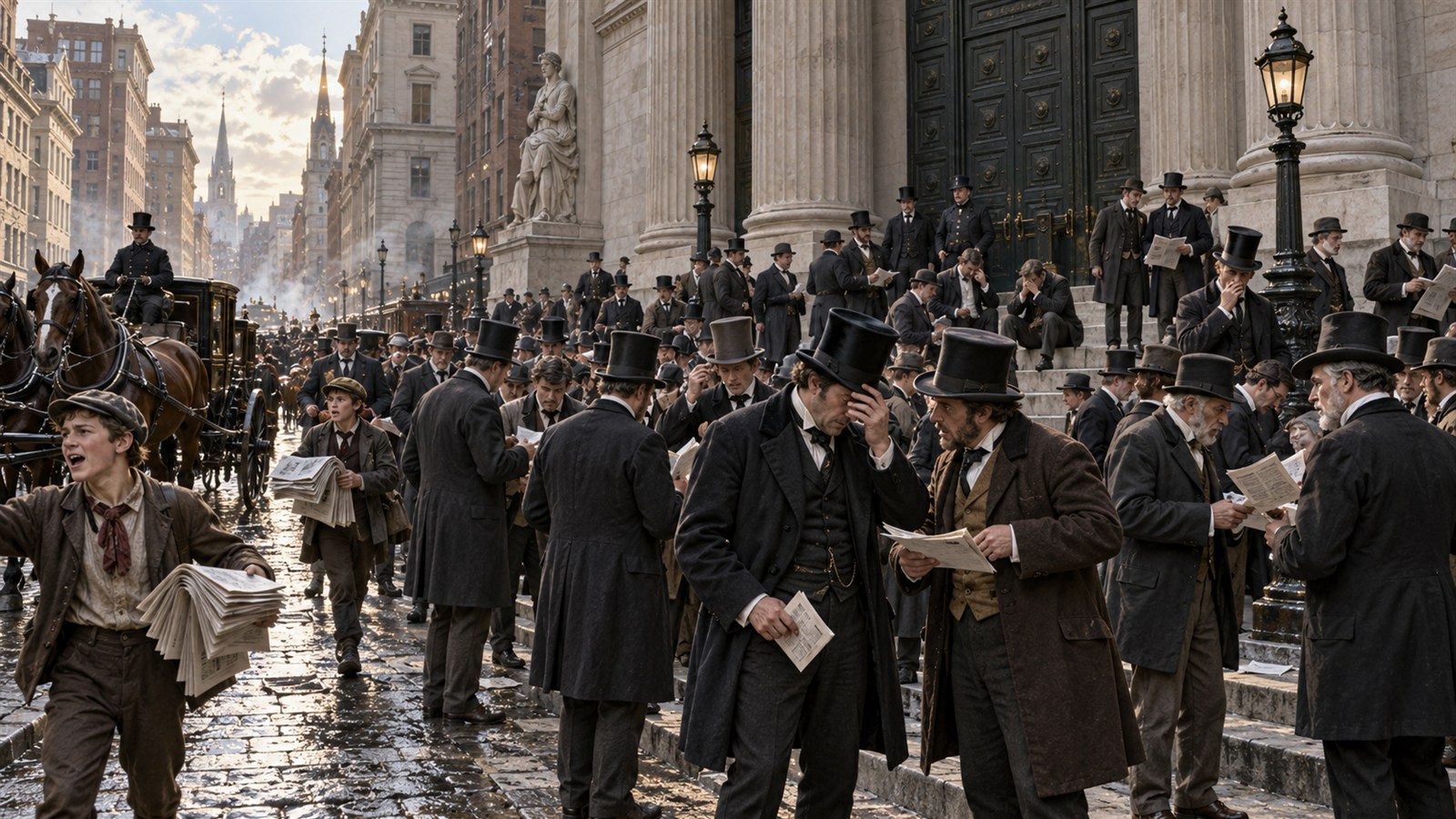
On September 20, 1873, the New York Stock Exchange closed its doors for the first time in its history. The decision followed the failure of Jay Cooke & Company, a prominent banking house deeply involved in financing the Northern Pacific Railway. Railroad construction had attracted enormous investment, but some projects expanded faster than traffic and revenue could support. European investors were also selling American securities after financial turmoil abroad. When Jay Cooke could not place enough bonds or meet demands for cash, its collapse shattered confidence in railroads and the institutions that financed them.
The panic spread because nineteenth-century finance depended on interconnected promises with limited emergency support. Banks held one another's deposits, country institutions kept reserves in major cities, and securities served as collateral for loans. Falling bond prices weakened borrowers and lenders at the same time. Depositors and creditors demanded cash, but assets could not be sold quickly without pushing prices even lower. Closing the exchange for ten days interrupted trading in an attempt to stop disorderly sales and give banks and brokers time to sort obligations.
The shock reached beyond Wall Street. Railroad projects slowed, businesses lost access to credit, factories cut production, unemployment rose, and the economy entered a long downturn. At least one hundred banks failed nationwide, according to Federal Reserve History. The episode demonstrated how infrastructure booms can become financial vulnerabilities when optimistic projections, leverage, and maturity mismatch reinforce one another. Railroads were transformative assets, but a valuable technology did not make every route or bond economically sound.
The United States had no central bank in 1873 to supply broad emergency liquidity. Clearinghouses improvised support among member banks, while cash payments were restricted as institutions defended reserves. Later panics would strengthen arguments for a more coordinated financial safety net, eventually contributing to the creation of the Federal Reserve in 1913. The September 20 closure remains important because it exposed a recurring business pattern: capital floods into a promising sector, financing outruns realistic returns, and a prominent failure changes beliefs everywhere at once. Markets require mechanisms for price discovery, but they also require settlement, liquidity, and confidence. When those supports fail together, even closing the trading room may only pause a crisis already moving through the wider economy. The episode also complicates the idea that infrastructure investment is automatically safe. Railroads produced enormous public value, but securities tied to poorly sequenced routes could still fail. Investors had to separate belief in a transformative technology from the economics, financing, and governance of each individual project.
The New York Stock Exchange closed on September 20, 1873, for the first time in its history.
Jay Cooke & Company's failure undermined confidence in railroad bonds and their financiers.
Interconnected deposits, collateralized loans, and demands for cash spread the panic.
The exchange remained closed for ten days while banks and brokers managed obligations.
Railroad investment slowed, banks failed, businesses lost credit, and unemployment increased.
The crisis strengthened the case for institutions capable of supplying coordinated emergency liquidity.
Explore more of "On This Day ..."
Discover more events from the same date across news, politics, technology, sports, and other fields. Each link highlights significant moments that shaped history on different fronts.