

On This Day in Business: September 22, 1955
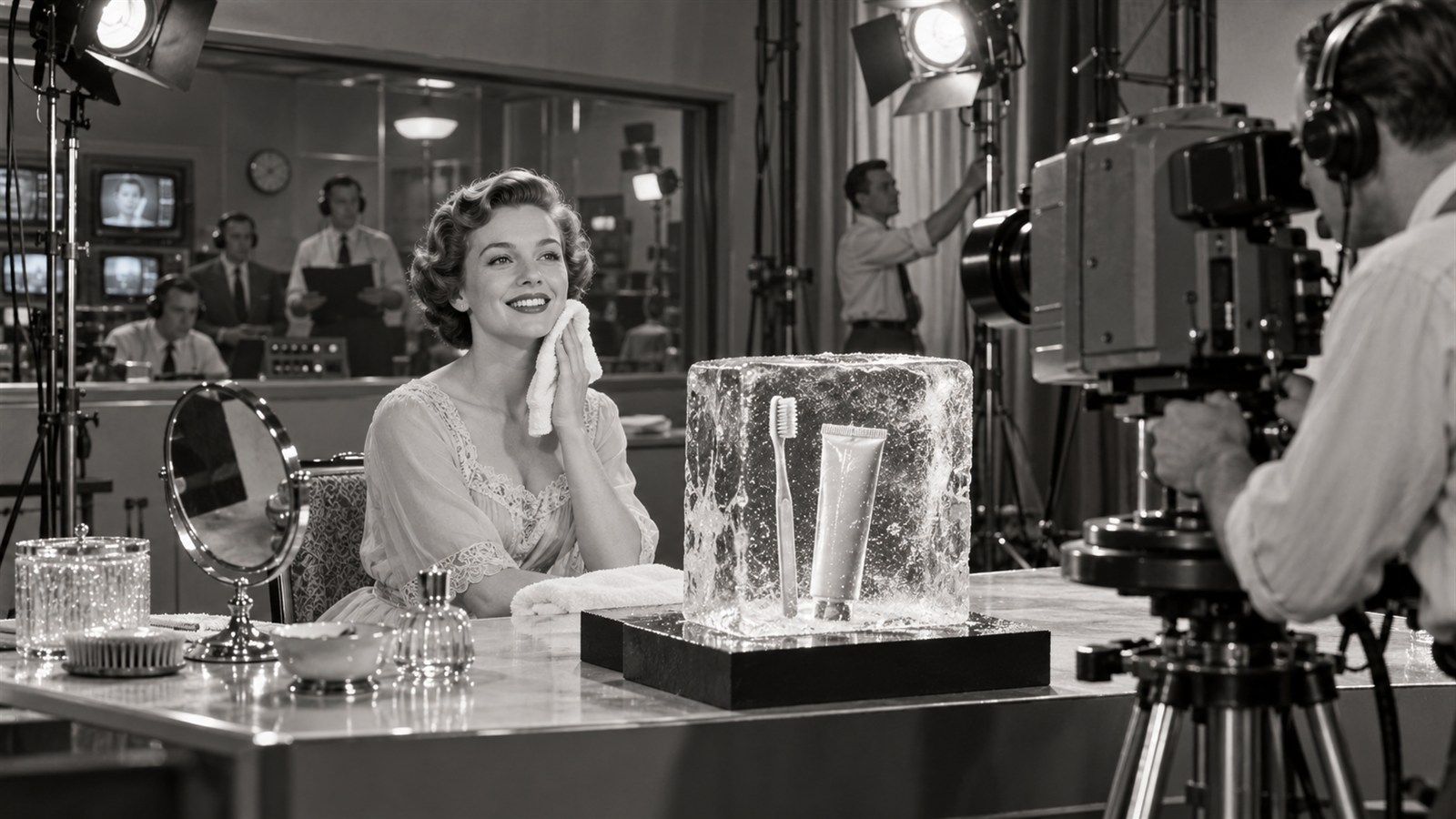
Britain's first television commercial aired on September 22, 1955, during the opening night of Independent Television. The one-minute black-and-white spot promoted Gibbs SR toothpaste and showed a tube and toothbrush embedded in ice to suggest freshness. It appeared at 8:12 p.m. and reached an estimated 105,000 homes. Until ITV's launch, the BBC had held a television monopoly without commercial advertising. The new channel introduced not only another source of programs but a business model in which companies paid for access to audiences gathered around the screen.
Television changed advertising by combining sight, sound, demonstration, and repeated exposure inside the home. Brands that had relied on newspapers, posters, radio, packaging, and cinema shorts could now show products in use and attach them to characters, music, and domestic routines. Agencies needed writers, directors, performers, production crews, research, and schedules designed for short interruptions between programs. Broadcasters, in turn, had to attract enough viewers to sell time while following rules that separated editorial content from commercial persuasion.
The Gibbs commercial used imagery that would be understandable even on small early screens: a bright block of ice, a close product view, a model brushing, and a simple claim about freshness. Its construction reveals an enduring advertising principle. New media often succeed first with messages adapted to the technical limits of the device and the habits of the audience. The commercial also demonstrated measurable reach. Audience ratings gave advertisers evidence about who might have seen a spot, helping television compete for budgets and encouraging programs designed for attractive consumer groups.
Commercial television quickly became central to British consumer culture and financed news, entertainment, drama, and sport outside the license-funded BBC. It also generated continuing debates about interruption, claims, children, sponsorship, and the influence of advertisers. The market later expanded into color, multiple channels, satellite, streaming, and targeted digital video, but the exchange established in 1955 remains recognizable: viewers trade attention for subsidized content. September 22 marks the moment that exchange entered British living rooms at scale. The first spot's frozen toothpaste may appear simple today, yet it opened a production and measurement ecosystem that would shape brands, broadcasters, and household demand for generations. Advertising also changed program strategy. A broadcaster could charge more for audiences that were large, predictable, or attractive to particular brands, so scheduling and measurement became commercial sciences. Content and advertising remained separate on screen, yet the economics of each increasingly shaped the other.
The first British television commercial aired on ITV on September 22, 1955.
The one-minute black-and-white advertisement promoted Gibbs SR toothpaste.
ITV introduced an advertising-funded alternative to the noncommercial BBC television service.
Television combined demonstration, sound, performance, repetition, and domestic reach for brands.
Audience measurement helped advertisers compare programs and allocate marketing budgets.
The launch created a lasting exchange in which advertising revenue subsidizes broadcast content.
Explore more of "On This Day ..."
Discover more events from the same date across news, politics, technology, sports, and other fields. Each link highlights significant moments that shaped history on different fronts.