

On This Day in Business: September 27, 1908
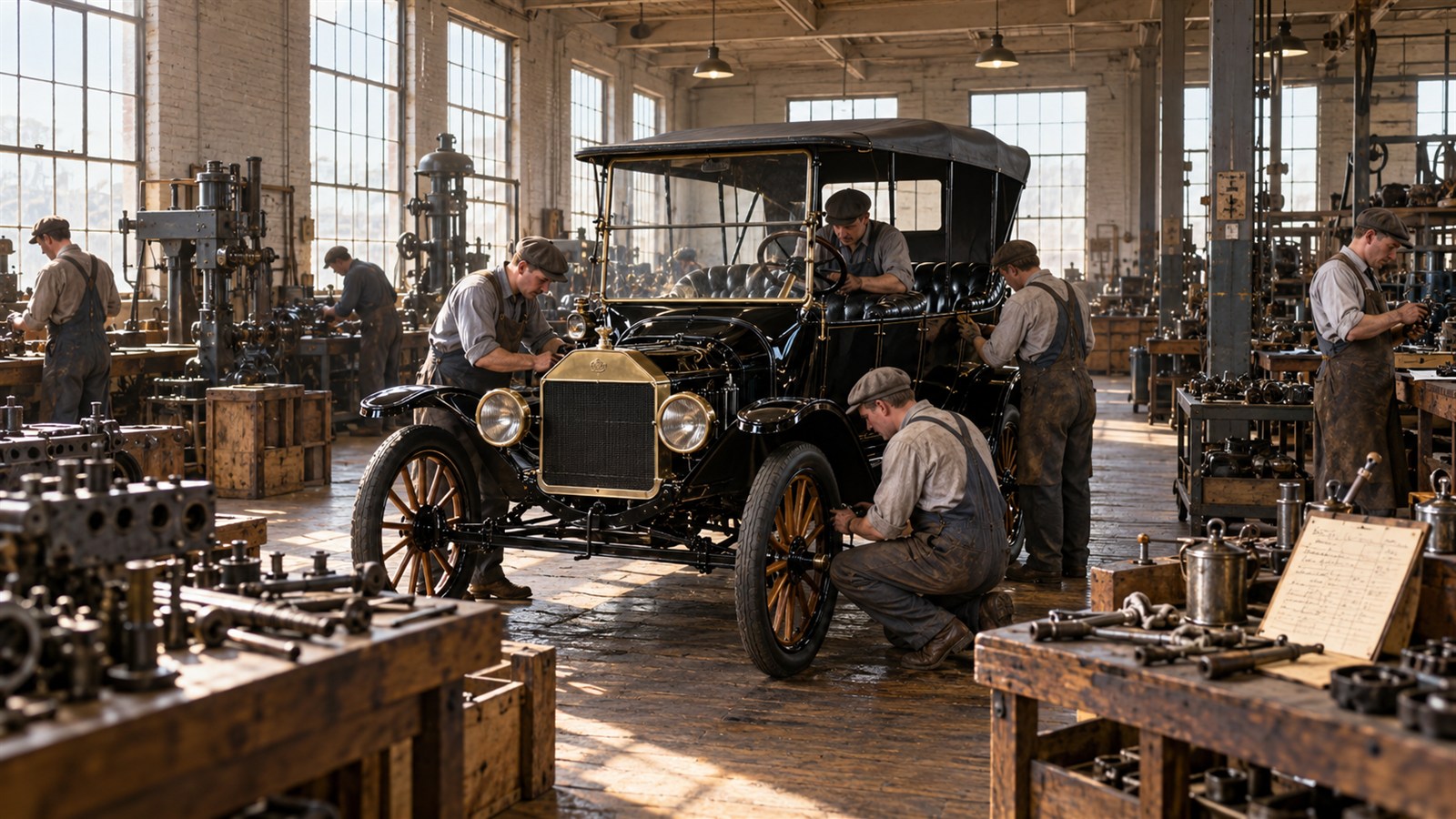
Ford Motor Company completed the first Model T intended for sale on September 27, 1908, at its Piquette Avenue plant in Detroit. The production card identified it as car number one. The vehicle used a four-cylinder engine, a lightweight flexible chassis, high ground clearance, and a planetary transmission that was easier for inexperienced drivers to operate than many contemporary gearboxes. Henry Ford wanted a durable automobile suitable for ordinary roads and a much broader customer base than the wealthy buyers who dominated the early market.
The first Model T was built before Ford introduced the moving assembly line associated with the car's later fame. Piquette production began slowly: only a handful of vehicles were completed in the first weeks as workers assembled engines, axles, bodies, and other components across several floors. Demand quickly filled the building. Ford learned where labor, material flow, and interchangeable parts created delays, knowledge that shaped the more systematic Highland Park factory. The product and the production system evolved together.
Scale allowed Ford to lower the Model T's price while paying for specialized equipment and a vast supplier and dealer network. Standardized components simplified manufacturing and repair, while rural usefulness expanded the market beyond cities. The car changed commuting, shopping, tourism, farming, road construction, petroleum demand, and the geography of housing and retail. It also created difficult consequences, including traffic deaths, pollution, congestion, and dependence on automobiles. A successful product did not merely capture an existing market; it reorganized many surrounding industries.
More than fifteen million Model Ts were ultimately produced before the line ended in 1927. The car became a symbol of mass production, although its achievement depended on design choices made for manufacturability and customer use long before the moving line reached full speed. September 27 marks the tangible beginning of that system: one recorded automobile leaving a process that would soon be transformed for enormous volume. The business lesson is that affordability is engineered across the whole enterprise. Product architecture, factory layout, wages, supplier coordination, distribution, maintenance, and financing all determine whether an innovation can move from a specialist object to a mass-market platform. Dealers and repair shops helped convert the car from a factory product into dependable transportation. Spare parts, manuals, trained mechanics, and resale value lowered the perceived risk of ownership. Mass adoption relied on that service infrastructure as much as on the price displayed in an advertisement. Service completed the product.
Ford completed the first Model T for sale on September 27, 1908, at the Piquette plant.
The car emphasized durability, ground clearance, light weight, and accessible controls.
Early stationary assembly exposed bottlenecks later addressed at the Highland Park factory.
Standardized parts and increasing scale helped lower prices and simplify repairs.
The Model T reshaped roads, retail, housing, farming, petroleum demand, and personal mobility.
Its affordability came from coordinated design, manufacturing, suppliers, dealers, labor, and service.
Explore more of "On This Day ..."
Discover more events from the same date across news, politics, technology, sports, and other fields. Each link highlights significant moments that shaped history on different fronts.