

On This Day in Business: October 10, 1913
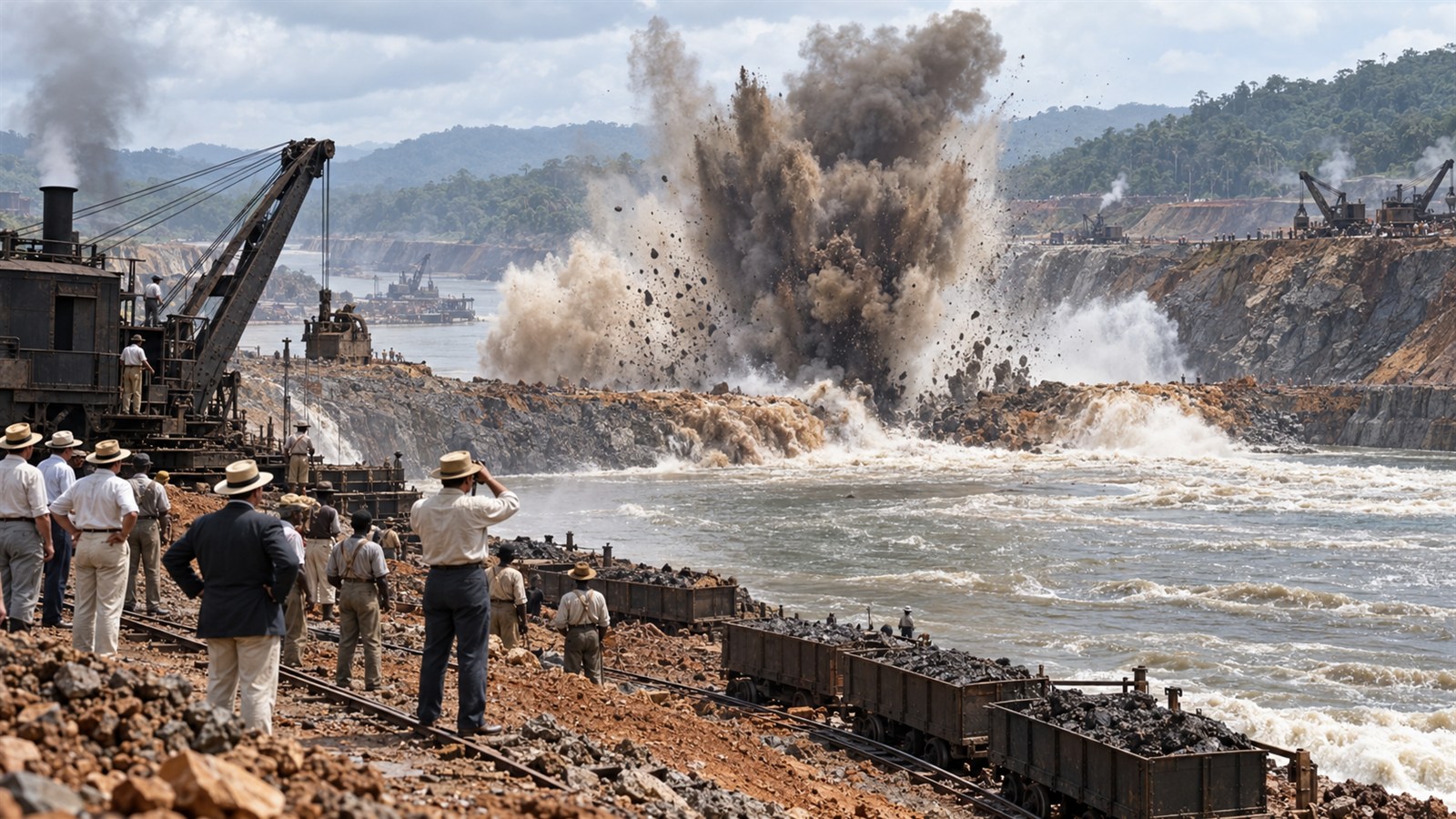
On October 10, 1913, a remote electrical signal from President Woodrow Wilson in Washington triggered explosives at the Gamboa Dike in Panama. The blast opened the barrier between Gatun Lake and the Culebra Cut, allowing water to enter a central section of the nearly completed Panama Canal. It was not the canal's formal opening—that came in August 1914—but it was a vivid engineering milestone. The event showed that an interoceanic water route assembled from locks, dams, excavation, and an artificial lake was becoming operational after decades of failed efforts, disease, political conflict, and extraordinarily difficult construction.
The United States had taken over a French project in 1904 after supporting Panama's separation from Colombia and negotiating control of the Canal Zone, circumstances that remain central to the canal's political history. Engineers rejected a sea-level route and built locks that lift ships to Gatun Lake before lowering them again. The system reduced excavation but created a permanent operating business dependent on water management, dredging, maintenance, skilled labor, and traffic control. Tens of thousands of workers arrived from the Caribbean, Europe, Latin America, and the United States, often receiving unequal pay and living conditions under a segregated labor system.
For shipping companies, the canal altered the map of costs. Vessels traveling between the Atlantic and Pacific coasts of the Americas could avoid the long and hazardous passage around Cape Horn. Shorter voyages saved fuel, crew time, insurance exposure, and vessel capacity, making some routes and commodities more competitive. Ports, railroads, naval planners, and manufacturers adjusted to the new corridor. The canal also created toll revenue and a strategically important chokepoint whose value depended on reliable service. A delay, drought, accident, or political dispute could affect supply chains far beyond Panama.
Panama assumed full control of the canal at the end of 1999 and later expanded it with larger locks that opened in 2016. Current operations still reveal the original project's central tradeoff: a lock canal gains efficiency from freshwater but remains constrained by watershed conditions. The October 1913 blast matters because it marked the moment separate works became a connected transport system. It illustrates how infrastructure creates business value by reducing time and uncertainty rather than producing an ordinary consumer product. It also reminds us that the gains from global trade routes rest on contested sovereignty, human labor, environmental management, and continuous public investment. The ceremony also demonstrated the value of public spectacle in infrastructure. A remote signal turned technical progress into news that investors, shippers, and citizens could understand. Confidence in a future route can influence contracts and planning before the first regular customer passes through it.
Explosives opened the Gamboa Dike on October 10, 1913, joining Gatun Lake with the Culebra Cut.
President Woodrow Wilson initiated the blast by remote electrical signal from Washington.
The milestone preceded the Panama Canal's formal commercial opening in August 1914.
A lock-and-lake design reduced excavation but created lasting water and maintenance requirements.
The canal shortened major shipping routes and changed costs for carriers, ports, insurers, and manufacturers.
Its history joins commercial efficiency with contested sovereignty, unequal labor, and environmental limits.
Explore more of "On This Day ..."
Discover more events from the same date across news, politics, technology, sports, and other fields. Each link highlights significant moments that shaped history on different fronts.