

On This Day in Business: October 15, 1951
On October 15, 1951, CBS broadcast the first episode of I Love Lucy. The comedy starred Lucille Ball and Desi Arnaz as Lucy and Ricky Ricardo, with Vivian Vance and William Frawley as their neighbors. It quickly became a ratings leader, but its business importance extended beyond popularity. Through their company Desilu Productions, Ball and Arnaz helped build a production model based on high-quality 35-millimeter film, multiple cameras, a live studio audience, and ownership of recorded episodes that could be shown again. Those choices changed how television programs were financed, produced, distributed, and valued after their original broadcast.
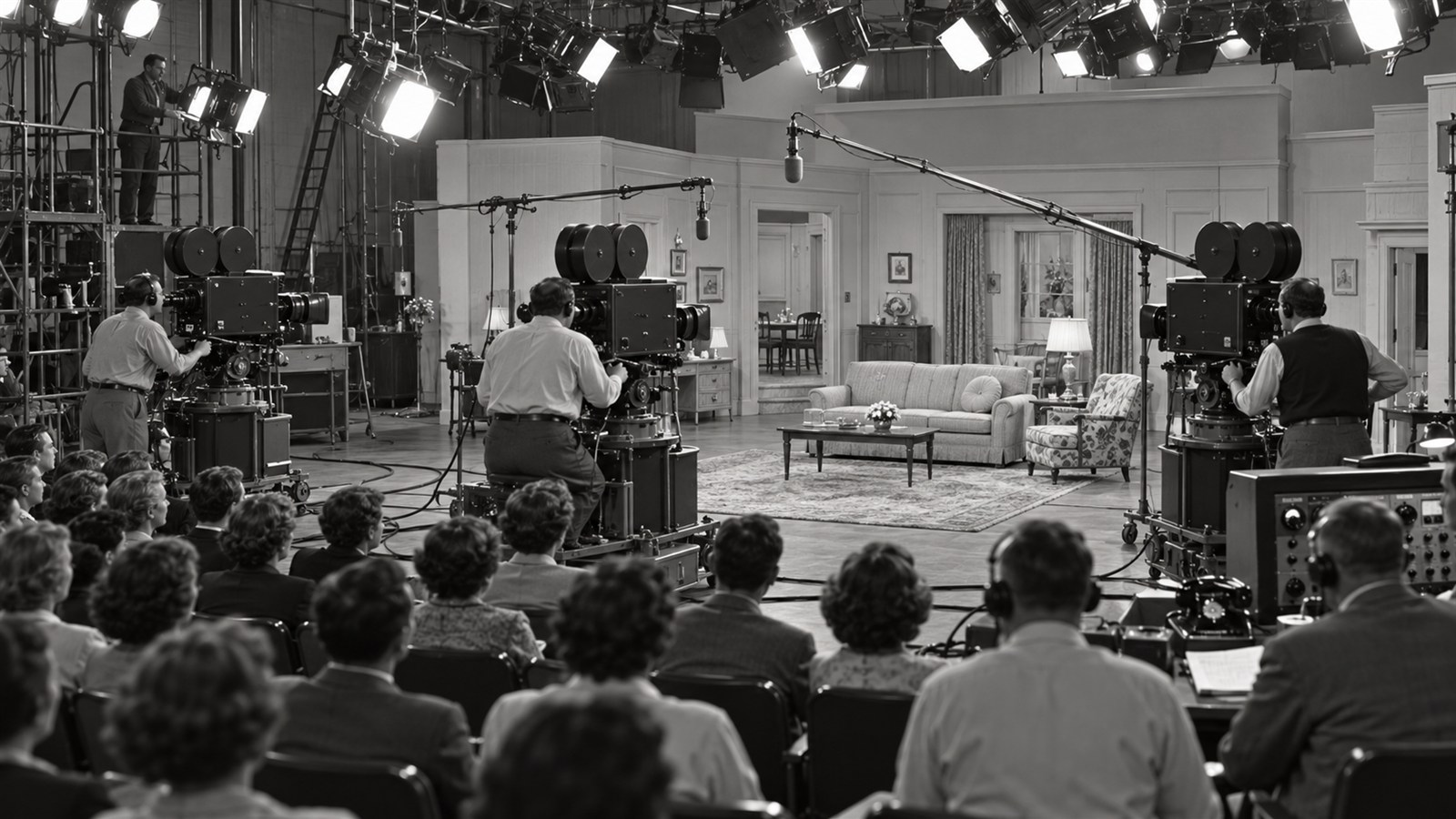
Most network programs were made in New York, while Ball and Arnaz wanted to remain in Los Angeles. A live broadcast from the West Coast would reach eastern viewers at the wrong time, and low-quality kinescope recordings were unattractive. Desilu accepted part of the added filming cost in exchange for rights to the finished programs. Cinematographer Karl Freund helped design a three-camera system that captured wide, medium, and close views before an audience, preserving performance energy while giving editors usable coverage. The negative became a durable asset rather than a disposable record of one evening.
CBS could rebroadcast filmed episodes, affiliates received consistent picture quality, and Desilu could license reruns in syndication. That secondary market made a television library economically valuable and helped establish the idea that a show could earn revenue long after production ended. Desilu used its success to expand studio operations and later produced other influential series. Ball also became a pioneering female studio executive. The program's depiction of a marriage between a white American woman and a Cuban-born bandleader challenged some network expectations, though it also relied at times on ethnic stereotypes typical of the era.
I Love Lucy remains widely distributed because the production decisions made in 1951 preserved both image quality and rights. Its history offers a durable lesson about media economics: ownership and format can matter as much as first-run audience size. Spending more to create a reusable master may produce an asset capable of serving new channels, territories, and generations. October 15 therefore marks more than a successful premiere. It marks the emergence of a library business in television, supported by technical standards, contractual leverage, and a production company willing to trade near-term cost for long-term control. The arrangement also changed negotiating power. Producers who retained reusable rights could bargain with networks and local stations after a first run, while a successful catalog supported borrowing and future production. Creative ownership became a financial asset rather than only a screen credit.
I Love Lucy premiered on CBS on October 15, 1951.
Desilu filmed the show in Los Angeles rather than relying on a low-quality broadcast recording.
A three-camera setup captured performances before a live studio audience on 35-millimeter film.
Ball and Arnaz accepted added production risk in exchange for valuable rights to the finished episodes.
Syndicated reruns turned a program library into a long-lived commercial asset.
The series linked creative success with ownership, durable masters, and repeatable production methods.
Explore more of "On This Day ..."
Discover more events from the same date across news, politics, technology, sports, and other fields. Each link highlights significant moments that shaped history on different fronts.