

On This Day in Business: October 16, 1923
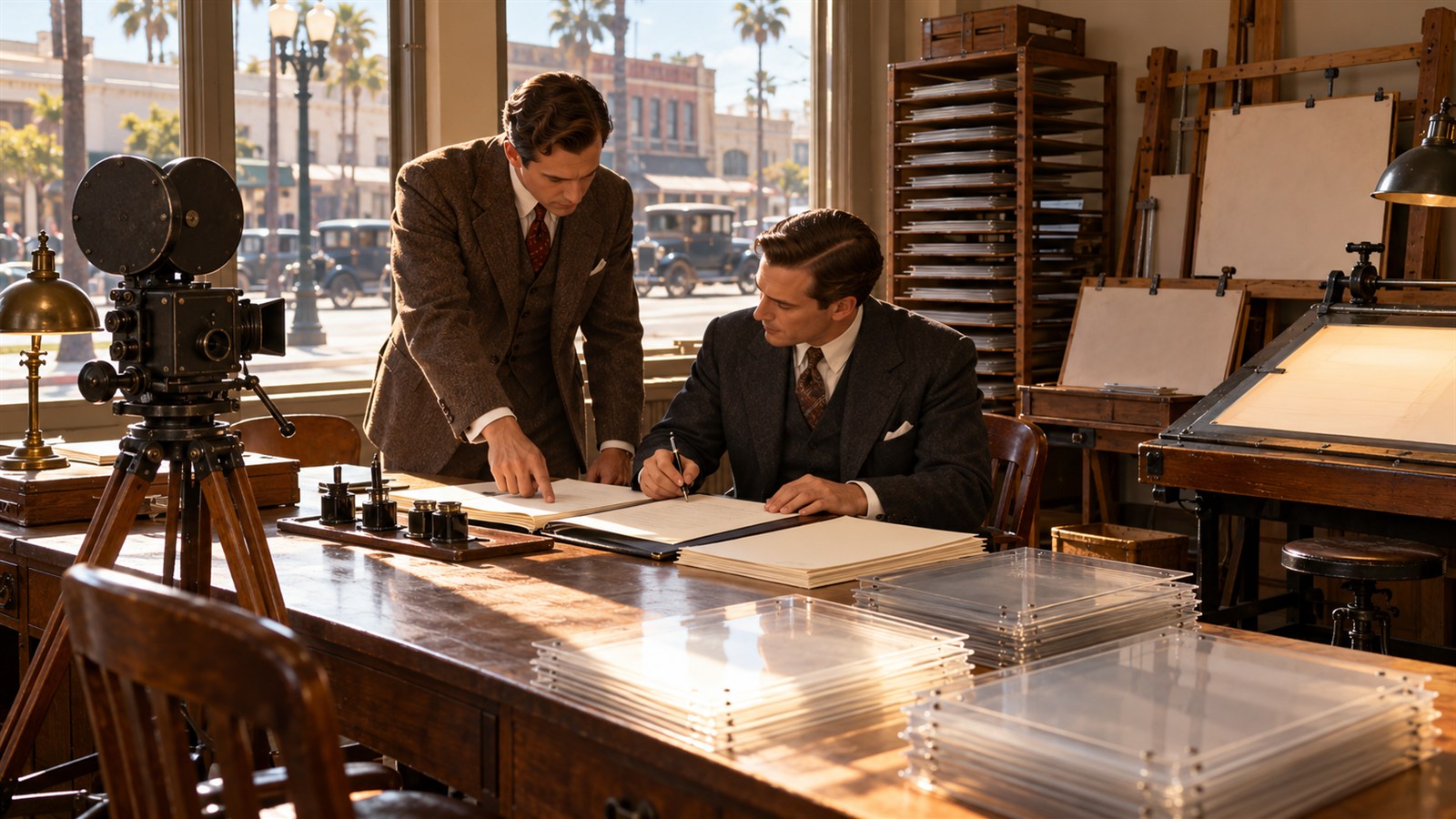
On October 16, 1923, New York distributor Margaret J. Winkler signed an agreement to distribute a series of Alice Comedies made by Walt Disney. The date is recognized as the beginning of the company first called the Disney Brothers Cartoon Studio. Walt had arrived in California after an earlier Kansas City venture failed, bringing a partly completed film that combined a live child performer with animation. His brother Roy supplied organizational and financial support. The contract converted a sample into a series commitment, giving the young studio a customer, deadlines, and a path to revenue rather than merely a collection of creative ambitions.
The early business operated from modest rented space and depended on cash arriving from a distant distributor. Animation required labor before release, so production schedules, quality, and working capital were tightly connected. Disney later lost control of Oswald the Lucky Rabbit because the distributor held the character rights and recruited much of his staff. That setback shaped the studio's emphasis on owning intellectual property. Mickey Mouse, synchronized sound, color, feature animation, television, and theme parks were not isolated inventions; they became ways to extend controlled characters and stories across new formats.
The company repeatedly risked more capital than a short film required. Snow White and the Seven Dwarfs built a feature-film market for animation. Disneyland turned narrative worlds into a physical destination. Television promoted films and parks while generating its own revenue. Merchandise, music, publishing, and international licensing multiplied the uses of each successful property. The strategy depended on integration: creative development supplied assets, distribution built audiences, and consumer products or experiences lengthened their economic life. Failures remained part of the model because no studio could predict every hit.
The enterprise that began with the Alice contract grew into a global media and entertainment company, though its scale has also brought labor disputes, cultural criticism, regulatory attention, and difficult questions about concentration. October 16 matters because it captures the commercial moment between making something and building an institution around it. A signed distribution agreement imposed obligations and supplied opportunity. The Disney story shows how rights ownership, reinvestment, and cross-format development can turn creative work into a compounding portfolio. It also shows that founders learn from unfavorable contracts: control over distribution and intellectual property can determine whether success builds someone else's business or becomes capital for the creator's next experiment. Distribution remained essential even when ownership improved. Characters gained value because theaters, broadcasters, retailers, and later digital services repeatedly placed them before audiences. Control and reach were complementary capabilities, and the company's growth came from building both rather than choosing between them.
A distribution agreement for the Alice Comedies was signed on October 16, 1923.
The date is recognized as the start of the Disney Brothers Cartoon Studio.
Walt supplied creative production while Roy helped organize finance and operations.
The later loss of Oswald the Lucky Rabbit strengthened Disney's focus on owning character rights.
Film, television, parks, merchandise, and licensing became mutually reinforcing uses of intellectual property.
The founding illustrates how a customer contract can turn a creative experiment into a durable company.
Explore more of "On This Day ..."
Discover more events from the same date across news, politics, technology, sports, and other fields. Each link highlights significant moments that shaped history on different fronts.