

On This Day in Business: November 10, 1983
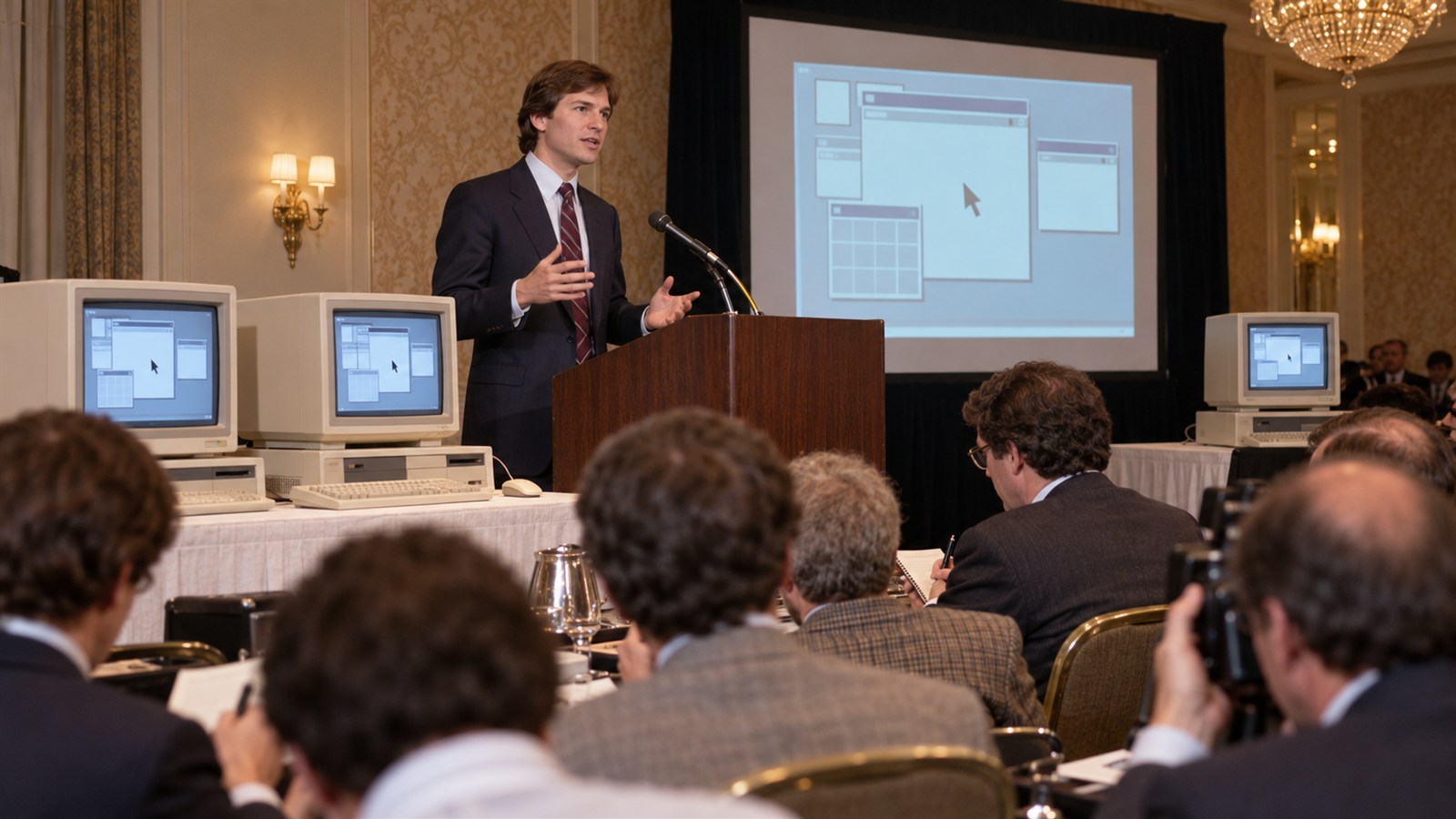
On November 10, 1983, Microsoft announced Windows, a graphical operating environment intended to run with MS-DOS. Bill Gates presented a system that could display multiple application windows and move information between programs. The announcement came before the product was ready to ship, so Microsoft was asking hardware makers, developers, business customers, and the press to believe in a direction as much as a finished package. The immediate product was only one layer of the opportunity. A platform becomes valuable when developers, distributors, customers, and complementary products can coordinate around it. That makes compatibility, documentation, pricing, and timing as important as the features visible in the first demonstration.
Personal computing was fragmented across machines, operating systems, and application interfaces. Windows promised a more visual way to manage programs while allowing Microsoft to build on the large installed base of DOS. The company emphasized device-independent graphics and multitasking, capabilities that could give software developers a broader target and users a more consistent experience. Adoption also carried switching costs. Buyers had to learn new interfaces, convert files, test hardware, and trust that support would continue. The vendor therefore needed an ecosystem, not merely code: tools, training, partners, and a roadmap that reduced the perceived risk of committing to the new standard.
The first retail version did not arrive until November 1985 and faced technical limits and competition. Yet the early announcement gave partners time to prepare and signaled Microsoft's ambition to control a layer above the command line. Later versions benefited from better hardware, a larger application library, and the company's relationships with PC manufacturers. As participation increased, network effects strengthened the proposition. More users attracted more applications and services, which attracted still more users. That flywheel could create durable advantage, but it also made governance consequential because technical decisions by one company affected an expanding community.
Windows illustrates both the power and risk of announcing a platform early. A roadmap can coordinate an ecosystem, discourage rivals, and attract development, but delays can damage trust. Microsoft ultimately turned that promise into a dominant computing environment because it kept investing through imperfect first releases and aligned the interface with a rapidly expanding PC market. For today's technology leaders, the lesson is to design the surrounding market along with the product. Open interfaces, dependable support, backward compatibility, and clear incentives can turn a clever invention into infrastructure. Neglect those relationships and even superior technology may remain an isolated demonstration. In practical terms, the advantage came from linking a clear customer promise to disciplined execution. Capital had to be allocated before demand was certain, employees and partners had to coordinate, and leaders had to keep learning after the initial milestone passed into history.
Microsoft announced Windows on November 10, 1983.
The product was designed as a graphical environment for MS-DOS.
Windows promised multiple application views and data transfer.
The announcement preceded commercial shipment by two years.
Developers and hardware partners were invited into a shared roadmap.
Later versions turned the early concept into a major software platform.
Explore more of "On This Day ..."
Discover more events from the same date across news, politics, technology, sports, and other fields. Each link highlights significant moments that shaped history on different fronts.