

On This Day in Business: November 27, 1924
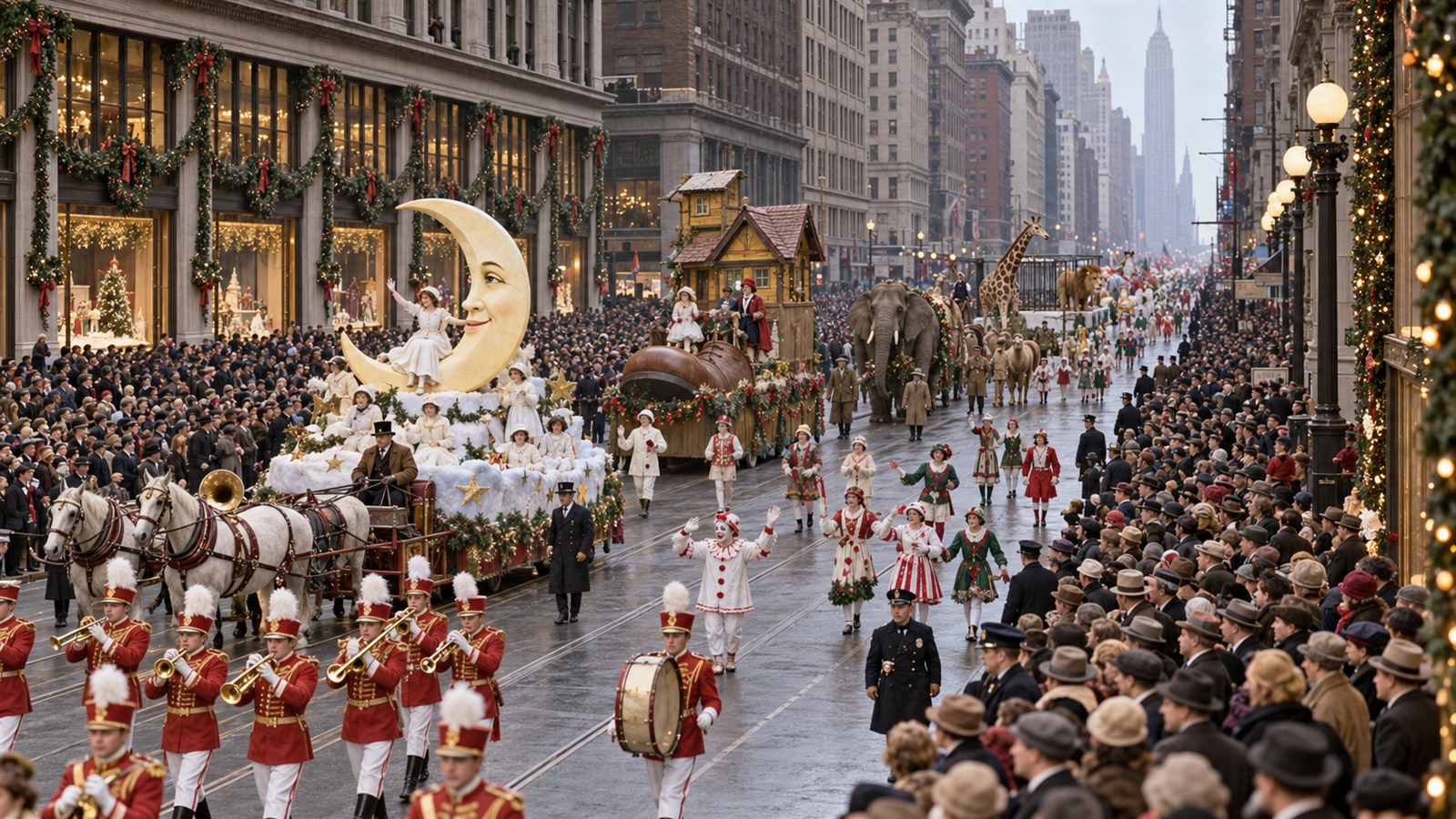
On November 27, 1924, employees of R.H. Macy & Co. marched through Manhattan in the first event then called the Macy's Christmas Parade. Bands, costumes, horse-drawn floats, and animals from the Central Park Zoo accompanied the procession to the Herald Square store, where Santa Claus signaled the opening of the holiday shopping season. The proposition had to be understandable at the counter: a recognizable product, a clear price, and a service routine customers could trust. Retail concepts scale only when the promise can be delivered during ordinary shifts, not merely when the founder is present for opening day.
The parade transformed advertising into a public experience. Instead of asking customers simply to read an announcement, the store created a spectacle along city streets and connected its name with celebration, family, and the seasonal retail calendar. The event also drew attention to Macy's expanded Herald Square flagship and its elaborate holiday windows. That required choices about layout, menu or assortment, staffing, training, equipment, and replenishment. Small efficiencies multiplied across transactions, while a confusing process or inconsistent product could erase the benefit of promotion. Operations therefore became part of the brand rather than a function hidden behind it.
Macy's repeated the parade, introduced giant character balloons later in the decade, and eventually reached a national television audience. Sponsors, broadcasters, performers, city agencies, and production teams became part of a complex annual operation. The event created media inventory and brand recognition while remaining free to spectators on the route. Expansion created a second challenge—copying the experience without flattening what made it distinctive. Franchising, standardized equipment, supplier agreements, and local management could accelerate growth, but only if measurement and accountability preserved quality as the number of locations and employees increased.
The first parade illustrates experiential marketing at extraordinary scale. Its value came from a ritual people wanted to attend and discuss even when they were not immediately shopping. Such events must balance commercial goals with public safety, civic coordination, weather risk, and authenticity. A tradition endures when the audience feels it belongs partly to them. For current operators, the lesson is that customer loyalty is assembled from repeatable details. A memorable idea earns the first visit; dependable execution earns the next one. Businesses that document the process, learn from frontline workers, and protect unit economics give a strong concept room to compound. In practical terms, the advantage came from linking a clear customer promise to disciplined execution. Capital had to be allocated before demand was certain, employees and partners had to coordinate, and leaders had to keep learning after the initial milestone passed into history.
The first Macy's holiday parade took place on November 27, 1924.
Employees marched toward the Herald Square flagship.
The procession included bands, floats, costumes, and zoo animals.
The event promoted the store and the holiday shopping season.
Balloons and national television expanded the audience later.
The parade became a recurring experiential-marketing platform.
Explore more of "On This Day ..."
Discover more events from the same date across news, politics, technology, sports, and other fields. Each link highlights significant moments that shaped history on different fronts.