

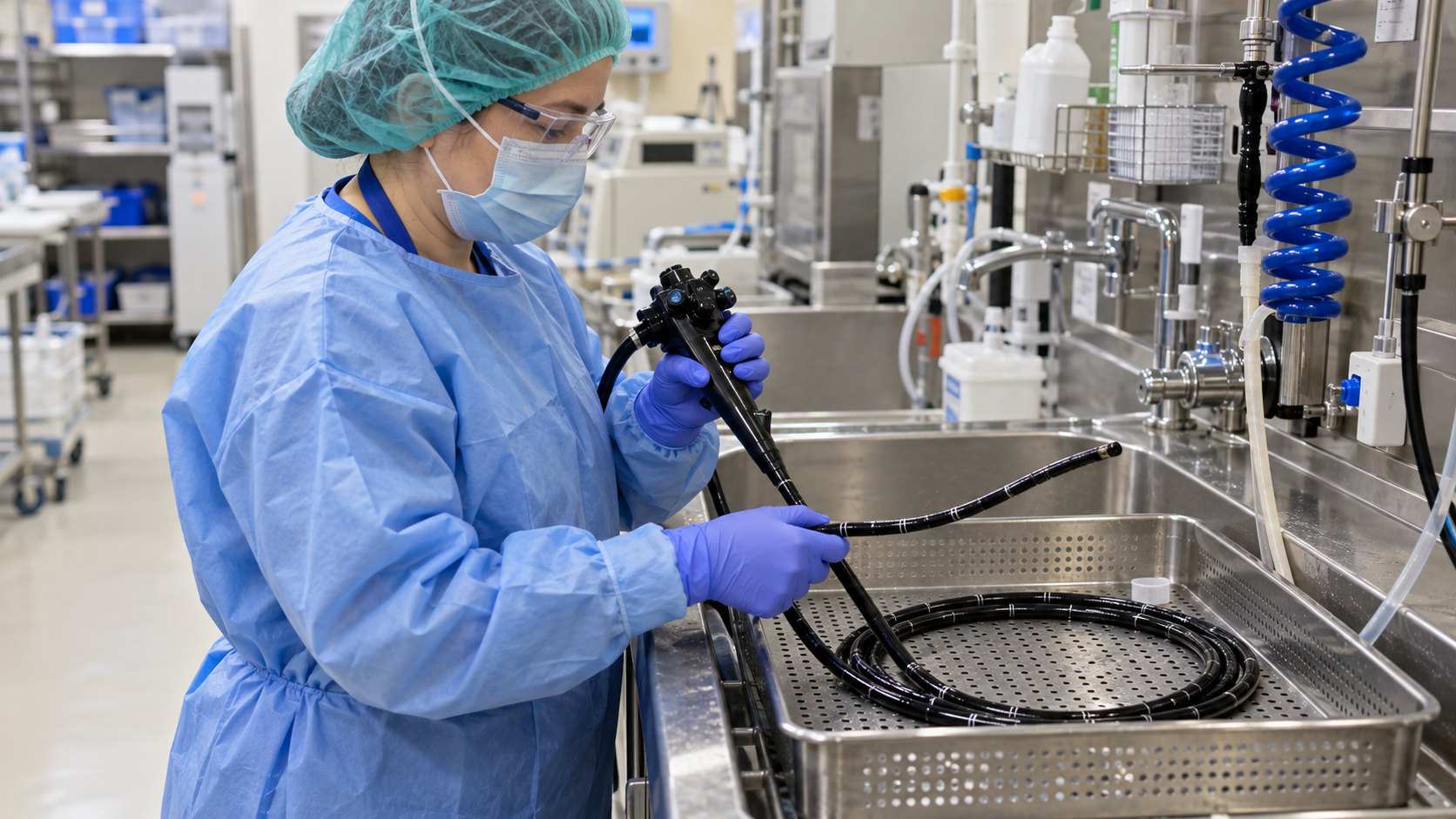
On This Day in Health: February 19, 2015
On February 19, 2015, the United States Food and Drug Administration issued a safety communication about infections associated with reprocessed duodenoscopes. The agency warned health professionals that the complex design of these instruments could impede effective cleaning and disinfection. The devices are used in endoscopic retrograde cholangiopancreatography, commonly called ERCP, a procedure that can investigate and treat problems in the bile and pancreatic ducts. The alert concerned a particular reusable instrument and its reprocessing challenges. It was not a declaration that every endoscopic procedure carried the same problem or that all patients should avoid an indicated procedure.
A duodenoscope is a flexible instrument with a camera and channels through which other tools can be passed. Its distal end includes a mechanism that helps direct those tools during ERCP. That useful complexity can also create surfaces and small spaces that are difficult to clean thoroughly. Reprocessing refers to the steps used to make a reusable device suitable for another patient, including cleaning and the required disinfection process. The FDA's concern was that microorganisms could remain despite efforts to follow instructions. Reports of transmission involving difficult-to-treat bacteria made the consequences especially serious and drew attention to the relationship between device design and infection control.
The communication placed responsibility on more than one part of the health-care system. Staff needed clear procedures, training, and attention to every required step, while manufacturers needed designs and instructions that could be used effectively. Regulators had to assess evidence about the instruments and their real-world performance. A reusable device's safety depends not only on what it does during a procedure, but also on whether it can reliably be prepared for the next one. The alert therefore raised a wider question about how usability and maintenance should be considered throughout a product's life. A complicated cleaning problem could not be understood simply as an individual worker's failure.
Further investigations, revised instructions, and developments in device design followed the warning. Their details belong to later stages of the response and should remain distinct from the February 19 communication. The anniversary marks a moment when a specific infection-control problem received prominent regulatory attention. ERCP continued to have important clinical uses, requiring a balance between procedural benefits and the need to reduce preventable harm. The episode also became part of a broader discussion about reporting, oversight, and safer reusable equipment. Its enduring lesson is that medical innovation includes the practical ability to maintain and reprocess an instrument, with evidence from actual use informing how its risks are addressed.
ERCP instruments serve important diagnostic and treatment purposes. The alert focused on duodenoscopes rather than treating all endoscopy as identical.
The distal mechanism helps direct tools but creates a cleaning challenge. Device complexity can affect safety between procedures.
The FDA issued its communication on February 19. It highlighted the possibility that design could impede effective reprocessing.
Cleaning instructions, staff training, manufacturer design, and oversight all mattered. The problem extended beyond a single worker or institution.
Investigations and design changes followed over time. Those later measures should remain separate from the initial warning date.
Real-world evidence is part of medical-device safety. An instrument must function clinically and be prepared reliably for repeated use.
Explore more of "On This Day ..."
Discover more events from the same date across news, politics, technology, sports, and other fields. Each link highlights significant moments that shaped history on different fronts.