

On This Day in Health: February 23, 1954
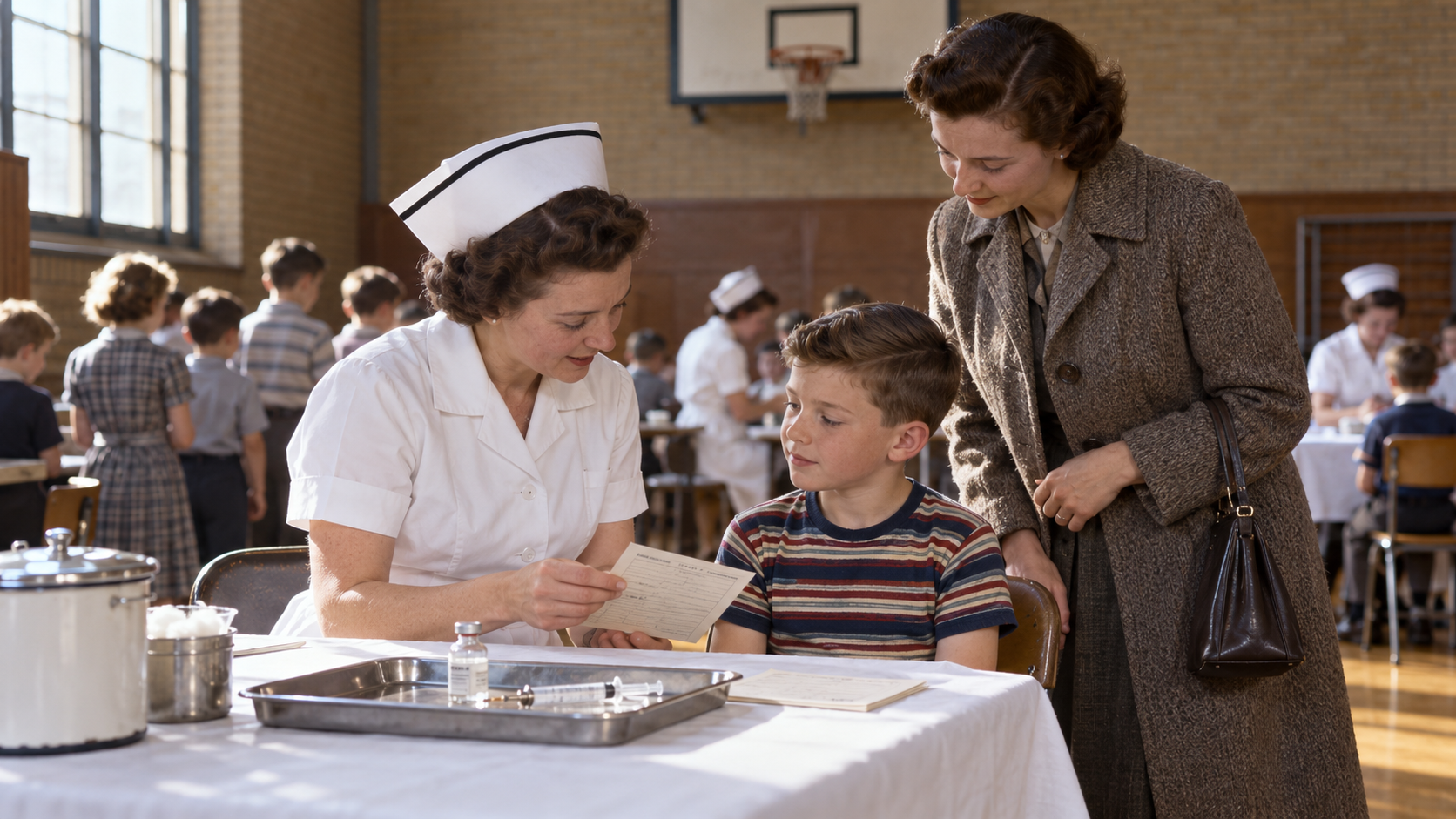
On February 23, 1954, children at Arsenal Elementary School in Pittsburgh received Jonas Salk's experimental polio vaccine during an early school vaccination effort. The event brought research from the University of Pittsburgh into a community setting at a time when polio caused widespread fear among families. It preceded the much larger national field trial that began later that spring. Salk and colleagues had already studied the vaccine in people before this school campaign, so the date should not be described as the first human dose. Its significance lay in extending the investigation through organized vaccination of Pittsburgh schoolchildren.
Polio could cause paralysis and sometimes death, particularly when breathing muscles were affected. Outbreaks disrupted ordinary childhood activities and placed heavy demands on hospitals and families. Salk's approach used an inactivated poliovirus vaccine, intended to stimulate an immune response without relying on a virus capable of causing the disease. The work drew on earlier discoveries in virology, methods for growing virus, and research into immunity. A candidate vaccine still needed careful evaluation in people. Laboratory promise was not enough to establish whether vaccination would protect children reliably or whether production could provide a consistent and safe product.
School-based vaccination required coordination between researchers, health professionals, families, and local institutions. Consent, recordkeeping, follow-up, and additional doses were practical parts of the effort. The Pittsburgh campaign helped build experience before the national study expanded the scale of investigation. That later trial involved a far larger population and a structured evaluation of protection. Its outcome, announced in 1955, belonged to a subsequent milestone rather than knowledge already available on February 23, 1954. Keeping those stages separate preserves the uncertainty that participants and investigators faced at the time. The children were taking part in a developing research program, not receiving a vaccine whose later success had already been established.
The anniversary remembers a local event within a much broader effort to prevent a feared disease. It also highlights the role of communities in medical research: a laboratory team could design a vaccine, but large-scale evaluation required people and institutions willing to participate. Later licensing, manufacturing safeguards, and vaccination campaigns helped transform the public-health impact of polio prevention. Those achievements depended on continuing work after the Pittsburgh school clinic. February 23 marks an important bridge between research and community investigation, with both hope and unanswered questions present. Its place in health history rests on the effort to replace the fear of recurring outbreaks with prevention supported by evidence, organization, and dependable production.
Polio outbreaks caused paralysis and sometimes death. Fear of the disease shaped family life and created strong interest in preventive research.
Salk’s candidate used inactivated poliovirus. Its development relied on earlier work in virology, virus cultivation, and immunity.
The February 23 clinic involved Pittsburgh schoolchildren. It followed earlier human studies and preceded the larger national field trial.
School vaccination required consent, records, and follow-up. Community institutions were essential to investigating the candidate vaccine.
The national trial’s findings were announced in 1955. They should remain distinct from what was known at the earlier school campaign.
The event connected laboratory research with organized community participation. Prevention ultimately depended on evidence and reliable manufacturing as well as discovery.
Explore more of "On This Day ..."
Discover more events from the same date across news, politics, technology, sports, and other fields. Each link highlights significant moments that shaped history on different fronts.