

On This Day in Health: April 1, 2020
On April 1, 2020, the U.S. Food and Drug Administration issued an emergency use authorization for Cellex’s qSARS-CoV-2 IgG/IgM Rapid Test. It was the first coronavirus antibody test to receive this authorization in the United States. The announcement came in the FDA’s daily update the following day, but the authorization itself belonged to April 1. At a moment when laboratories were racing to expand testing, the decision introduced a different way of examining the body’s encounter with the new virus. The test looked for antibodies in blood, adding another type of evidence to the emerging clinical picture of COVID-19.
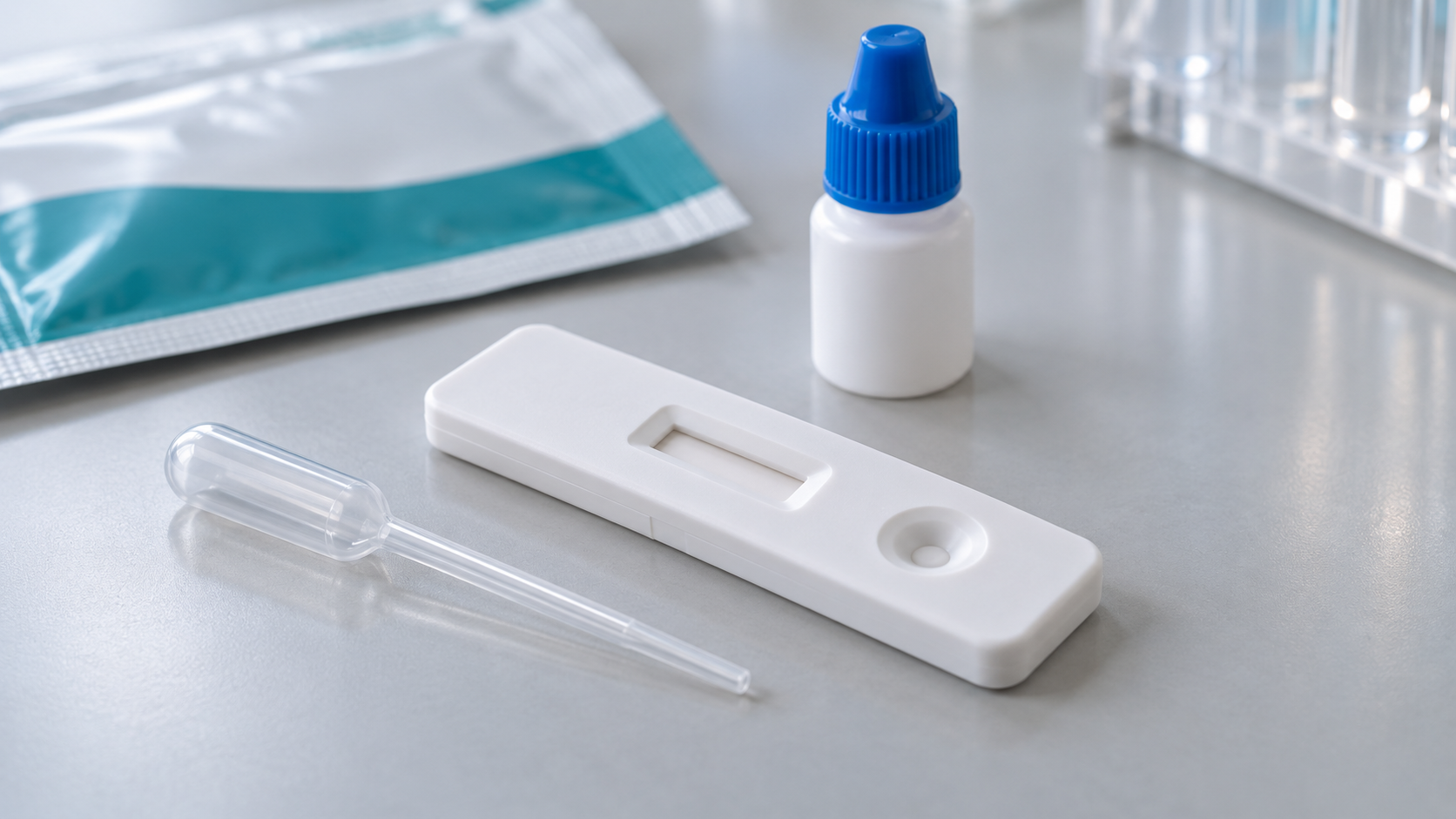
Antibodies are proteins produced by the immune system. The Cellex test was designed to detect two classes, IgM and IgG, associated with a response to SARS-CoV-2. Its method used a small lateral-flow cassette, a format in which a prepared sample travels across a strip and can produce visible bands. The authorized specimens included serum, plasma and blood obtained through a vein. This was a laboratory tool rather than a home test: use was restricted to laboratories certified to perform moderate- or high-complexity testing under federal standards. The instructions also made clear that fingerstick specimens had not been evaluated. Those distinctions mattered because a compact device could appear deceptively simple to use or interpret.
The authorization carried an essential limitation. An antibody result could not serve as the sole basis for diagnosing COVID-19. A person might be infected before enough antibodies had developed to be detected, while a positive result required interpretation alongside symptoms and other laboratory findings. False positive results were also possible. In practical terms, the test examined an immune response rather than directly demonstrating the virus in a respiratory sample. The FDA described it as an aid to diagnosis, to be used with medical review. That cautious language shaped the meaning of the milestone: access to another test did not remove the need for clinical judgment or make every result a definitive answer.
April 1 therefore marks an early regulatory step in the development of coronavirus serology, rather than the arrival of a complete solution to pandemic testing. An emergency authorization allowed a defined use during an urgent public-health situation; it did not establish that the product could answer every question about infection, recovery or protection. The surviving documents show both the ambition and the uncertainty of that period. Researchers and clinicians wanted more ways to understand an unfamiliar disease, while regulators had to specify what each new tool could support. Remembering the authorization together with its limits gives the date its lasting value: medical progress includes the careful explanation of what a new test can and cannot tell us.
The authorization was issued April 1; the FDA described it in its April 2 daily update.
The Cellex assay detected IgM and IgG antibodies in authorized blood specimens.
Antibody testing examines the immune response, rather than directly detecting viral material.
Authorized use was confined to certified moderate- and high-complexity laboratories.
Results required review alongside symptoms and other laboratory evidence.
This was an emergency authorization, with explicit limits on diagnostic interpretation.
Explore more of "On This Day ..."
Discover more events from the same date across news, politics, technology, sports, and other fields. Each link highlights significant moments that shaped history on different fronts.