

On This Day in Health: June 26, 2000
On June 26, 2000, President Bill Clinton brought a major biomedical achievement into the White House East Room: the announcement of a working draft of the human genome. Francis Collins, a leader of the publicly funded Human Genome Project, and Craig Venter, founder of the private company Celera Genomics, appeared together at the Washington ceremony. British Prime Minister Tony Blair participated by video from London. Their shared appearance recognized the progress of two different sequencing efforts toward reading the roughly three billion DNA letters that help carry human biological instructions. For medicine, it offered an extraordinary new research resource, with much of its meaning still to be discovered.
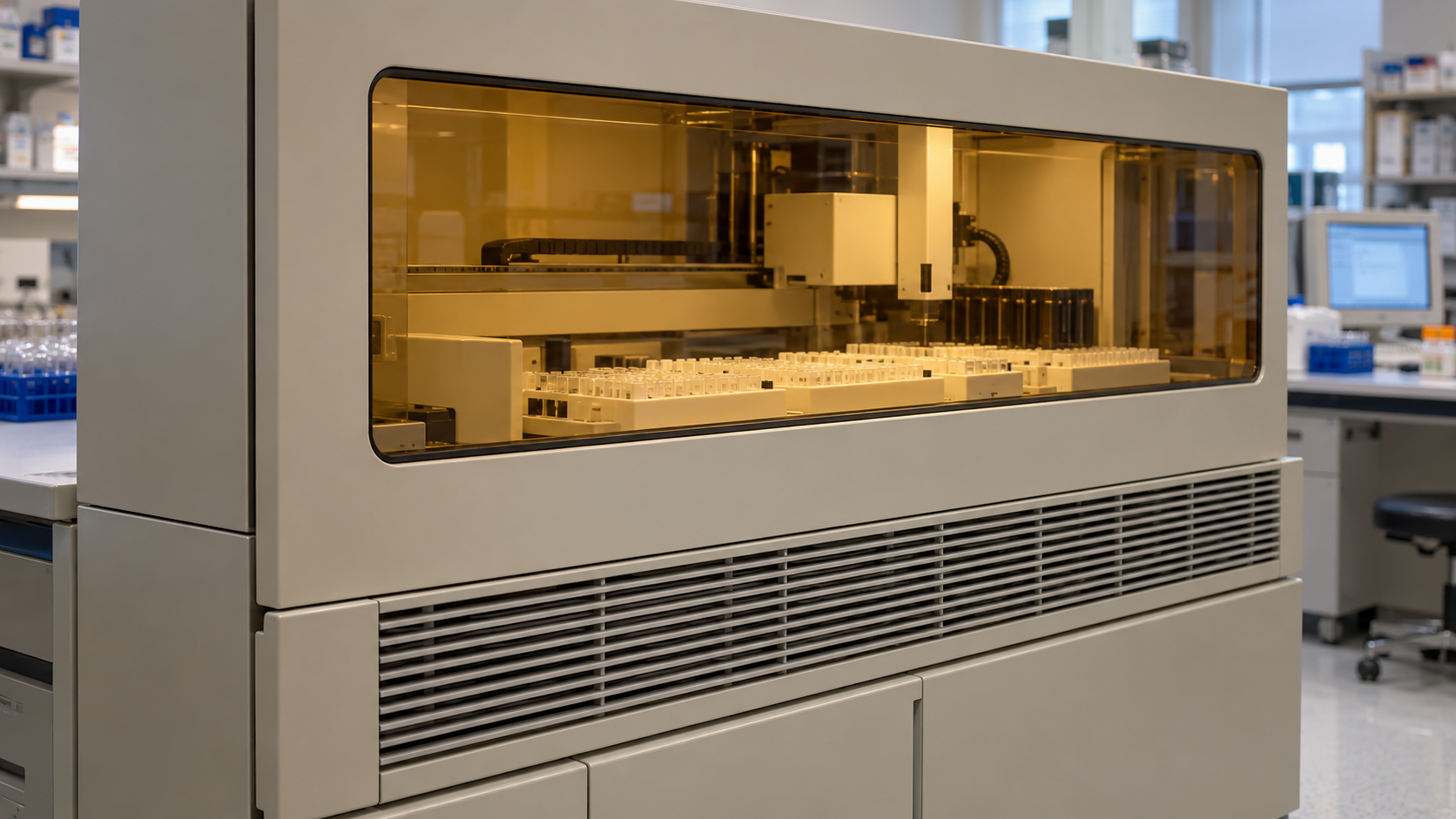
The achievement rested on years of work by scientists, technicians, computer specialists, and sequencing centers across national borders. The Human Genome Project had formally begun in October 1990, with goals that included mapping chromosomes, determining DNA sequence, and improving the tools needed to study it. Automated instruments could read fragments of DNA, while researchers and computers worked to put those fragments into order. Public consortium centers committed to rapidly releasing sequence information so other researchers could use it. The draft therefore represented both a large technical accomplishment and a model of shared scientific infrastructure, giving many laboratories access to information beyond what they could produce independently.
A working draft was still an unfinished reference. Gaps and uncertain stretches remained, and reading a sequence did not explain what every part did. Researchers needed to improve accuracy, assemble difficult regions, identify genes, and investigate how genetic differences related to disease. The first major analyses of the draft appeared in 2001, while completion of the Human Genome Project was announced in April 2003. That distinction matters when remembering June 26: the ceremony celebrated a decisive stage in a continuing project. It did not announce a complete explanation of human biology, a treatment for every inherited disorder, or an immediate transformation of routine patient care.
Its lasting health significance was the foundation it provided for asking better questions. A shared genome reference helped researchers locate and compare genes and investigate the biological basis of illness. Turning those findings into useful tests and treatments required further experiments, clinical studies, and careful interpretation. The project also made ethical questions inseparable from its scientific ambition, including how genetic information should be used and who would benefit from the resulting knowledge. June 26 remains a landmark because it made the scale of the new resource visible to the world. The most consequential work lay in learning how to use that resource responsibly to understand disease and improve human health.
The human genome is far larger than any single gene. Building a reference meant organizing enormous amounts of sequence information, rather than discovering one universal cause of illness.
Collins and Venter represented public and private efforts. Their joint appearance gave the announcement a cooperative public face despite the different organizations and approaches behind the work.
The draft gave researchers useful information before every region was finished. Its value depended on recognizing uncertainties while continuing to improve the reference.
Patients did not receive a new treatment at the ceremony. The announcement concerned a research foundation whose medical applications would require additional evidence.
Rapid public data sharing helped other laboratories build on sequencing work. The value of the resource grew as researchers developed new questions and analytical tools.
The milestone also raised enduring questions about privacy, participation, and fair access to benefits. Scientific progress alone could not settle how genomic knowledge should be used.
Explore more of "On This Day ..."
Discover more events from the same date across news, politics, technology, sports, and other fields. Each link highlights significant moments that shaped history on different fronts.