

On This Day in Health: September 30, 1951
On September 30, 1951, Barry James Marshall was born in Kalgoorlie, Western Australia. Working decades later with pathologist Robin Warren, he helped overturn the belief that most peptic ulcers were mainly caused by stress or excess acid by demonstrating the role of Helicobacter pylori infection. This date matters because it fixes a broad medical story to a specific moment, place, and group of people. It also shows how health history is shaped by institutions and practical choices as well as laboratory discoveries.
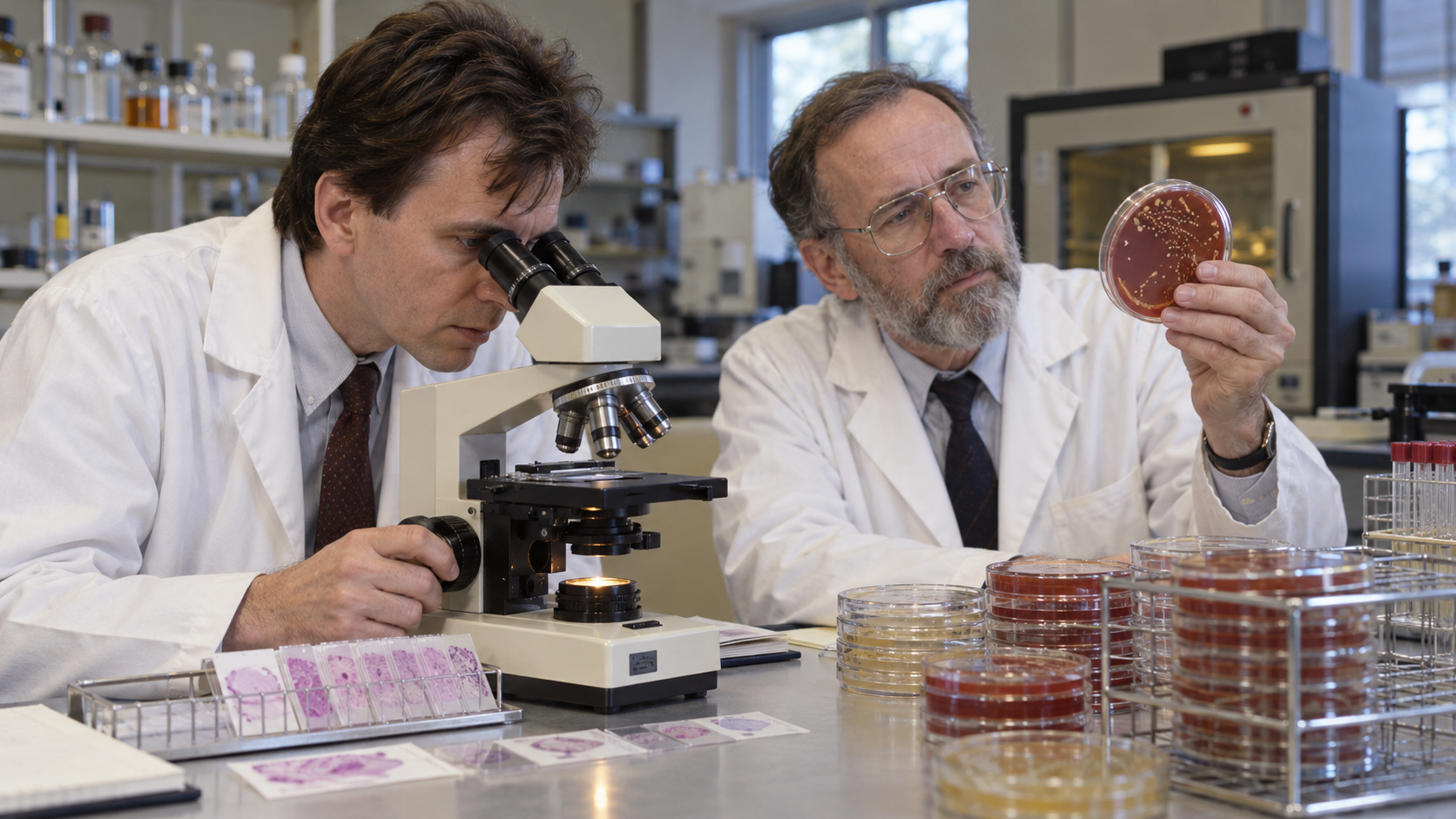
The background was already developing before that day. Warren noticed curved bacteria in gastric biopsy specimens and saw inflammation around them. Marshall joined the investigation at Royal Perth Hospital. Culturing the organism was difficult until plates were left incubating over a long holiday, allowing colonies to grow slowly enough to be recognized. Those conditions defined what participants could attempt and what patients or communities could reasonably expect. They also explain why later accounts sometimes compress years of preparation into a single anniversary. Looking at that preparation keeps credit broad and makes the turning point easier to understand without turning it into a miracle story.
What happened on the date was consequential but limited. The researchers connected the bacterium with gastritis and peptic ulcer disease. To strengthen the case, Marshall drank a culture in 1984, developed gastritis, and documented infection before taking antibiotics. The self-experiment was dramatic, but clinical studies and successful eradication therapy supplied the broader evidence. Not every ulcer is caused by H. pylori; nonsteroidal anti-inflammatory drugs and other conditions also matter. Self-experimentation raises ethical questions and should not substitute for controlled research. Medical acceptance changed gradually as laboratories reproduced the findings. The distinction is important: the event did not instantly solve the underlying health problem, and later progress depended on follow-up research, training, policy, funding, and public trust. Contemporary evidence also helps separate what participants knew then from interpretations added after the result became famous.
Its longer legacy reaches beyond the original setting. Treating H. pylori with antibiotics and acid suppression turned many recurrent ulcers from chronic surgical problems into curable infections. The discovery also clarified links between long-term infection, gastric cancer, and mucosa-associated lymphoid tissue lymphoma. Marshall and Warren shared the 2005 Nobel Prize. Their work remains a case study in careful observation, persistence against conventional wisdom, and the need to revise treatment when a disease's cause becomes clearer. Seen in context, the anniversary is useful because it connects a concrete historical episode with continuing questions about evidence, access, safety, and responsibility in health care. That connection is stronger when the people affected, the limits of the achievement, and the work still unfinished remain part of the account.
The researchers connected the bacterium with gastritis and peptic ulcer disease. To strengthen the case, Marshall drank a culture in 1984, developed gastritis, and documented infection before taking antibiotics. The self-experiment was dramatic, but clinical studies and successful eradication therapy supplied the broader evidence.
Not every ulcer is caused by H. pylori; nonsteroidal anti-inflammatory drugs and other conditions also matter. Self-experimentation raises ethical questions and should not substitute for controlled research. Medical acceptance changed gradually as laboratories reproduced the findings.
Treating H. pylori with antibiotics and acid suppression turned many recurrent ulcers from chronic surgical problems into curable infections. The discovery also clarified links between long-term infection, gastric cancer, and mucosa-associated lymphoid tissue lymphoma.
Warren noticed curved bacteria in gastric biopsy specimens and saw inflammation around them. Marshall joined the investigation at Royal Perth Hospital. Culturing the organism was difficult until plates were left incubating over a long holiday, allowing colonies to grow slowly enough to be recognized.
Barry James Marshall was born in Kalgoorlie, Western Australia. Working decades later with pathologist Robin Warren, he helped overturn the belief that most peptic ulcers were mainly caused by stress or excess acid by demonstrating the role of Helicobacter pylori infection.
Marshall and Warren shared the 2005 Nobel Prize. Their work remains a case study in careful observation, persistence against conventional wisdom, and the need to revise treatment when a disease's cause becomes clearer.
Explore more of "On This Day ..."
Discover more events from the same date across news, politics, technology, sports, and other fields. Each link highlights significant moments that shaped history on different fronts.