

On This Day in Health: July 17, 1867
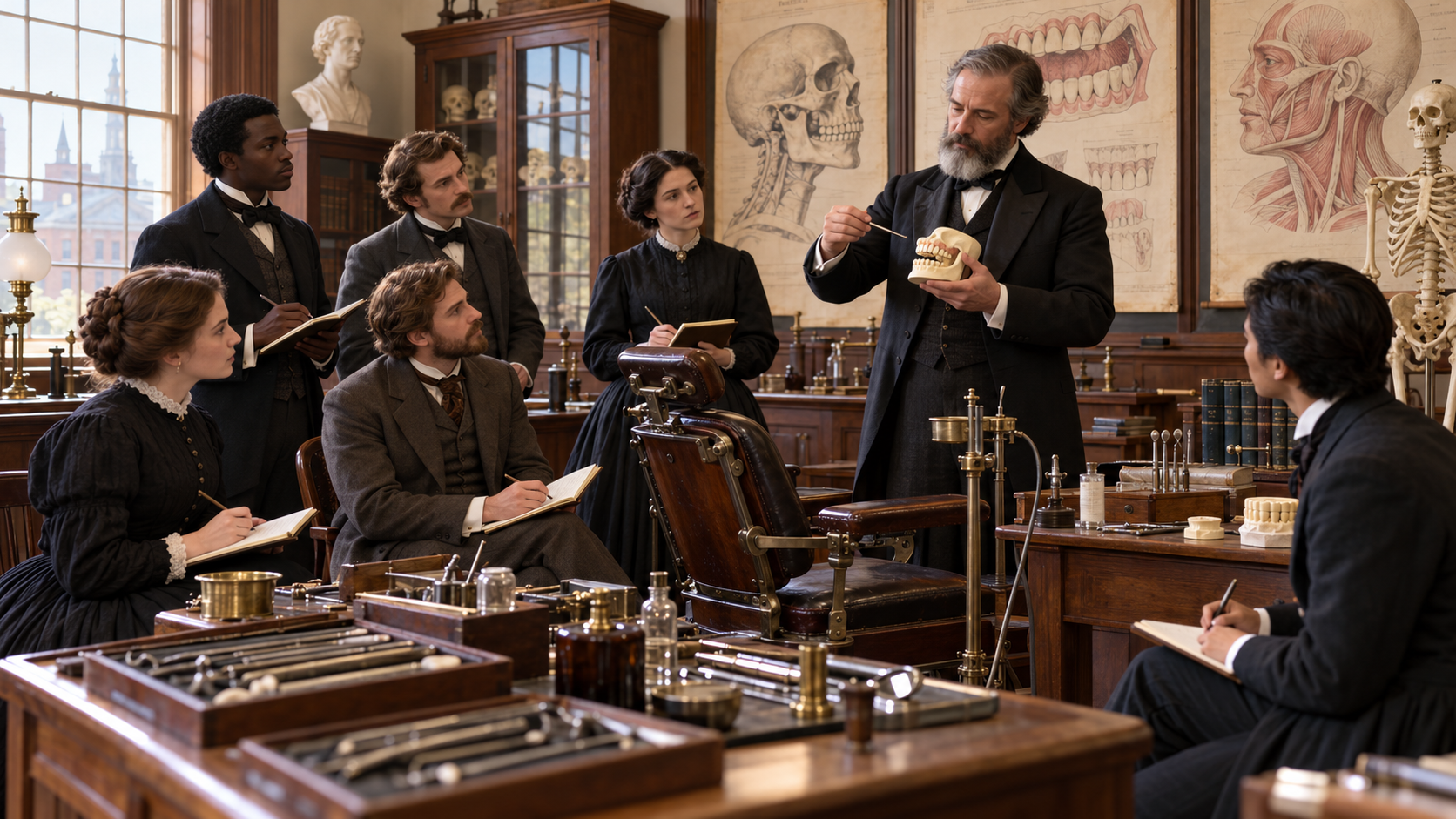
On July 17, 1867, Harvard University established the institution now called the Harvard School of Dental Medicine. It was the first dental school in the United States affiliated with both a university and a medical school, and it became the first to award the Doctor of Dental Medicine degree. The choice of DMD signaled that dental students would receive substantial education in the biological and medical sciences rather than learn only the manual techniques of treating teeth. At a time when dentistry was still organizing its professional standards, the school helped place oral health within an academic medical setting.
Nineteenth-century dental care ranged from skilled practice to poorly regulated tooth pulling, and access depended heavily on income and location. Formal schools were beginning to replace apprenticeship as the main route into the profession, but dentistry and medicine often remained institutionally separate. Harvard's program required students to study anatomy, physiology, pathology, surgery, and other medical subjects alongside dental technique. That structure supported the idea that diseases of the mouth are connected with nutrition, infection, speech, pain, and general health. It also encouraged research and clinical teaching under university oversight.
The school's history was not a simple story of inclusion. Tuition, admission practices, race, sex, and social status limited who could train and who could obtain care. Robert Tanner Freeman, the son of enslaved parents, graduated in 1869 and became the first African American to earn a dental degree in the United States after other schools had rejected him. His achievement exposed both an opening and the discrimination that made it exceptional. Women entered dental education in growing numbers later, while organized dentistry continued to confront segregation and unequal distribution of practitioners and services.
July 17 marks an institutional change whose health effects extend beyond one campus. University-based dental education helped standardize scientific training, promote research, and strengthen the connection between oral and systemic health. Modern dentistry now includes prevention, restorative care, surgery, public health, and investigation of relationships between oral disease and conditions elsewhere in the body. Its schools also train specialists, conduct clinical trials, and prepare practitioners to recognize conditions that appear first in the mouth. Yet unequal access remains visible in untreated decay, tooth loss, pain, and shortages of affordable care. The anniversary therefore celebrates professional education while keeping its unfinished public-health purpose in view: scientific knowledge matters most when people can use it to prevent disease, relieve suffering, and receive respectful care.
Harvard established its dental school on July 17, 1867. It was the first U.S. dental school formally connected with a university and medical school.
The school awarded the Doctor of Dental Medicine degree, emphasizing a curriculum grounded in biological and medical science as well as clinical technique.
Academic affiliation did not erase barriers to education or care. Cost and discrimination continued to restrict participation in the profession and access to treatment.
Robert Tanner Freeman's 1869 graduation was historic, but the rejections he faced before admission reveal the racial exclusion common in professional education.
University-based training contributed to common standards, research, supervised clinical instruction, and recognition of oral health as part of overall health.
The legacy remains incomplete while preventable dental disease, pain, and shortages of affordable care continue to affect communities unequally.
Explore more of "On This Day ..."
Discover more events from the same date across news, politics, technology, sports, and other fields. Each link highlights significant moments that shaped history on different fronts.