

On This Day in Health: August 4, 2020
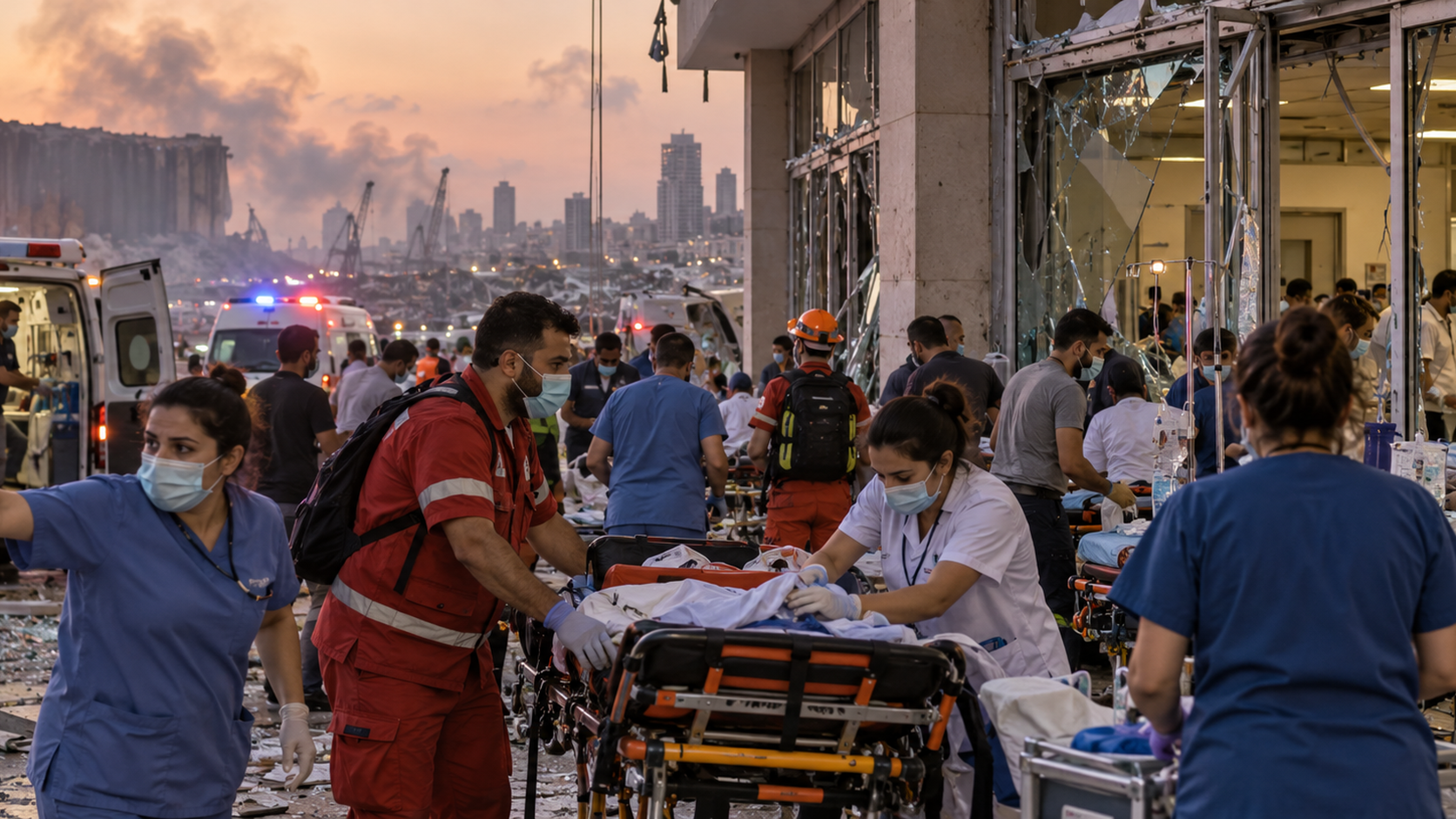
On August 4, 2020, a massive explosion at the port of Beirut tore through neighborhoods of Lebanon’s capital. The blast killed more than 200 people, injured thousands, and displaced an estimated 300,000. It also struck the health system at the moment demand for emergency care surged. Hospitals near the port suffered shattered windows, structural damage, lost equipment, and injured staff. Some became nonfunctional or had to evacuate patients, while facilities farther away received waves of people with lacerations, burns, fractures, head injuries, and other trauma. Emergency workers and residents carried the wounded through streets obstructed by debris.
The disaster landed amid several overlapping crises. Lebanon was facing a severe economic collapse, shortages of medicines and supplies, political unrest, and a growing COVID-19 outbreak. Intensive care capacity was already under pressure, and infection-control work became harder as injured people crowded emergency departments. The explosion damaged primary care sites and medical warehouses as well as hospitals. WHO reported that three hospitals lost their full capacity, three others lost part of theirs, and roughly 500 hospital beds became unavailable. The destruction therefore reduced the system’s ability to respond at the same time that the need for surgery, critical care, blood, medications, and follow-up treatment rose sharply.
Local health professionals, volunteers, humanitarian organizations, and international partners mounted an immediate response. Patients were transferred to facilities across Lebanon. WHO sent trauma and surgical supplies, assessed damaged hospitals, supported continuity of essential services, and worked with partners on mental health and COVID-19 needs. The response extended beyond the first hours. People with severe wounds required repeated operations and rehabilitation; displaced residents needed medications and routine care; and clinicians and communities faced grief, anxiety, and psychological trauma. Restoring maternal, child, chronic disease, and infectious disease services was part of emergency recovery because disasters do not pause ordinary illness.
The Beirut blast became a stark lesson in health-system resilience. Emergency planning depends on safe infrastructure, protected supply chains, reserve capacity, reliable communication, and support for the workforce. It also depends on prevention and accountable management of hazardous materials near dense communities. Recovery assessments called for rebuilding services with transparency, inclusion, and attention to people already made vulnerable by poverty, displacement, disability, or chronic illness. August 4 is remembered first for lives lost and changed. In health history, it also marks the moment an already strained system absorbed mass casualties while parts of that system were themselves damaged, revealing both the courage of responders and the human cost of fragile public infrastructure.
The August 4 explosion at Beirut’s port caused mass casualties, damaged homes and businesses, and displaced an estimated 300,000 people across the city.
Hospitals near the blast lost windows, equipment, staff capacity, and usable beds even as emergency departments received large numbers of wounded patients.
The response unfolded during Lebanon’s economic crisis and the COVID-19 pandemic, increasing pressure on intensive care, medicines, staffing, and infection control.
Local responders and residents moved patients through damaged streets, while hospitals elsewhere in Lebanon accepted transfers and international partners delivered trauma supplies.
Recovery required surgery and rehabilitation as well as primary care, chronic disease treatment, maternal and child services, mental health support, and continued pandemic response.
The disaster showed why resilient health systems need safe facilities, protected supply chains, reserve capacity, trained teams, reliable coordination, and prevention of industrial hazards.
Explore more of "On This Day ..."
Discover more events from the same date across news, politics, technology, sports, and other fields. Each link highlights significant moments that shaped history on different fronts.