

On This Day in Health: September 7, 1953
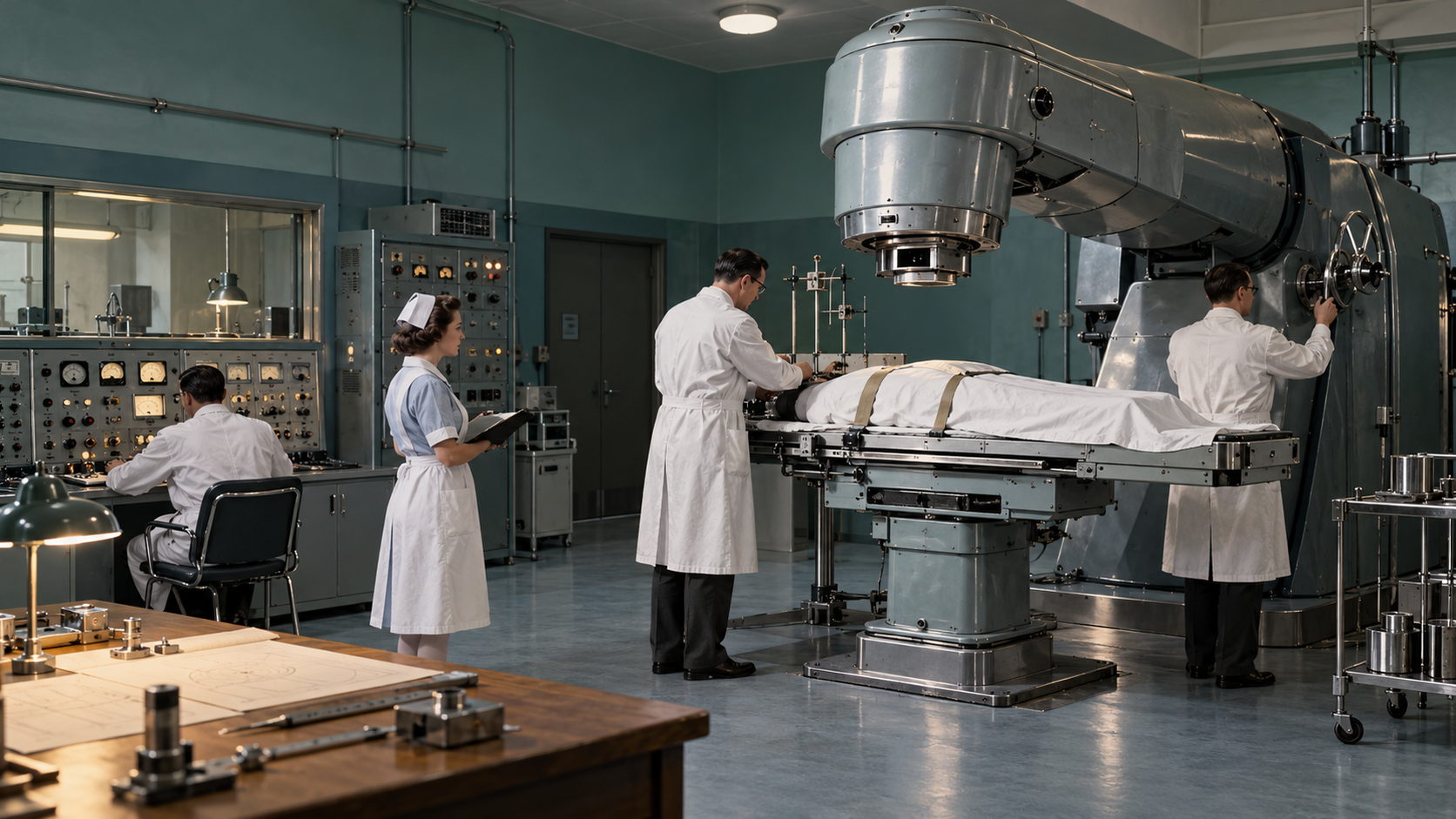
On September 7, 1953, Hammersmith Hospital in London began clinical treatment with a dedicated medical linear accelerator. The large 8-MeV machine, built by Metropolitan-Vickers for the Medical Research Council's radiotherapy unit, marked a new stage in using high-energy radiation against cancer. This date matters because it fixes a broad medical story to a specific moment, place, and group of people. It also shows how health history is shaped by institutions and practical choices as well as laboratory discoveries.
The background was already developing before that day. Earlier radiation therapy relied on lower-energy X-ray machines or radioactive sources. Clinicians wanted beams that could reach deeper tumors while reducing the dose absorbed by skin and nearby tissue. Wartime advances in microwave engineering made it possible to accelerate electrons and generate more penetrating X-rays. Those conditions defined what participants could attempt and what patients or communities could reasonably expect. They also explain why later accounts sometimes compress years of preparation into a single anniversary. Looking at that preparation keeps credit broad and makes the turning point easier to understand without turning it into a miracle story.
What happened on the date was consequential but limited. After installation and months of physics testing, the Hammersmith unit entered patient service in 1953. Its fixed arrangement and limited controls looked primitive beside modern machines, yet it demonstrated that accelerator technology could operate in a hospital and support planned courses of treatment. Sources differ on the earliest treatment date, with some historical accounts citing August and a detailed technical review citing September 7. The milestone also did not make radiotherapy precise by current standards; imaging, computing, dosimetry, shielding, and quality assurance all required decades of development. The distinction is important: the event did not instantly solve the underlying health problem, and later progress depended on follow-up research, training, policy, funding, and public trust. Contemporary evidence also helps separate what participants knew then from interpretations added after the result became famous.
Its longer legacy reaches beyond the original setting. Linear accelerators became the main workhorses of external-beam radiotherapy. Successive generations added rotating gantries, multileaf collimators, computer planning, image guidance, and techniques that shape radiation closely around tumors. The anniversary highlights both technological progress and an ongoing access gap: a sophisticated machine improves cancer care only when trained staff, maintenance, reliable power, planning systems, and safe treatment protocols are available. Seen in context, the anniversary is useful because it connects a concrete historical episode with continuing questions about evidence, access, safety, and responsibility in health care. That connection is stronger when the people affected, the limits of the achievement, and the work still unfinished remain part of the account.
After installation and months of physics testing, the Hammersmith unit entered patient service in 1953. Its fixed arrangement and limited controls looked primitive beside modern machines, yet it demonstrated that accelerator technology could operate in a hospital and support planned courses of treatment.
Sources differ on the earliest treatment date, with some historical accounts citing August and a detailed technical review citing September 7. The milestone also did not make radiotherapy precise by current standards; imaging, computing, dosimetry, shielding, and quality assurance all required decades of development.
Linear accelerators became the main workhorses of external-beam radiotherapy. Successive generations added rotating gantries, multileaf collimators, computer planning, image guidance, and techniques that shape radiation closely around tumors.
Earlier radiation therapy relied on lower-energy X-ray machines or radioactive sources. Clinicians wanted beams that could reach deeper tumors while reducing the dose absorbed by skin and nearby tissue. Wartime advances in microwave engineering made it possible to accelerate electrons and generate more penetrating X-rays.
Hammersmith Hospital in London began clinical treatment with a dedicated medical linear accelerator. The large 8-MeV machine, built by Metropolitan-Vickers for the Medical Research Council's radiotherapy unit, marked a new stage in using high-energy radiation against cancer.
The anniversary highlights both technological progress and an ongoing access gap: a sophisticated machine improves cancer care only when trained staff, maintenance, reliable power, planning systems, and safe treatment protocols are available.
Explore more of "On This Day ..."
Discover more events from the same date across news, politics, technology, sports, and other fields. Each link highlights significant moments that shaped history on different fronts.