

On This Day in Health: September 6, 1860
On September 6, 1860, Jane Addams was born in Cedarville, Illinois. She later co-founded Hull House in Chicago, where settlement workers combined social services, research, and political advocacy to address the conditions affecting immigrant families in a rapidly industrializing city. This date matters because it fixes a broad medical story to a specific moment, place, and group of people. It also shows how health history is shaped by institutions and practical choices as well as laboratory discoveries.
The background was already developing before that day. Chicago's late nineteenth-century neighborhoods faced overcrowded housing, unsafe work, poor sanitation, infectious disease, infant mortality, and limited access to medical care. Addams and Ellen Gates Starr opened Hull House in 1889, adapting the settlement-house model to a diverse working-class district. Those conditions defined what participants could attempt and what patients or communities could reasonably expect. They also explain why later accounts sometimes compress years of preparation into a single anniversary. Looking at that preparation keeps credit broad and makes the turning point easier to understand without turning it into a miracle story.
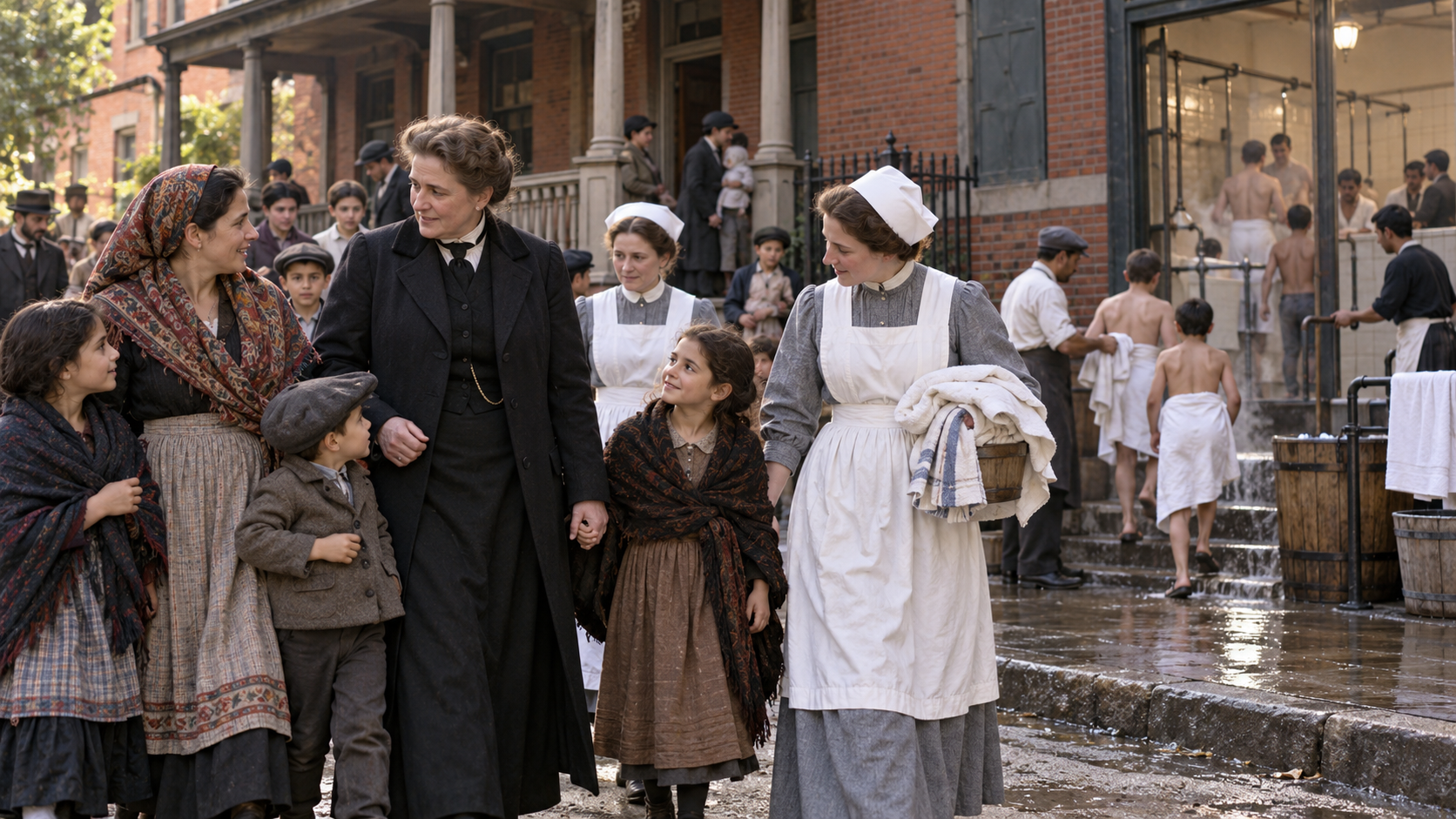
What happened on the date was consequential but limited. Hull House offered a day nursery, classes, meals, baths, and other services while residents documented local conditions. Reformers connected garbage collection, workplace hazards, child labor, housing, and nutrition with health, using surveys and firsthand knowledge to press city officials for change. Settlement work could be paternalistic, and reformers sometimes interpreted immigrant communities through middle-class assumptions. Services also could not substitute for structural change. Addams's strongest work came when observation, community relationships, and policy advocacy reinforced one another. The distinction is important: the event did not instantly solve the underlying health problem, and later progress depended on follow-up research, training, policy, funding, and public trust. Contemporary evidence also helps separate what participants knew then from interpretations added after the result became famous.
Its longer legacy reaches beyond the original setting. The Hull House network helped professionalize social work and contributed to reforms in sanitation, labor, juvenile justice, and maternal and child welfare. Addams also became an international peace advocate and received the Nobel Peace Prize in 1931. Community health programs still follow a similar insight: clinical care works better when housing, food, safety, education, and working conditions are treated as health issues rather than background scenery. Seen in context, the anniversary is useful because it connects a concrete historical episode with continuing questions about evidence, access, safety, and responsibility in health care. That connection is stronger when the people affected, the limits of the achievement, and the work still unfinished remain part of the account.
Hull House offered a day nursery, classes, meals, baths, and other services while residents documented local conditions. Reformers connected garbage collection, workplace hazards, child labor, housing, and nutrition with health, using surveys and firsthand knowledge to press city officials for change.
Settlement work could be paternalistic, and reformers sometimes interpreted immigrant communities through middle-class assumptions. Services also could not substitute for structural change. Addams's strongest work came when observation, community relationships, and policy advocacy reinforced one another.
The Hull House network helped professionalize social work and contributed to reforms in sanitation, labor, juvenile justice, and maternal and child welfare. Addams also became an international peace advocate and received the Nobel Peace Prize in 1931.
Chicago's late nineteenth-century neighborhoods faced overcrowded housing, unsafe work, poor sanitation, infectious disease, infant mortality, and limited access to medical care. Addams and Ellen Gates Starr opened Hull House in 1889, adapting the settlement-house model to a diverse working-class district.
Jane Addams was born in Cedarville, Illinois. She later co-founded Hull House in Chicago, where settlement workers combined social services, research, and political advocacy to address the conditions affecting immigrant families in a rapidly industrializing city.
Community health programs still follow a similar insight: clinical care works better when housing, food, safety, education, and working conditions are treated as health issues rather than background scenery.
Explore more of "On This Day ..."
Discover more events from the same date across news, politics, technology, sports, and other fields. Each link highlights significant moments that shaped history on different fronts.