

On This Day in Health: October 5, 1823
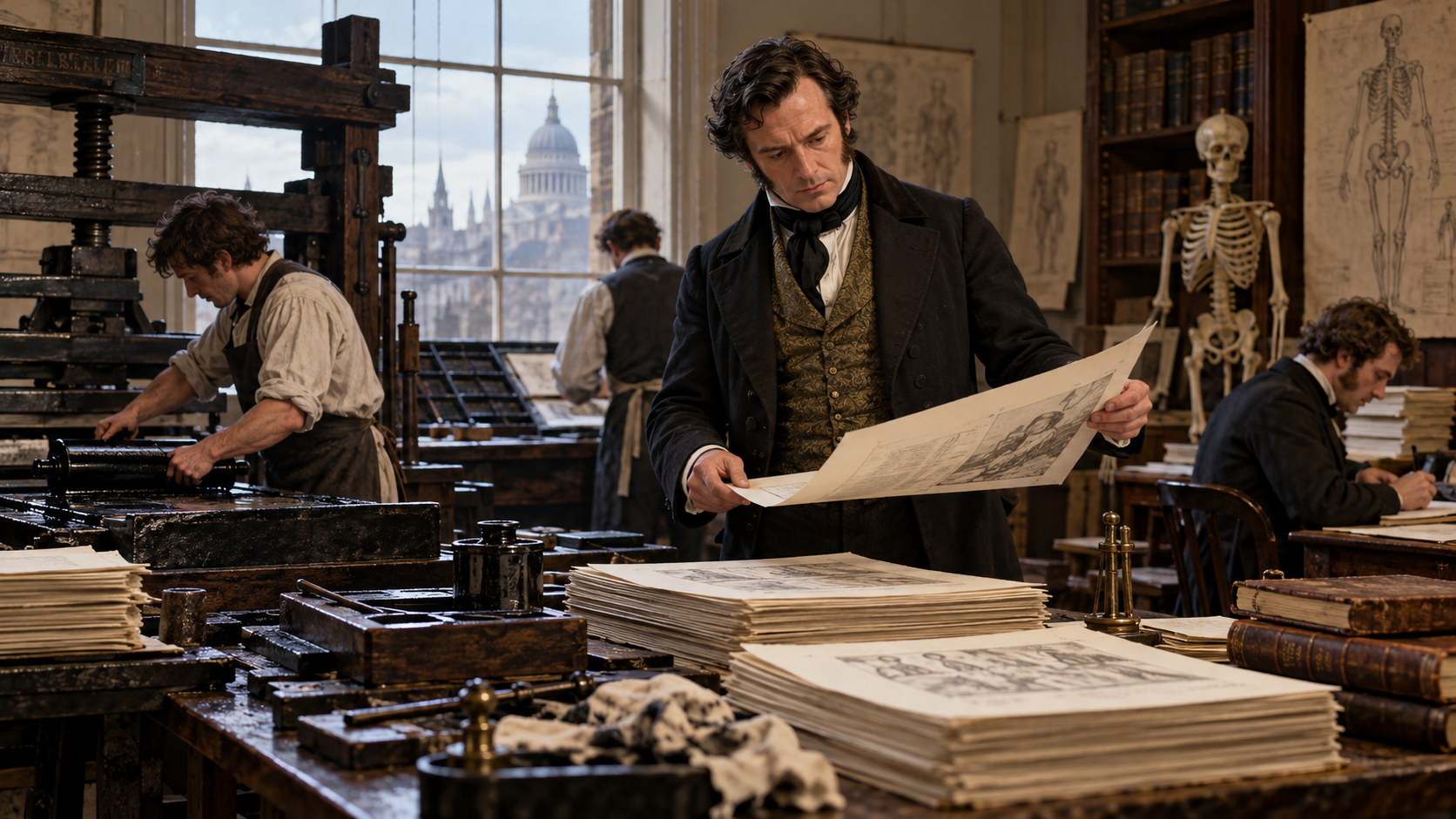
On October 5, 1823, the first issue of The Lancet was published in London under surgeon and reformer Thomas Wakley. Its name evoked both a surgical instrument and a window that could let light into medicine. This date matters because it fixes a broad medical story to a specific moment, place, and group of people. It also shows how health history is shaped by institutions and practical choices as well as laboratory discoveries.
The background was already developing before that day. British medical education and hospital appointments were dominated by powerful institutions and private networks. Wakley believed lectures, operations, and professional conduct should be open to scrutiny rather than guarded as the property of an elite. Those conditions defined what participants could attempt and what patients or communities could reasonably expect. The available tools, social expectations, and professional structures all shaped the result. Change also depended on cooperation among people whose roles were not always recorded equally. They also explain why later accounts sometimes compress years of preparation into a single anniversary. Looking at that preparation keeps credit broad and makes the turning point easier to understand without turning it into a miracle story.
What happened on the date was consequential but limited. The new weekly printed clinical lectures, case reports, commentary, and investigations in an energetic and often combative style. It widened access to medical discussion and treated publishing as a tool for both education and institutional reform. Early reporting could be partisan, sensational, or incomplete, and the journal faced libel actions. Publicity alone did not create reliable evidence; methods for peer review, ethical oversight, statistics, and correction developed unevenly over many decades. The distinction is important: the event did not instantly solve the underlying health problem, and later progress depended on follow-up research, training, policy, funding, and public trust. Contemporary evidence also helps separate what participants knew then from interpretations added after the result became famous.
Its longer legacy reaches beyond the original setting. The publication survived to become one of the world's leading general medical journals and a venue for major research, commissions, correspondence, and debate. The anniversary is a reminder that medical journals influence health through what they publish, whose work they recognize, how they handle error, and whether readers can inspect the evidence behind important claims. Seen in context, the anniversary is useful because it connects a concrete historical episode with continuing questions about evidence, access, safety, and responsibility in health care. That connection is stronger when the people affected, the limits of the achievement, and the work still unfinished remain part of the account.
The new weekly printed clinical lectures, case reports, commentary, and investigations in an energetic and often combative style. It widened access to medical discussion and treated publishing as a tool for both education and institutional reform.
Early reporting could be partisan, sensational, or incomplete, and the journal faced libel actions. Publicity alone did not create reliable evidence; methods for peer review, ethical oversight, statistics, and correction developed unevenly over many decades.
The publication survived to become one of the world's leading general medical journals and a venue for major research, commissions, correspondence, and debate.
British medical education and hospital appointments were dominated by powerful institutions and private networks. Wakley believed lectures, operations, and professional conduct should be open to scrutiny rather than guarded as the property of an elite.
the first issue of The Lancet was published in London under surgeon and reformer Thomas Wakley. Its name evoked both a surgical instrument and a window that could let light into medicine.
The anniversary is a reminder that medical journals influence health through what they publish, whose work they recognize, how they handle error, and whether readers can inspect the evidence behind important claims.
Explore more of "On This Day ..."
Discover more events from the same date across news, politics, technology, sports, and other fields. Each link highlights significant moments that shaped history on different fronts.