

On This Day in Health: October 6, 1836
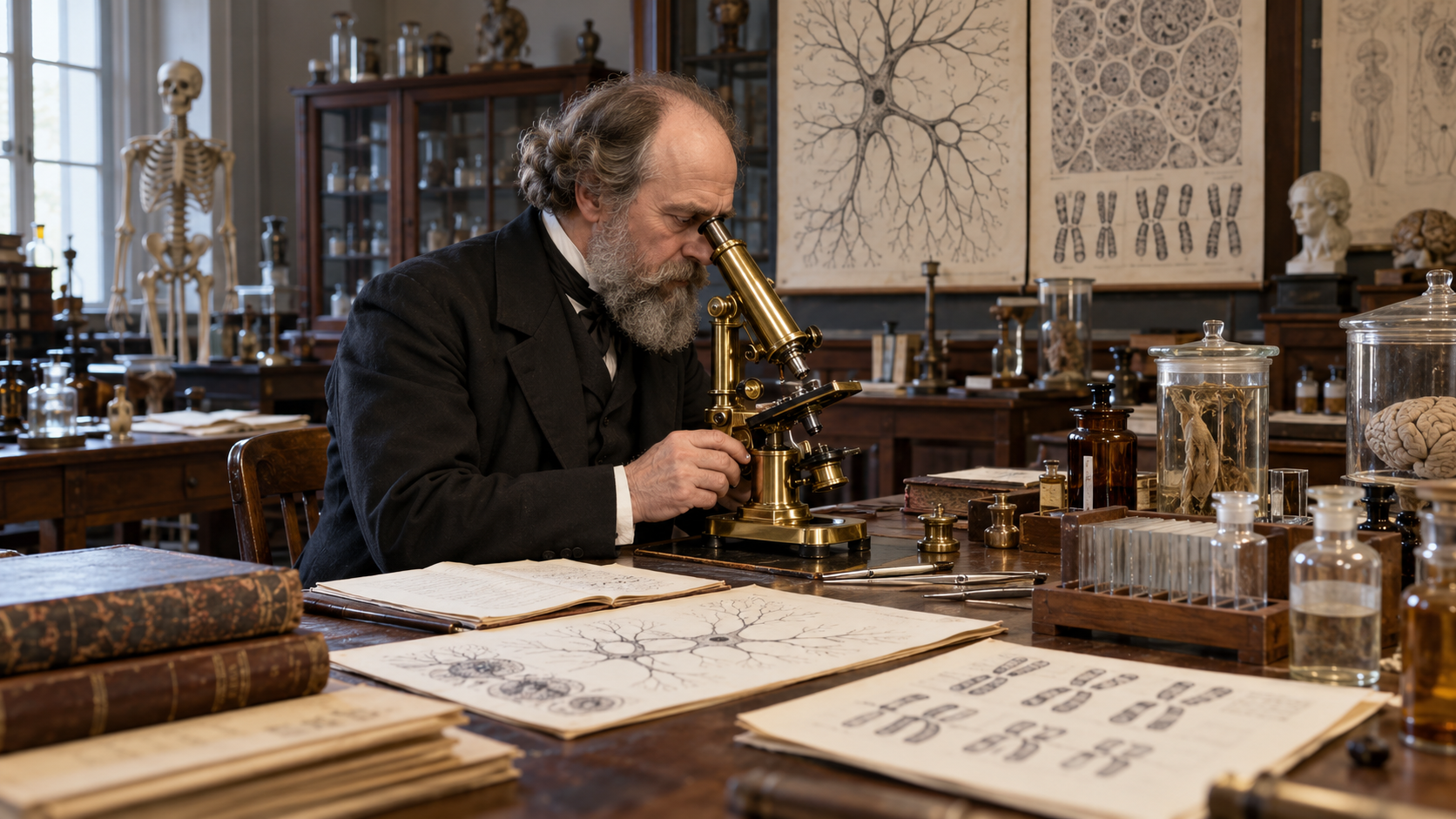
On October 6, 1836, Wilhelm von Waldeyer-Hartz was born near Brunswick in Germany. He became an influential anatomist whose syntheses helped establish the terms neuron and chromosome in scientific language. This date matters because it fixes a broad medical story to a specific moment, place, and group of people. It also shows how health history is shaped by institutions and practical choices as well as laboratory discoveries.
The background was already developing before that day. Microscopy was revealing cells and tissues in unprecedented detail, but investigators disagreed about how the nervous system was organized and how structures seen during cell division related to heredity. Discoveries often appeared in separate languages and specialties. Those conditions defined what participants could attempt and what patients or communities could reasonably expect. The available tools, social expectations, and professional structures all shaped the result. Change also depended on cooperation among people whose roles were not always recorded equally. They also explain why later accounts sometimes compress years of preparation into a single anniversary. Looking at that preparation keeps credit broad and makes the turning point easier to understand without turning it into a miracle story.
What happened on the date was consequential but limited. Waldeyer reviewed evidence from many researchers and in 1888 promoted the term chromosome for the stained bodies of the nucleus. In 1891 he used neuron while presenting the case that the nervous system consists of discrete cellular units. He did not discover every structure associated with his name, and his authority sometimes overshadowed the experimental work of others, including scientists whose observations supplied the basis for his syntheses. Later molecular genetics greatly revised what chromosomes were understood to contain and do. The distinction is important: the event did not instantly solve the underlying health problem, and later progress depended on follow-up research, training, policy, funding, and public trust. Contemporary evidence also helps separate what participants knew then from interpretations added after the result became famous.
Its longer legacy reaches beyond the original setting. The vocabulary helped researchers communicate across anatomy, pathology, neurology, and genetics, while Waldeyer's teaching shaped generations of physicians. Modern neuroscience and genomic medicine still depend on clear terms that connect observations at different scales, while also demanding accurate credit for the people who produced the underlying evidence. Seen in context, the anniversary is useful because it connects a concrete historical episode with continuing questions about evidence, access, safety, and responsibility in health care. That connection is stronger when the people affected, the limits of the achievement, and the work still unfinished remain part of the account.
Waldeyer reviewed evidence from many researchers and in 1888 promoted the term chromosome for the stained bodies of the nucleus. In 1891 he used neuron while presenting the case that the nervous system consists of discrete cellular units.
He did not discover every structure associated with his name, and his authority sometimes overshadowed the experimental work of others, including scientists whose observations supplied the basis for his syntheses. Later molecular genetics greatly revised what chromosomes were understood to contain and do.
The vocabulary helped researchers communicate across anatomy, pathology, neurology, and genetics, while Waldeyer's teaching shaped generations of physicians.
Microscopy was revealing cells and tissues in unprecedented detail, but investigators disagreed about how the nervous system was organized and how structures seen during cell division related to heredity. Discoveries often appeared in separate languages and specialties.
Wilhelm von Waldeyer-Hartz was born near Brunswick in Germany. He became an influential anatomist whose syntheses helped establish the terms neuron and chromosome in scientific language.
Modern neuroscience and genomic medicine still depend on clear terms that connect observations at different scales, while also demanding accurate credit for the people who produced the underlying evidence.
Explore more of "On This Day ..."
Discover more events from the same date across news, politics, technology, sports, and other fields. Each link highlights significant moments that shaped history on different fronts.