

On This Day in Health: October 17, 1886
On October 17, 1886, Ernest William Goodpasture was born in Clarksville, Tennessee. He became a pathologist whose work linked careful tissue observation with practical methods for growing viruses. This date matters because it fixes a broad medical story to a specific moment, place, and group of people. It also shows how health history is shaped by institutions and practical choices as well as laboratory discoveries.
The background was already developing before that day. Viruses could not be cultivated on ordinary bacterial media, which limited experiments and vaccine production. Pathologists were also learning how patterns of organ injury could reveal mechanisms of infection and immune disease. Those conditions defined what participants could attempt and what patients or communities could reasonably expect. The available tools, social expectations, and professional structures all shaped the result. Change also depended on cooperation among people whose roles were not always recorded equally. They also explain why later accounts sometimes compress years of preparation into a single anniversary. Looking at that preparation keeps credit broad and makes the turning point easier to understand without turning it into a miracle story.
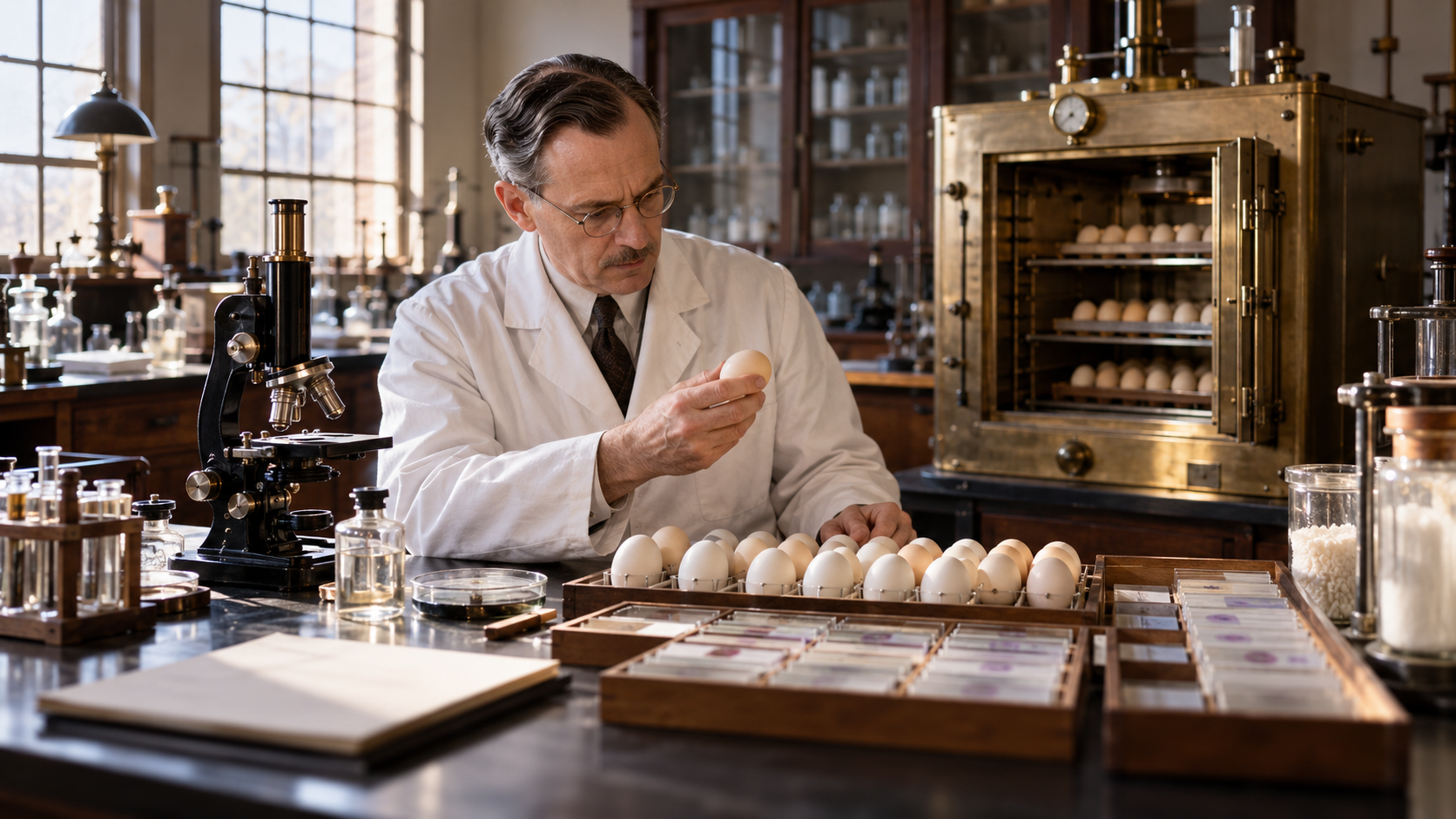
What happened on the date was consequential but limited. At Vanderbilt, Goodpasture and colleagues developed methods for cultivating viruses in fertilized chicken eggs. The system provided a controlled living environment for studying infection and producing material at a scale useful for vaccines. Egg culture did not work equally for every virus and introduced risks of contamination, variable yields, and allergic reactions. The syndrome later bearing Goodpasture's name was clarified by other investigators and is now understood through autoantibodies rather than his original case description alone. The distinction is important: the event did not instantly solve the underlying health problem, and later progress depended on follow-up research, training, policy, funding, and public trust. Contemporary evidence also helps separate what participants knew then from interpretations added after the result became famous.
Its longer legacy reaches beyond the original setting. Embryonated eggs became central to research and to production of vaccines, including many influenza vaccines, while Goodpasture's pathology helped connect microscopic lesions with disease processes. Cell culture, recombinant platforms, and newer manufacturing methods have expanded the toolkit, yet egg-based production remains important and shows how a laboratory model can endure when it is dependable and scalable. Seen in context, the anniversary is useful because it connects a concrete historical episode with continuing questions about evidence, access, safety, and responsibility in health care. That connection is stronger when the people affected, the limits of the achievement, and the work still unfinished remain part of the account.
At Vanderbilt, Goodpasture and colleagues developed methods for cultivating viruses in fertilized chicken eggs. The system provided a controlled living environment for studying infection and producing material at a scale useful for vaccines.
Egg culture did not work equally for every virus and introduced risks of contamination, variable yields, and allergic reactions. The syndrome later bearing Goodpasture's name was clarified by other investigators and is now understood through autoantibodies rather than his original case description alone.
Embryonated eggs became central to research and to production of vaccines, including many influenza vaccines, while Goodpasture's pathology helped connect microscopic lesions with disease processes.
Viruses could not be cultivated on ordinary bacterial media, which limited experiments and vaccine production. Pathologists were also learning how patterns of organ injury could reveal mechanisms of infection and immune disease.
Ernest William Goodpasture was born in Clarksville, Tennessee. He became a pathologist whose work linked careful tissue observation with practical methods for growing viruses.
Cell culture, recombinant platforms, and newer manufacturing methods have expanded the toolkit, yet egg-based production remains important and shows how a laboratory model can endure when it is dependable and scalable.
Explore more of "On This Day ..."
Discover more events from the same date across news, politics, technology, sports, and other fields. Each link highlights significant moments that shaped history on different fronts.