

On This Day in Health: October 16, 1846
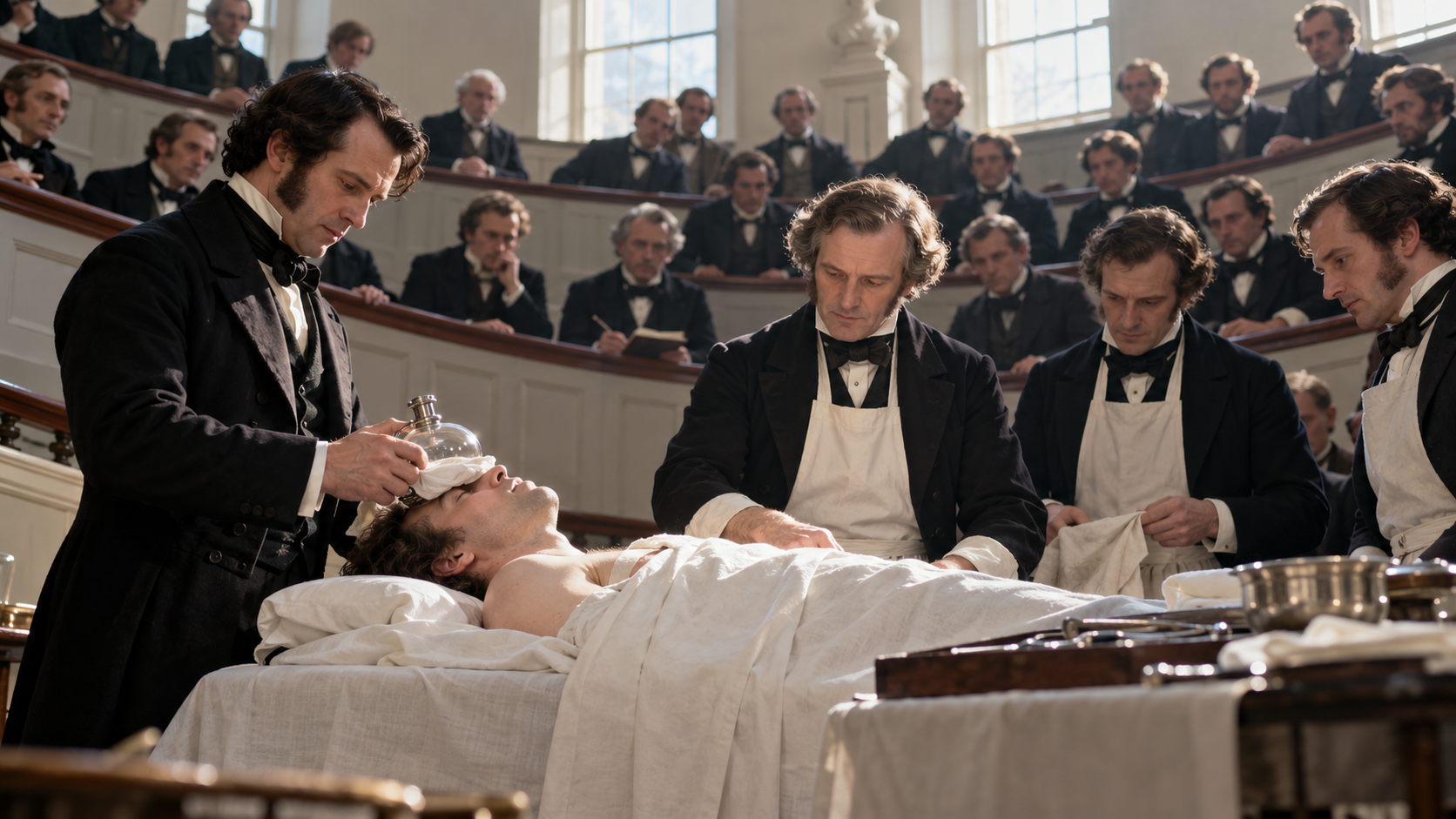
On October 16, 1846, dentist William T. G. Morton publicly demonstrated ether anesthesia during an operation at Massachusetts General Hospital in Boston. Surgeon John Collins Warren removed a neck tumor while the patient was insensible to pain. This date matters because it fixes a broad medical story to a specific moment, place, and group of people. It also shows how health history is shaped by institutions and practical choices as well as laboratory discoveries.
The background was already developing before that day. People had used intoxicants, plant drugs, cold, compression, and restraint against surgical pain, but none provided reliably controlled unconsciousness. Crawford Long had used ether earlier, and Horace Wells had tested nitrous oxide, yet public acceptance remained uncertain. Those conditions defined what participants could attempt and what patients or communities could reasonably expect. The available tools, social expectations, and professional structures all shaped the result. Change also depended on cooperation among people whose roles were not always recorded equally. They also explain why later accounts sometimes compress years of preparation into a single anniversary. Looking at that preparation keeps credit broad and makes the turning point easier to understand without turning it into a miracle story.
What happened on the date was consequential but limited. In the hospital amphitheater later called the Ether Dome, Morton administered ether vapor to Gilbert Abbott. Warren completed the procedure and the demonstration persuaded many observers that major surgery without conscious agony was possible. The event did not establish safe modern anesthesia. Dosing was imprecise, airways were poorly protected, monitoring was minimal, and ether was flammable. Credit disputes also obscured contributions from earlier users, patients, assistants, and other practitioners. The distinction is important: the event did not instantly solve the underlying health problem, and later progress depended on follow-up research, training, policy, funding, and public trust. Contemporary evidence also helps separate what participants knew then from interpretations added after the result became famous.
Its longer legacy reaches beyond the original setting. News traveled rapidly, and surgical anesthesia spread across countries within months, enabling longer and more deliberate operations while creating a new field responsible for physiology and safety during procedures. Modern anesthesia combines drugs, airway management, continuous monitoring, recovery care, and trained teams, but access to safe anesthesia remains uneven and limits surgery in many parts of the world. Seen in context, the anniversary is useful because it connects a concrete historical episode with continuing questions about evidence, access, safety, and responsibility in health care. That connection is stronger when the people affected, the limits of the achievement, and the work still unfinished remain part of the account.
In the hospital amphitheater later called the Ether Dome, Morton administered ether vapor to Gilbert Abbott. Warren completed the procedure and the demonstration persuaded many observers that major surgery without conscious agony was possible.
The event did not establish safe modern anesthesia. Dosing was imprecise, airways were poorly protected, monitoring was minimal, and ether was flammable. Credit disputes also obscured contributions from earlier users, patients, assistants, and other practitioners.
News traveled rapidly, and surgical anesthesia spread across countries within months, enabling longer and more deliberate operations while creating a new field responsible for physiology and safety during procedures.
People had used intoxicants, plant drugs, cold, compression, and restraint against surgical pain, but none provided reliably controlled unconsciousness. Crawford Long had used ether earlier, and Horace Wells had tested nitrous oxide, yet public acceptance remained uncertain.
dentist William T. G. Morton publicly demonstrated ether anesthesia during an operation at Massachusetts General Hospital in Boston. Surgeon John Collins Warren removed a neck tumor while the patient was insensible to pain.
Modern anesthesia combines drugs, airway management, continuous monitoring, recovery care, and trained teams, but access to safe anesthesia remains uneven and limits surgery in many parts of the world.
Explore more of "On This Day ..."
Discover more events from the same date across news, politics, technology, sports, and other fields. Each link highlights significant moments that shaped history on different fronts.