

On This Day in Health: November 19, 1825
On November 19, 1825, Jean-Martin Charcot was born in Paris and later became a central figure in the emergence of neurology as a distinct medical specialty. This date matters because it fixes a broad medical story to a specific moment, place, and group of people. It also shows how health history is shaped carefully by institutions and practical choices as well as laboratory discoveries.
The background was already developing before that day. The Salpetriere housed thousands of poor and chronically ill women, creating a vast clinical population within an institution marked by social inequality. Physicians were beginning to correlate repeated bedside examinations with postmortem anatomy. Those conditions defined what participants could attempt and what patients or communities could reasonably expect. The available tools, social expectations, and professional structures all shaped the result. Change also depended on cooperation among people whose roles were not always recorded equally. They explain why later accounts sometimes compress years of preparation into a single anniversary. Looking at that preparation keeps credit broad and makes the turning point easier to understand without turning it into a miracle story.
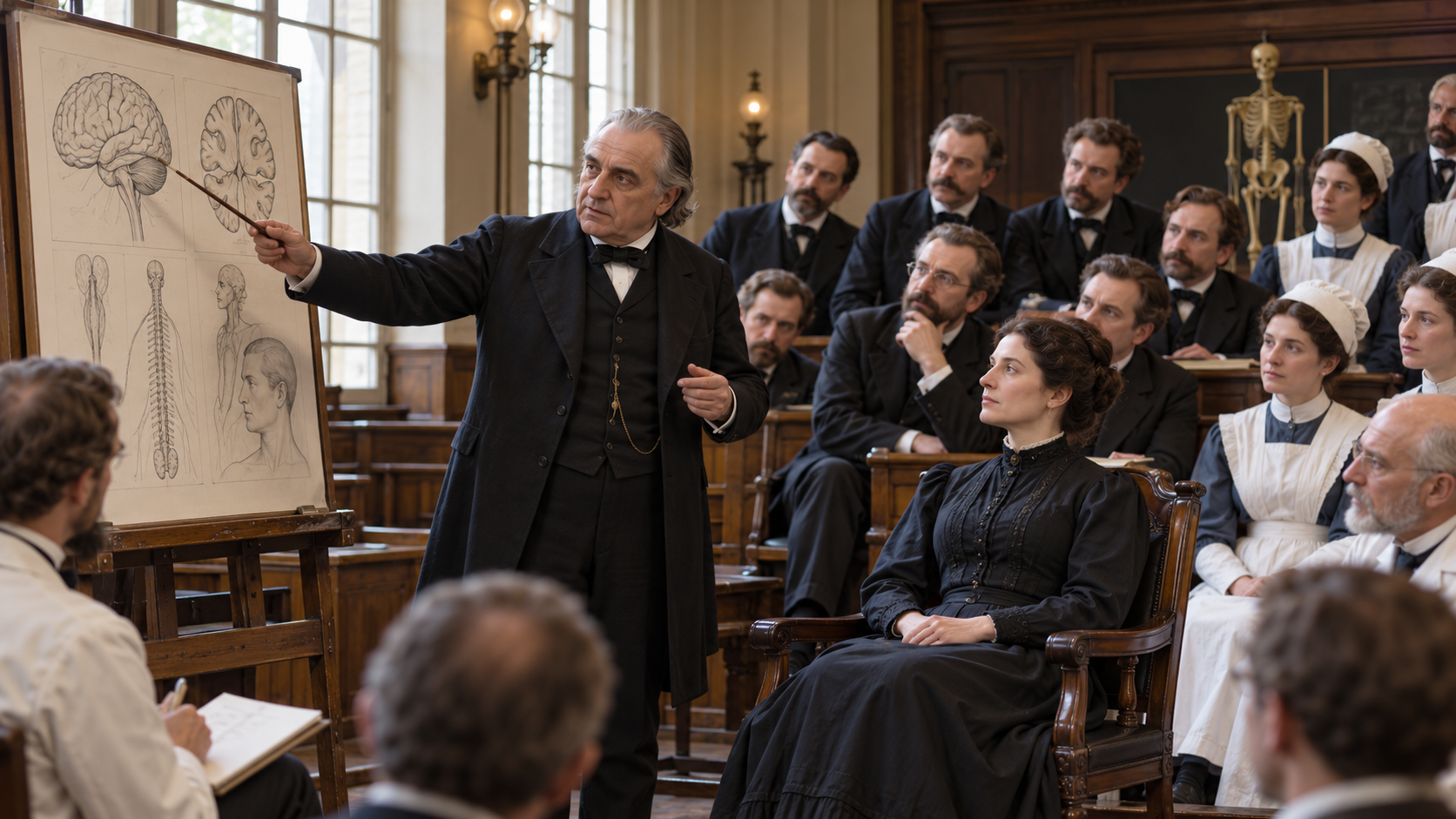
What happened on the date was consequential but limited. Charcot used longitudinal observation, drawings, specimens, and public teaching to distinguish multiple sclerosis, amyotrophic lateral sclerosis, movement disorders, and joint damage associated with loss of sensation. His theatrical demonstrations of hysteria were shaped by suggestion, institutional power, and gendered assumptions, and some conclusions did not endure. Concentrating fame around one professor can also obscure patients and collaborators who supplied the evidence. The distinction is important: the event did not instantly solve the underlying health problem, and later progress depended on follow-up research, training, policy, funding, and public trust. Contemporary evidence also helps separate what participants knew then from interpretations added after the result became famous.
Its longer legacy reaches beyond the original setting. Clinicopathological correlation became a foundation of modern neurology, and his students carried systematic neurological examination and disease classification to many countries. Neurology now uses imaging, electrophysiology, genetics, biomarkers, and patient-reported outcomes, while Charcot's mixed legacy underscores the need to pair close observation with consent, humility, and attention to power. Seen in context, the anniversary is useful because it connects a concrete historical episode with continuing questions about evidence, access, safety, and responsibility in health care. That connection is stronger when the people affected, the limits of the achievement, and the work still unfinished remain part of the account.
Charcot used longitudinal observation, drawings, specimens, and public teaching to distinguish multiple sclerosis, amyotrophic lateral sclerosis, movement disorders, and joint damage associated with loss of sensation.
His theatrical demonstrations of hysteria were shaped by suggestion, institutional power, and gendered assumptions, and some conclusions did not endure. Concentrating fame around one professor can also obscure patients and collaborators who supplied the evidence.
Clinicopathological correlation became a foundation of modern neurology, and his students carried systematic neurological examination and disease classification to many countries.
The Salpetriere housed thousands of poor and chronically ill women, creating a vast clinical population within an institution marked by social inequality. Physicians were beginning to correlate repeated bedside examinations with postmortem anatomy.
Jean-Martin Charcot was born in Paris and later became a central figure in the emergence of neurology as a distinct medical specialty.
Neurology now uses imaging, electrophysiology, genetics, biomarkers, and patient-reported outcomes, while Charcot's mixed legacy underscores the need to pair close observation with consent, humility, and attention to power.
Explore more of "On This Day ..."
Discover more events from the same date across news, politics, technology, sports, and other fields. Each link highlights significant moments that shaped history on different fronts.