

On This Day in Health: November 28, 1942
On November 28, 1942, the Cocoanut Grove nightclub fire in Boston killed hundreds of people and sent a large wave of patients with burns and smoke injury to nearby hospitals. This date matters because it fixes a broad medical story to a specific moment, place, and group of people. It also shows how health history is shaped carefully by institutions and practical choices as well as laboratory discoveries.
The background was already developing before that day. The crowded club had combustible decorations, confusing exits, and doors that impeded escape. Wartime hospitals had recently prepared blood banks, disaster plans, plasma supplies, and coordinated surgical teams, but the scale of the emergency was extraordinary. Those conditions defined what participants could attempt and what patients or communities could reasonably expect. The available tools, social expectations, and professional structures all shaped the result. Change also depended on cooperation among people whose roles were not always recorded equally. They explain why later accounts sometimes compress years of preparation into a single anniversary. Looking at that preparation keeps credit broad and makes the turning point easier to understand without turning it into a miracle story.
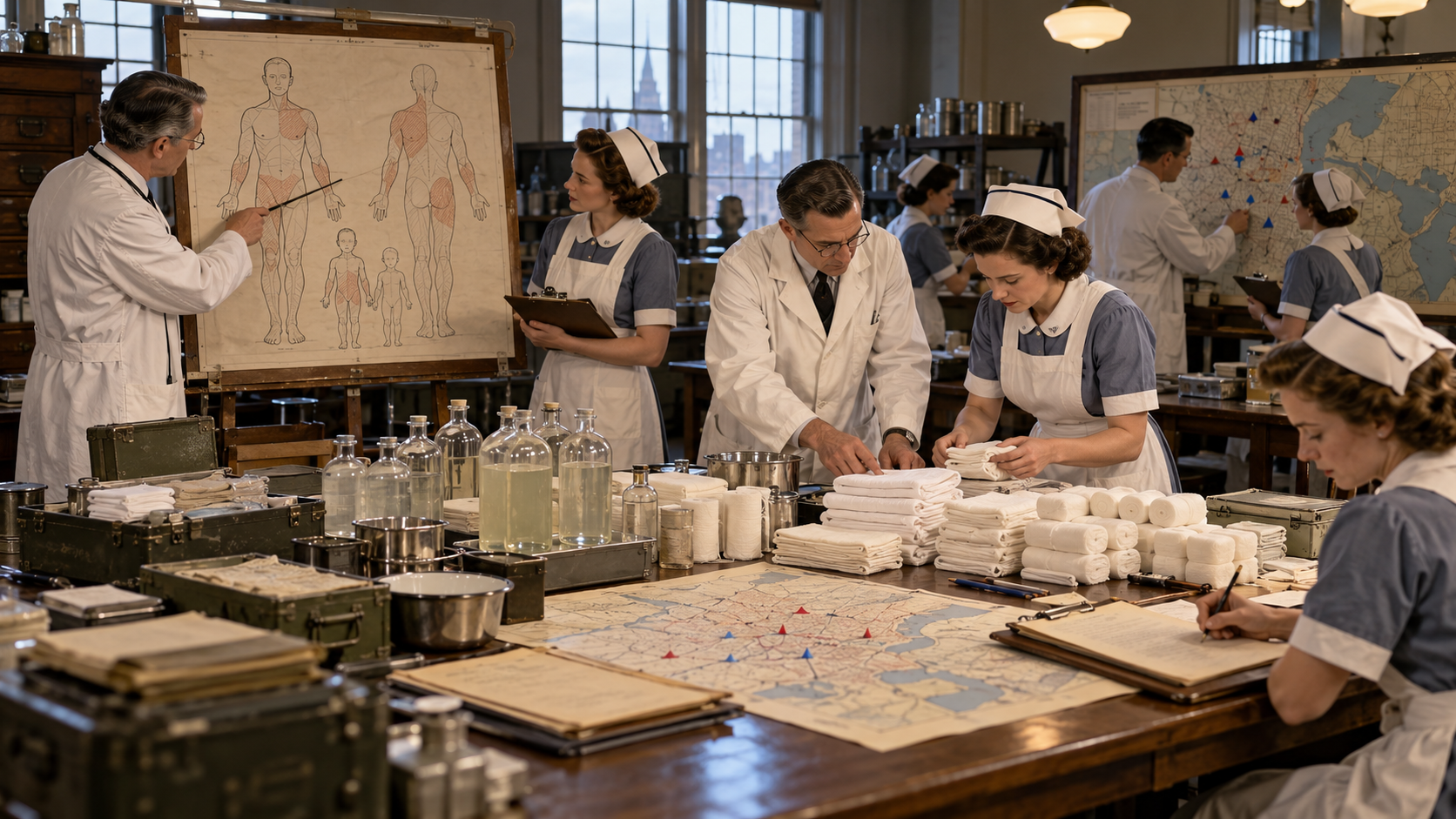
What happened on the date was consequential but limited. Boston City Hospital and Massachusetts General Hospital organized triage, airway care, fluids, dressings, infection management, nutrition, surgery, and detailed follow-up. Clinicians Charles Lund and Newton Browder later developed an age-adjusted chart for estimating burn area. Many people died at the scene or despite treatment, and some practices of the era were later revised. The disaster's medical lessons cannot be separated from preventable building hazards, regulatory failure, survivor trauma, and the lives lost. The distinction is important: the event did not instantly solve the underlying health problem, and later progress depended on follow-up research, training, policy, funding, and public trust. Contemporary evidence also helps separate what participants knew then from interpretations added after the result became famous.
Its longer legacy reaches beyond the original setting. The response influenced burn units, fluid resuscitation, airway management, wound care, disaster planning, rehabilitation, and stricter rules for exits, occupancy, and interior materials. Modern burn care combines specialized teams, early airway assessment, temperature control, precise resuscitation, surgery, infection prevention, pain care, mental-health support, and long rehabilitation, while prevention remains the most effective intervention. Seen in context, the anniversary is useful because it connects a concrete historical episode with continuing questions about evidence, access, safety, and responsibility in health care. That connection is stronger when the people affected, the limits of the achievement, and the work still unfinished remain part of the account.
Boston City Hospital and Massachusetts General Hospital organized triage, airway care, fluids, dressings, infection management, nutrition, surgery, and detailed follow-up. Clinicians Charles Lund and Newton Browder later developed an age-adjusted chart for estimating burn area.
Many people died at the scene or despite treatment, and some practices of the era were later revised. The disaster's medical lessons cannot be separated from preventable building hazards, regulatory failure, survivor trauma, and the lives lost.
The response influenced burn units, fluid resuscitation, airway management, wound care, disaster planning, rehabilitation, and stricter rules for exits, occupancy, and interior materials.
The crowded club had combustible decorations, confusing exits, and doors that impeded escape. Wartime hospitals had recently prepared blood banks, disaster plans, plasma supplies, and coordinated surgical teams, but the scale of the emergency was extraordinary.
the Cocoanut Grove nightclub fire in Boston killed hundreds of people and sent a large wave of patients with burns and smoke injury to nearby hospitals.
Modern burn care combines specialized teams, early airway assessment, temperature control, precise resuscitation, surgery, infection prevention, pain care, mental-health support, and long rehabilitation, while prevention remains the most effective intervention.
Explore more of "On This Day ..."
Discover more events from the same date across news, politics, technology, sports, and other fields. Each link highlights significant moments that shaped history on different fronts.