

On This Day in Lifestyles: January 7, 1785
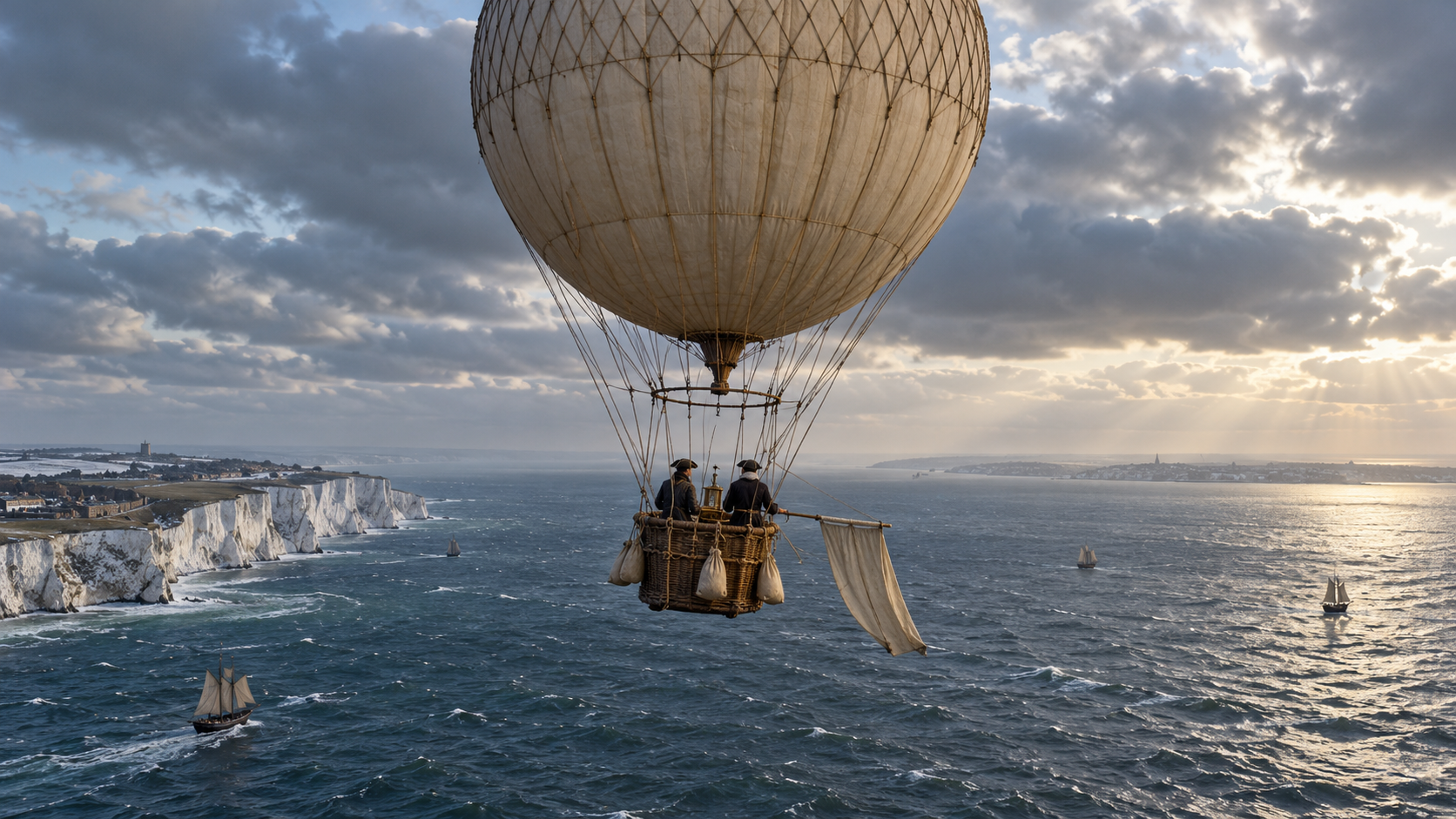
On January 7, 1785, French aeronaut Jean-Pierre Blanchard and American physician John Jeffries crossed the English Channel in a hydrogen balloon. They lifted off near Dover and landed near the French coast after roughly two and a half hours aloft. Balloons had carried people for the first time only in 1783, so the Channel remained a daunting barrier. The flight was both a public spectacle and an experiment in whether the new craft could connect countries rather than simply drift above a single landscape. Newspapers and spectators treated the attempt as a race against geography itself, because the narrow stretch of sea had challenged sailors for centuries and offered no safe place for a fragile balloon to stop.
Jeffries financed much of the voyage and hoped to make scientific observations during the crossing. He carried instruments including a barometer associated with measuring air pressure and altitude. Blanchard brought the experience of an ambitious professional balloonist, along with devices intended to steer or propel the craft, although wind remained the dominant force. The pair’s partnership was uneasy, and arguments over credit and weight began before departure. Once airborne, however, survival required cooperation as the balloon struggled to stay above the water.
As the craft descended dangerously, the men threw out ballast and then much of their equipment. Books, anchors, instruments, supplies, and even clothing went overboard as they tried to reduce weight. Near France, the balloon cleared the coast and came down safely on land around Guînes. The dramatic sacrifices became central to retellings of the voyage, but the result depended on more than theatrical desperation: careful lifting calculations, favorable winds, the balloon’s remaining gas, and quick decisions together made the landing possible.
The crossing was the first aerial passage of the English Channel and one of the earliest international journeys by air. It demonstrated reach without demonstrating reliable navigation; the balloon could cross a border, but its course and landing remained at the mercy of weather. Both men became celebrated, and Blanchard continued making prominent flights, including the first successful balloon voyage in the United States in 1793. The 1785 trip established the Channel as a symbolic test for aviation, a role later inherited by powered aircraft. It also captured a lasting tension in flight: every technological leap expands human mobility while exposing travelers to new forms of uncertainty, dependence, and risk. The barometer preserved by the Smithsonian and period images of the landing keep that mixture of science, improvisation, and performance visible long after balloon travel ceased to seem miraculous.
Jean-Pierre Blanchard and John Jeffries crossed from near Dover to the French coast by hydrogen balloon on January 7, 1785.
The roughly two-and-a-half-hour voyage came less than two years after the first crewed balloon flights and became the first aerial crossing of the Channel.
Jeffries carried scientific instruments, including a barometer, while Blanchard supplied aeronautical experience; wind still determined most of their route.
When the balloon lost altitude, the men discarded ballast, equipment, books, anchors, supplies, and clothing before clearing the French coast.
The landing proved that flight could connect nations even though balloons could not yet offer dependable steering or scheduled travel.
The Channel became a recurring test of aviation progress, and Blanchard later completed the first successful balloon voyage in the United States.
Explore more of “This Day in Lifestyles”
Discover more moments in everyday life, design, education, travel, food, fashion, and culture. Each story connects a calendar date with an event that changed how people lived.