

On This Day in Lifestyles: January 27, 1888
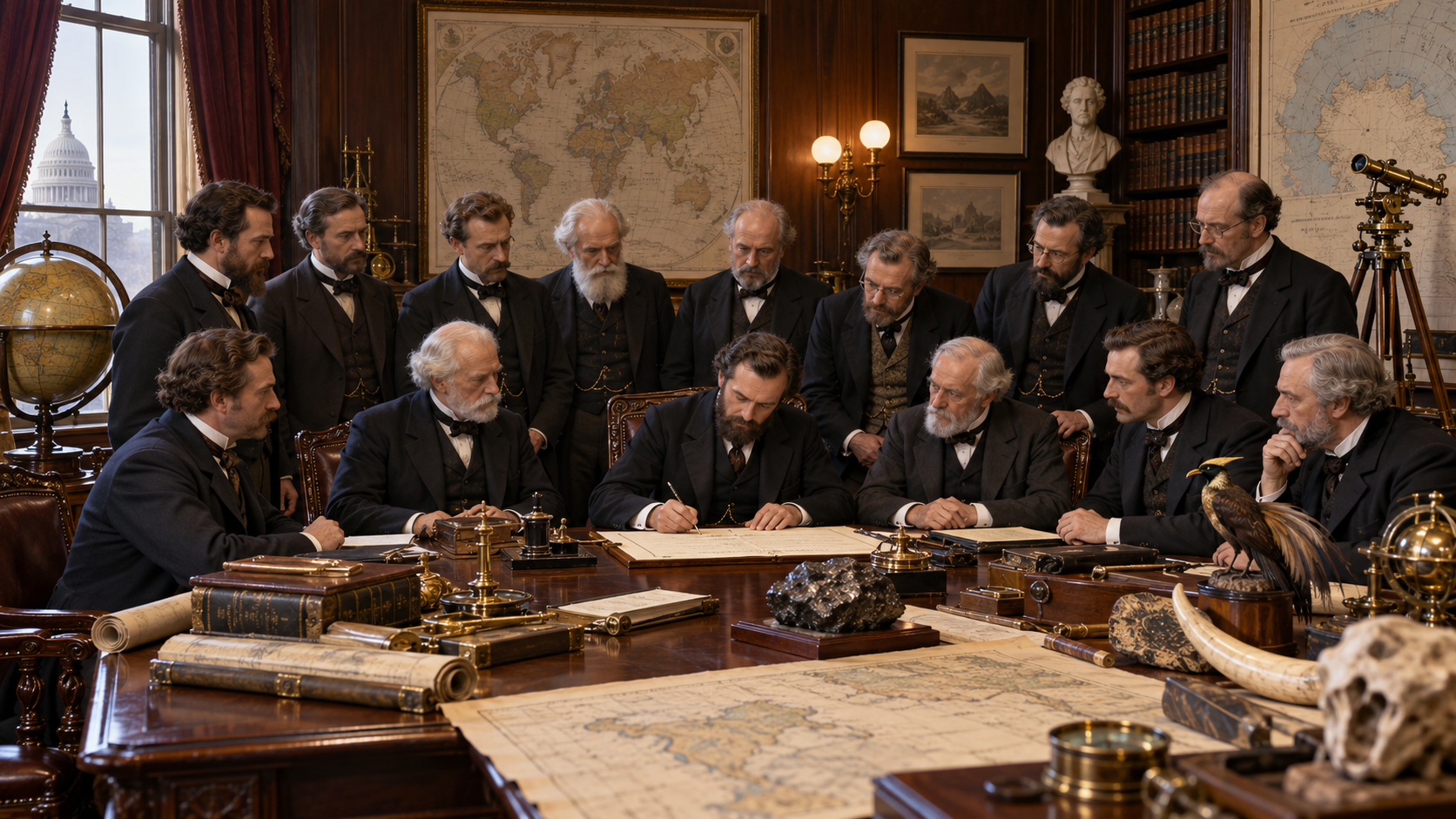
On January 27, 1888, the National Geographic Society was formally incorporated in Washington, D.C., with a mission to increase and spread geographic knowledge. The organization had taken shape two weeks earlier, when thirty-three scholars, explorers, scientists, and public officials met at the Cosmos Club and agreed to create a permanent society. Incorporation gave that idea an institutional life. Gardiner Greene Hubbard became its first president, and the new group set out to connect professional research with a public eager to understand landscapes, peoples, weather, wildlife, and distant places.
The society launched the National Geographic Magazine later that year. Its earliest issues were sober scientific publications filled with reports, maps, and technical language. Over time, improved printing and photography transformed the magazine into a visually distinctive window on the world. Maps could be unfolded across a kitchen table, while photographs carried readers to archaeological sites, oceans, cities, forests, and polar regions. For many households, the familiar yellow-bordered issues became both reference library and invitation to explore.
That influence extended beyond travel. Geographic knowledge shaped how people understood food, clothing, architecture, migration, climate, conservation, and the connections between everyday choices and distant environments. The society supported expeditions and research, and its media helped turn scientific discovery into widely shared stories. Its work also reflected the assumptions of its eras. Some coverage treated communities through colonial or stereotyped perspectives, and later editors publicly examined that record. Understanding this legacy means recognizing both the educational reach of the institution and the need to question who is represented, who speaks, and how cultures are framed.
Today, geographic storytelling appears through documentaries, classrooms, digital maps, social media, and satellite imagery as well as print. People can zoom from a neighborhood street to the surface of another continent in seconds, yet the founding purpose remains relevant: geography helps explain how lives are connected across place. It can make unfamiliar environments understandable and reveal the consequences of environmental change. On this day, a small Washington society gained a legal foundation for a project that would bring maps, exploration, photography, and global curiosity into everyday life. The society’s growth also showed the importance of visual literacy. Readers learned to interpret map scales, captions, symbols, and photographs as evidence about place. Those habits became useful far beyond the magazine, helping people plan journeys, follow world events, study environmental change, and compare their own communities with unfamiliar regions.
Thirty-three people organized the National Geographic Society at a January 13 meeting in Washington, D.C.
The society was formally incorporated on January 27, 1888, giving its educational mission a lasting structure.
The magazine evolved from a technical journal into a widely read publication known for photography and detailed maps.
Its issues helped families and students connect scientific research with places far beyond their immediate experience.
Geographic storytelling can expand curiosity, but it also carries responsibility for accurate and respectful representation.
Modern readers can value exploration while critically examining whose perspectives shaped older coverage.
Explore more of “This Day in Lifestyles”
Discover more moments in everyday life, design, education, travel, food, fashion, and culture. Each story connects a calendar date with an event that changed how people lived.