

On This Day in Lifestyles: February 11, 1963
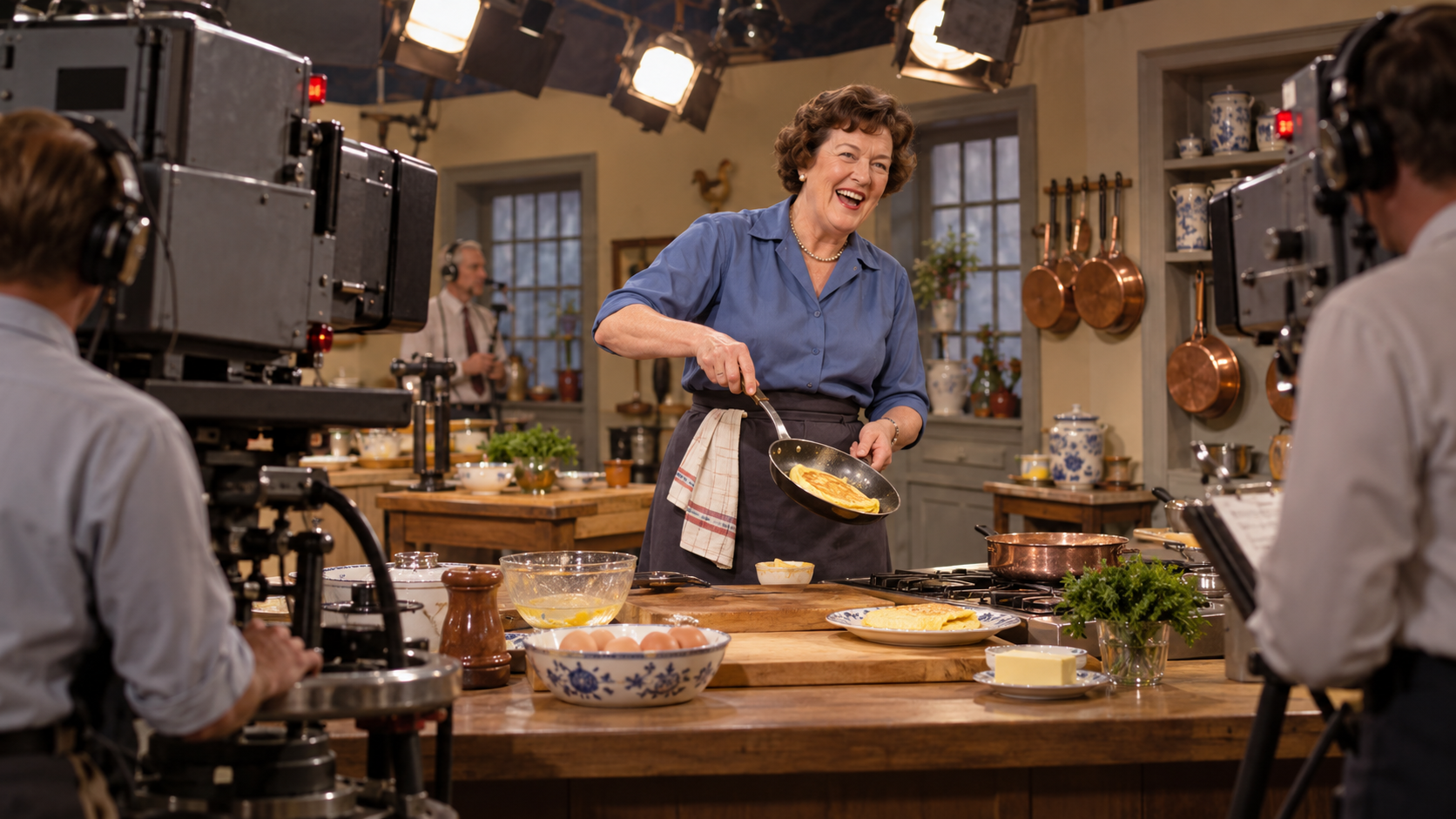
On February 11, 1963, Boston public television put The French Chef on the air, introducing viewers to Julia Child’s spacious television kitchen and unmistakable teaching style. Child explained French technique in plain language, worked through mistakes without panic, and treated ambitious cooking as learnable. The program made a professional culinary tradition feel available to people preparing dinner at home. What happened that day brought a long-developing idea into public view. The headline was important, but so was the experience around it: people could finally enter, read, watch, use, or discuss a change that previously belonged mostly to plans and specialists.
Child had studied at Le Cordon Bleu and collaborated on Mastering the Art of French Cooking, but television gave her a different kind of reach. An earlier book interview at WGBH became memorable when she calmly cooked an omelet on camera. Producers recognized that her height, voice, authority, and improvisational warmth could turn detailed instruction into compelling viewing even on a modest public-station budget. The background reveals how social need, technology, commerce, and imagination had gradually converged. No milestone appears from nowhere; it depends on earlier experiments, patient labor, institutions willing to invest, and audiences prepared to make the new development meaningful.
Episodes emphasized process over perfection. Viewers could watch butter foam, dough change texture, or a sauce recover from trouble in real time. Child used ordinary tools when possible and explained why a method worked. The camera’s close attention made hands, pans, and ingredients into the action, while her humor reassured beginners that a dropped utensil or uneven result was part of learning. Contemporaries experienced both promise and friction. New systems rarely fit existing routines perfectly, so users and organizers learned through practice. Publicity amplified the breakthrough, but personal encounters—curiosity, inconvenience, pride, resistance, or delight—gave it emotional force.
The series helped create the modern television cooking show and broadened American interest in culinary technique, regional food, and serious home cooking. Later hosts adopted different personalities and cuisines, but Child’s combination of expertise and permission remains influential. Her debut also showed public television’s cultural power: a low-cost instructional program could reshape shopping lists, kitchen confidence, and the social meaning of dinner. The anniversary endures because the underlying questions remain current. Who gets to participate, what values a system expresses, and how change reshapes relationships are not settled once. The historical moment offers a clear starting point for understanding choices still visible today. The anniversary also reminds us that everyday life is where large historical forces become personal, repeated, debated, and ultimately durable.
The French Chef began its television run on Boston public television with Julia Child teaching French cooking.
This detail helps place the anniversary in its original setting.
She paired expert technique with humor, clear explanations, and an unflustered willingness to show mistakes.
The wider context explains why the moment drew public attention.
It helped establish television cooking as a major genre and encouraged home cooks to attempt unfamiliar techniques.
Its legacy remains visible in contemporary culture and everyday life.
Explore more of “This Day in Lifestyles”
Discover more moments in everyday life, design, education, travel, food, fashion, and culture. Each story connects a calendar date with an event that changed how people lived.