

On This Day in Lifestyles: February 17, 1972
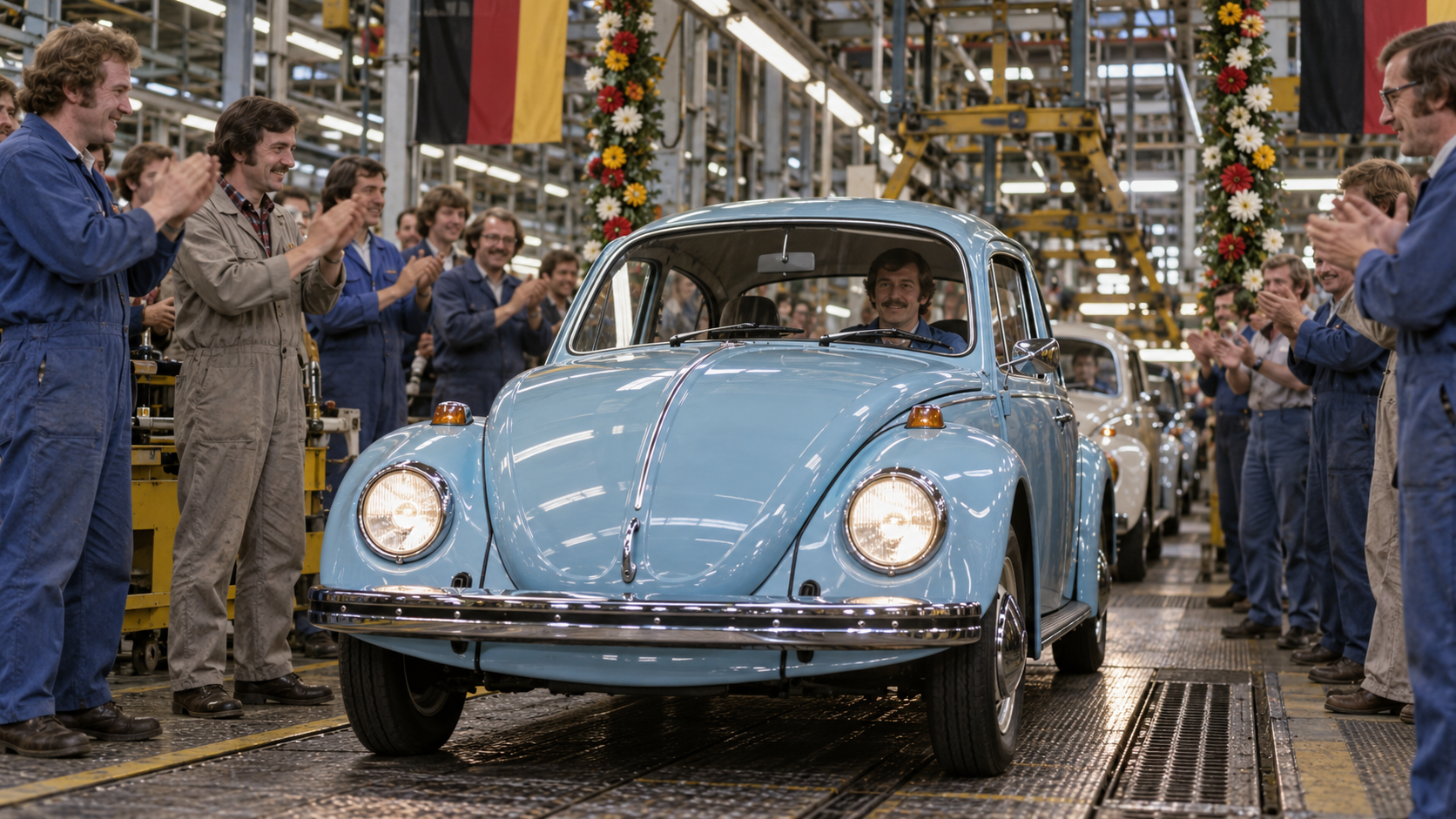
On February 17, 1972, Volkswagen announced that the Beetle had surpassed the Ford Model T’s long-standing production total. The milestone car represented more than a factory count. Its rounded body, rear engine, compact dimensions, and distinctive sound had become familiar on roads across continents, turning a utilitarian automobile into a symbol that carried very different meanings in different places. What happened that day brought a long-developing idea into public view. The headline was important, but so was the experience around it: people could finally enter, read, watch, use, or discuss a change that previously belonged mostly to plans and specialists.
The Beetle’s origins were entangled with Nazi Germany, where the planned “people’s car” served propaganda even though wartime production emphasized military needs. After the war, British oversight and West German manufacturing helped revive the design. Reliable mechanics, efficient packaging, export networks, and memorable advertising allowed the car to reach families, commuters, students, and first-time buyers far beyond its original political context. The background reveals how social need, technology, commerce, and imagination had gradually converged. No milestone appears from nowhere; it depends on earlier experiments, patient labor, institutions willing to invest, and audiences prepared to make the new development meaningful.
By the 1960s and early 1970s, the Beetle could signify economy, individuality, counterculture, or simply dependable transportation. Advertising famously made smallness and visual oddity into virtues. Owners decorated cars, formed clubs, learned basic maintenance, and passed them between generations. The record celebrated industrial scale, but the model’s cultural strength came from this personal adaptability—the same shape could carry countless private stories. Contemporaries experienced both promise and friction. New systems rarely fit existing routines perfectly, so users and organizers learned through practice. Publicity amplified the breakthrough, but personal encounters—curiosity, inconvenience, pride, resistance, or delight—gave it emotional force.
Production continued in different countries for decades, and later redesigns revived the name with modern engineering. The Beetle also illustrates the environmental and urban costs of mass car ownership alongside expanded personal mobility. Its 1972 record sits at the intersection of manufacturing, branding, design, memory, and historical reckoning, showing how an everyday object can outgrow its origin without ever fully escaping it. The anniversary endures because the underlying questions remain current. Who gets to participate, what values a system expresses, and how change reshapes relationships are not settled once. The historical moment offers a clear starting point for understanding choices still visible today. The anniversary also reminds us that everyday life is where large historical forces become personal, repeated, debated, and ultimately durable.
The Beetle’s production total passed the figure associated with Ford’s Model T on February 17, 1972.
This detail helps place the anniversary in its original setting.
Compact design, mechanical simplicity, export production, and distinctive advertising made it practical and recognizable.
The wider context explains why the moment drew public attention.
The design’s Nazi-era origins coexist with its postwar reinvention as affordable transportation and a personal cultural symbol.
Its legacy remains visible in contemporary culture and everyday life.
Explore more of “This Day in Lifestyles”
Discover more moments in everyday life, design, education, travel, food, fashion, and culture. Each story connects a calendar date with an event that changed how people lived.