

On This Day in Lifestyles: February 20, 1872
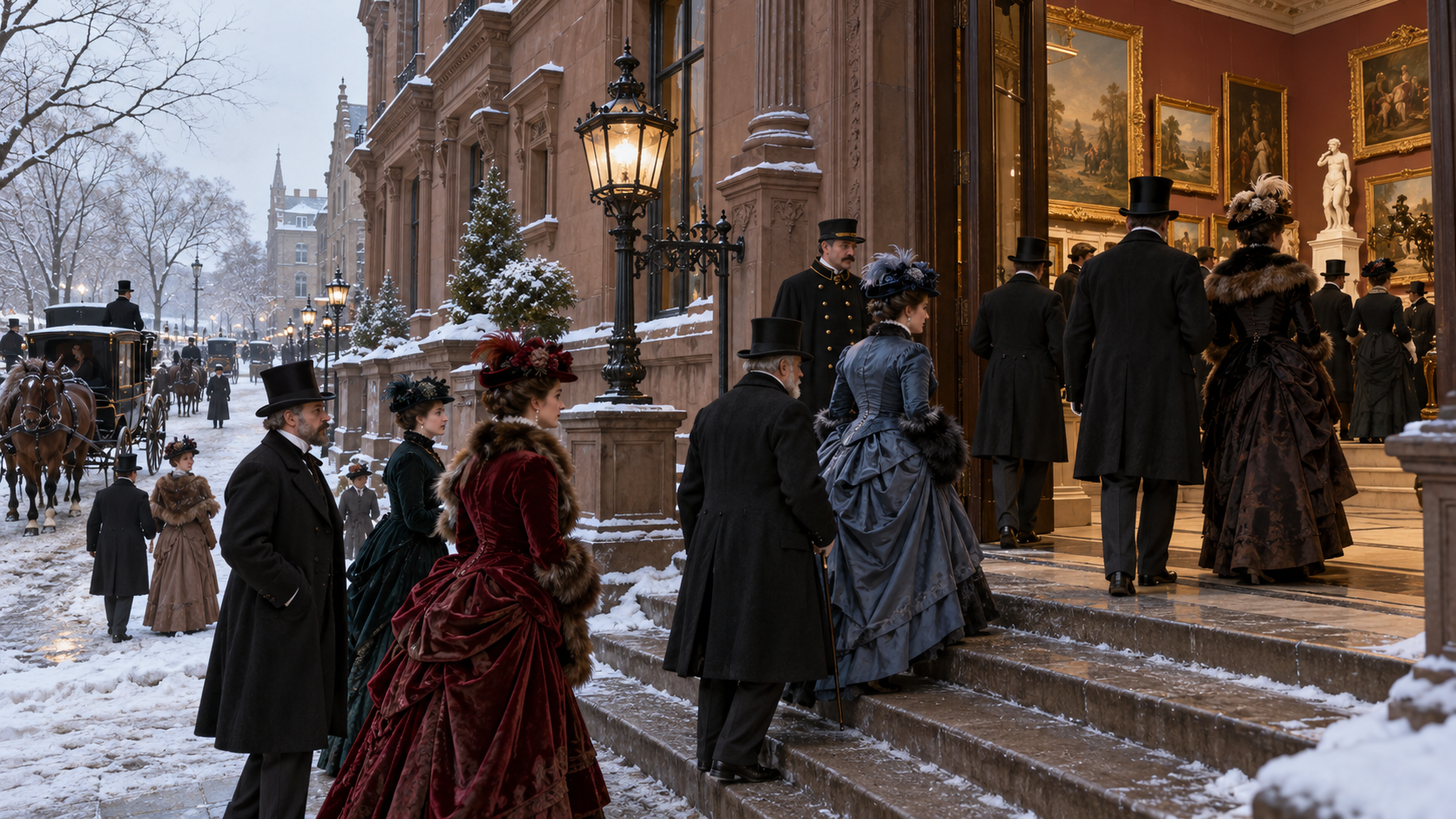
On February 20, 1872, the Metropolitan Museum of Art opened to the public in a rented building at 681 Fifth Avenue. The institution was far smaller than the museum now known simply as the Met, but its mission was already expansive: gather works of art, support study, and make cultural material available to a growing American city. Visitors entered a new kind of shared classroom. What happened that day brought a long-developing idea into public view. The headline was important, but so was the experience around it: people could finally enter, read, watch, use, or discuss a change that previously belonged mostly to plans and specialists.
The museum had been incorporated in 1870 through the efforts of artists, scholars, business leaders, and civic supporters who believed New York needed a major art institution. Early collections mixed paintings, antiquities, decorative arts, and casts. Establishing a museum required donors, purchases, catalogs, curatorship, and an audience willing to see art as a public resource rather than only private possession. The background reveals how social need, technology, commerce, and imagination had gradually converged. No milestone appears from nowhere; it depends on earlier experiments, patient labor, institutions willing to invest, and audiences prepared to make the new development meaningful.
The first opening offered city residents a chance to encounter objects separated by centuries and geography under one roof. Museum-going created its own habits: moving slowly through galleries, comparing styles, reading labels, sketching, discussing taste, and returning with family or students. The collection also reflected the priorities and inequalities of wealthy patrons, collecting markets, archaeology, and imperial networks. Contemporaries experienced both promise and friction. New systems rarely fit existing routines perfectly, so users and organizers learned through practice. Publicity amplified the breakthrough, but personal encounters—curiosity, inconvenience, pride, resistance, or delight—gave it emotional force.
The Met moved to Central Park in 1880 and grew into a vast institution with global collections and millions of visitors. Museums today face sustained questions about provenance, repatriation, representation, admission, and whose knowledge shapes interpretation. The modest 1872 opening remains significant because it began a durable civic promise—that art could belong to public life, while leaving each generation to redefine what responsible access means. The anniversary endures because the underlying questions remain current. Who gets to participate, what values a system expresses, and how change reshapes relationships are not settled once. The historical moment offers a clear starting point for understanding choices still visible today. The anniversary also reminds us that everyday life is where large historical forces become personal, repeated, debated, and ultimately durable.
The Met welcomed visitors in a rented Fifth Avenue building years before moving to Central Park.
This detail helps place the anniversary in its original setting.
Founders wanted to collect, study, and display art as a public cultural and educational resource.
The wider context explains why the moment drew public attention.
Museums continue to debate provenance, repatriation, representation, interpretation, and equitable access.
Its legacy remains visible in contemporary culture and everyday life.
Explore more of “This Day in Lifestyles”
Discover more moments in everyday life, design, education, travel, food, fashion, and culture. Each story connects a calendar date with an event that changed how people lived.