

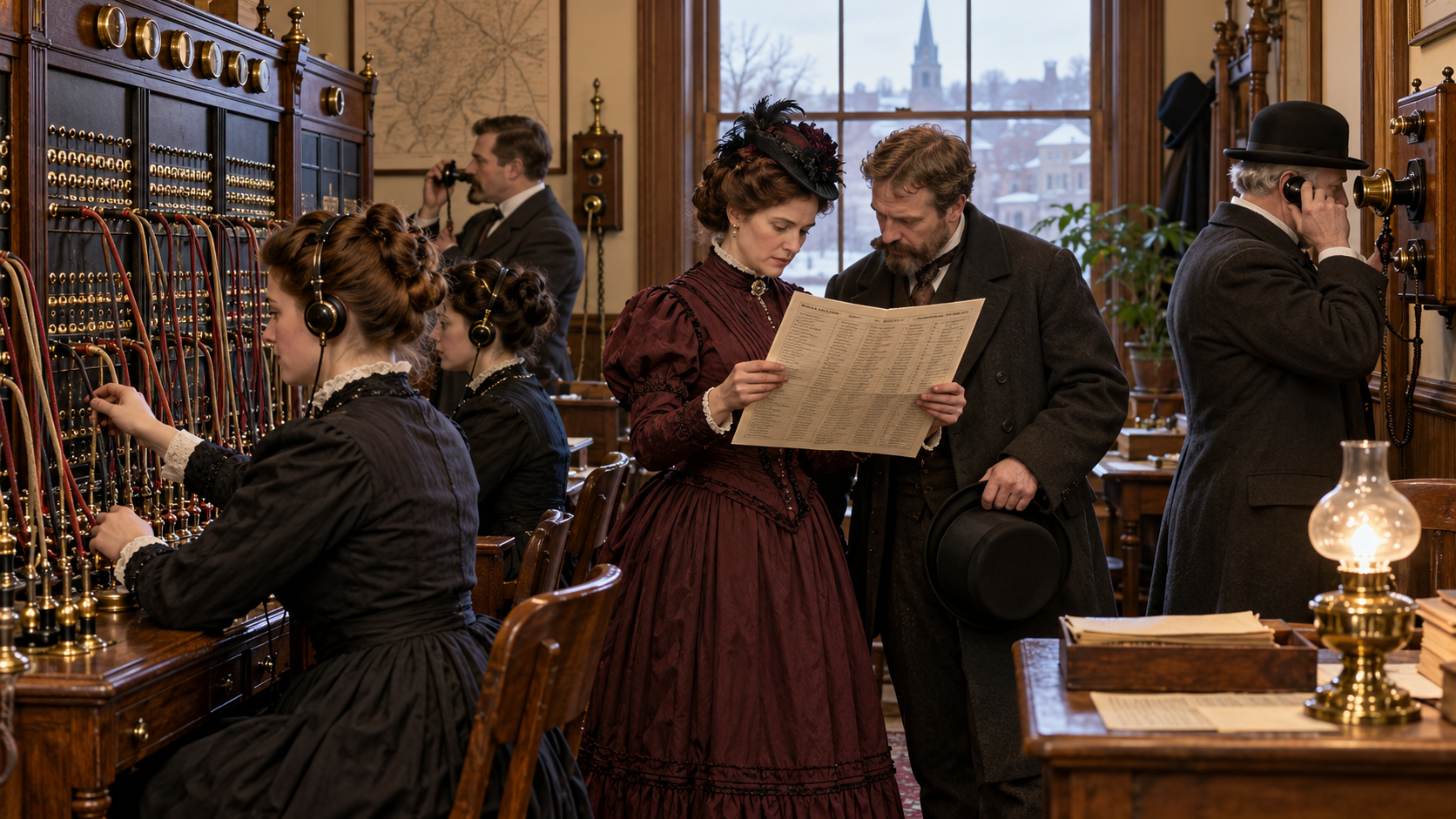
On This Day in Lifestyles: February 21, 1878
On February 21, 1878, a small list of New Haven telephone subscribers was issued, creating what is widely recognized as the first telephone directory. It contained names rather than the numbered entries familiar later, because users asked exchange operators to connect them. The sheet turned a novel device into a network by showing who could actually be reached. The occasion became memorable because a large historical shift took a form people could see and feel. It joined public significance with an ordinary action, turning an abstract change into a shared experience that could be described at dinner tables and remembered later.
The first commercial telephone exchange had opened in New Haven only weeks earlier. Individual telephones mattered less than the shared system linking homes, offices, physicians, police, businesses, and services through operators. As subscribers increased, memory was no longer enough. A printed directory made the network legible, encouraged calls, and advertised the practical value of joining it. Seen against its background, the moment was the product of sustained work rather than sudden inspiration. Earlier advocates, craftspeople, researchers, performers, organizers, or users supplied the knowledge and pressure that allowed the event to happen when it did.
Using the service required new habits. Callers lifted a receiver, spoke with an operator, identified the desired party, and waited while cords and switchboard connections completed the path. The directory supplied a social map of early adoption and revealed which institutions expected to be accessible by voice. It also introduced questions about listing, privacy, accuracy, and unequal access. Its first effects unfolded through details: schedules, rooms, tools, printed pages, broadcasts, conversation, and the movement of bodies through new routines. Those details show how history enters life—not as a slogan, but as hundreds of small adjustments made by real people.
Telephone books later became thick household fixtures, local business guides, advertising platforms, and records of community change before digital contacts and search displaced them. The first sheet appears modest, yet it established a durable principle: communication networks need organized ways to find people. Every contacts list and searchable directory inherits that effort to translate technical connection into usable social knowledge. Later generations inherited both the achievement and its unresolved tensions. The event helped establish a durable practice or institution, yet its meaning continues to evolve as society asks harder questions about inclusion, power, environmental cost, memory, and cultural ownership. The anniversary also reminds us that everyday life is where large historical forces become personal, repeated, debated, and ultimately durable.
It listed New Haven subscribers by name so callers could ask an exchange operator to connect them.
This detail helps place the anniversary in its original setting.
The early exchange relied on operators and a very small subscriber network rather than direct dialing.
The wider context explains why the moment drew public attention.
They grew into household reference books, business guides, advertising media, and detailed records of local communities.
Its legacy remains visible in contemporary culture and everyday life.
Explore more of “This Day in Lifestyles”
Discover more moments in everyday life, design, education, travel, food, fashion, and culture. Each story connects a calendar date with an event that changed how people lived.