

On This Day in Lifestyles: March 5, 1963
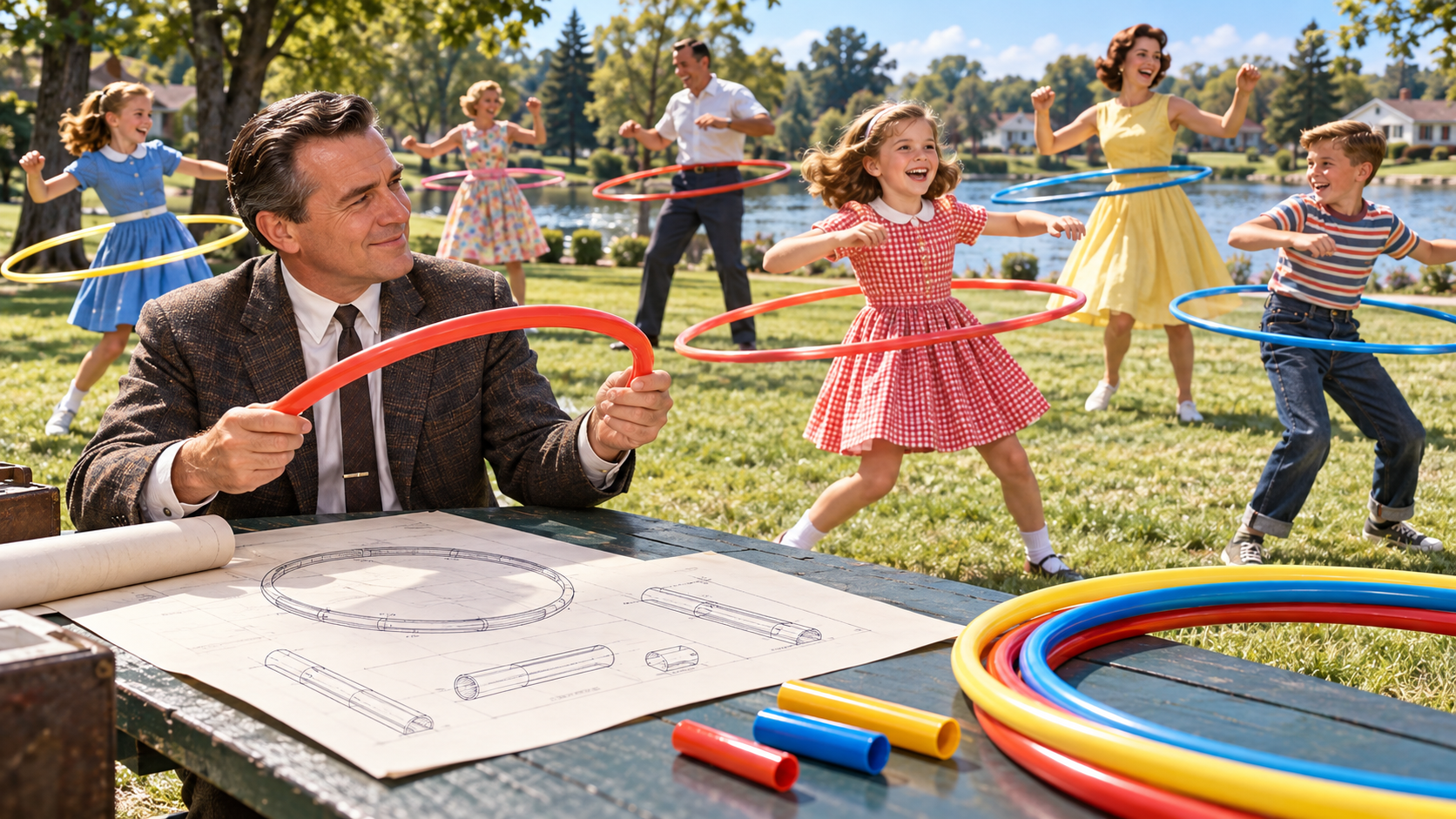
On March 5, 1963, The U.S. Patent Office granted Arthur Melin a patent for a hoop toy associated with the modern Hula Hoop. The patent arrived after the plastic hoop had already become a spectacular late-1950s craze, showing how product design, manufacturing, and intellectual property often move on different timetables. The date matters in lifestyle history because a simple object could become a shared movement craze through modern materials and marketing. Rather than remaining an isolated announcement or demonstration, the moment gave people a new way to think about playing, exercising, competing, performing, and improvising with friends. Its importance became visible through familiar places, objects, and routines, where a broad historical change could be felt at human scale.
Hoop play had existed for centuries, but lightweight plastic, mass production, television advertising, demonstrations, and a memorable product identity created a new commercial phenomenon. Children and adults could understand the challenge instantly: keep the hoop rotating through rhythm and body movement. The setting shaped how contemporaries understood the event. children, parents, teachers, retailers, performers, designers, and factory workers encountered it through toy stores, television commercials, playground demonstrations, contests, word of mouth, and colorful displays. Those details show that social change usually travels through ordinary systems such as workplaces, schools, shops, homes, streets, or public institutions. What seems inevitable in hindsight depended on people testing, organizing, purchasing, teaching, maintaining, or protecting the idea in real time.
The craze turned sidewalks, schoolyards, lawns, and living rooms into playful performance spaces. It encouraged coordination and exercise while also demonstrating how quickly a toy trend could spread through broadcast media, peer imitation, retail displays, and organized contests. In daily life, people learned tricks from one another and transformed an inexpensive hoop into games, exercise, and performance. The episode also exposed questions about short-lived consumer crazes, ownership claims around old forms of play, and the environmental cost of plastic goods. Access and influence were never perfectly even, and later generations adapted the original development to different communities, values, and technologies. Still, the event changed expectations by making accessible movement and imaginative social play easier to imagine, recognize, or demand.
Hula hoops have repeatedly returned in fitness classes, circus arts, dance, festivals, and children’s play. The patent marks one chapter in a much older circular pastime rather than the invention of hooping itself. Today, echoes remain in fitness hooping, dance, circus performance, playground games, and periodic toy revivals. Looking back helps separate the documented milestone from the myths that often accumulate around famous anniversaries. It also reminds us that lifestyle history is built from choices about design, health, work, leisure, communication, memory, and public space. On this day, the 1963 patent captured how design, play, and promotion can spin an ordinary shape into cultural memory.
The U.S. Patent Office granted Arthur Melin a patent for a hoop toy associated with the modern Hula Hoop. The patent arrived after the plastic hoop had already become a spectacular late-1950s craze, showing how product design, manufacturing, and intellectual property often move on different timetables.
Hoop play had existed for centuries, but lightweight plastic, mass production, television advertising, demonstrations, and a memorable product identity created a new commercial phenomenon. Children and adults could understand the challenge instantly: keep the hoop rotating through rhythm and body movement.
The craze turned sidewalks, schoolyards, lawns, and living rooms into playful performance spaces. It encouraged coordination and exercise while also demonstrating how quickly a toy trend could spread through broadcast media, peer imitation, retail displays, and organized contests.
The larger theme was that a simple object could become a shared movement craze through modern materials and marketing.
Hula hoops have repeatedly returned in fitness classes, circus arts, dance, festivals, and children’s play. The patent marks one chapter in a much older circular pastime rather than the invention of hooping itself.
Today the story remains visible in fitness hooping, dance, circus performance, playground games, and periodic toy revivals.
Explore more of “This Day in Lifestyles”
Discover more moments in everyday life, design, education, travel, food, fashion, and culture. Each story connects a calendar date with an event that changed how people lived.