

On This Day in Lifestyles: March 25, 1911
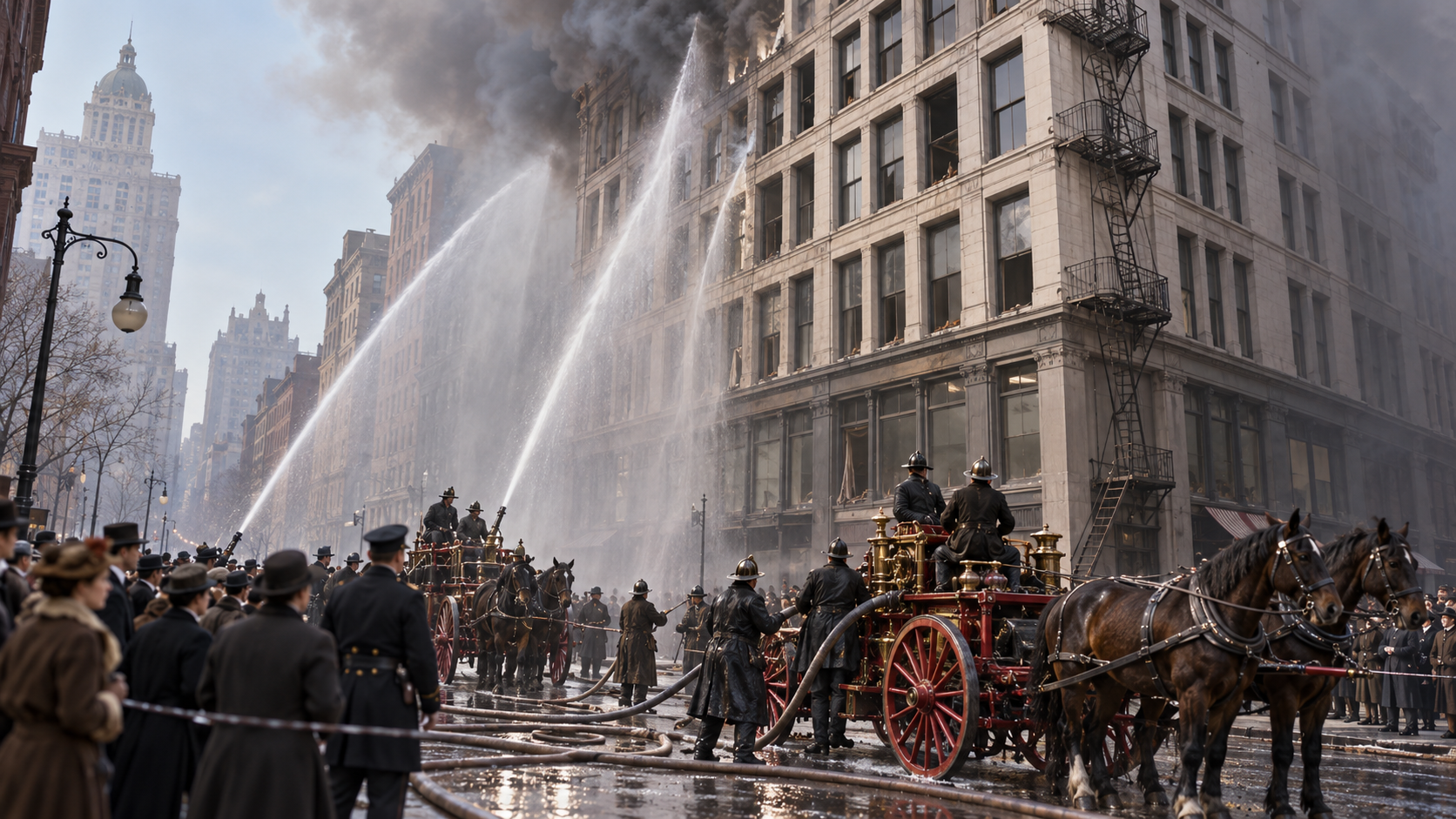
On March 25, 1911, Fire swept through the Triangle Shirtwaist Factory on the upper floors of New York’s Asch Building, killing 146 workers, most of them young immigrant women and girls. Inadequate exits, a failing fire escape, unreachable ladders, and a locked door contributed to the catastrophe. The date matters in lifestyle history because a workplace disaster exposed how design, law, labor, and daily survival are connected. Rather than remaining an isolated announcement or demonstration, the moment gave people a new way to think about entering a workplace, using exits, reporting hazards, organizing with coworkers, and expecting employers to protect life. Its importance became visible through familiar places, objects, and routines, where a broad historical change could be felt at human scale.
The factory occupied a crowded garment industry where long hours, low wages, subcontracting, and weak enforcement were common. Many Triangle employees had participated in the recent uprising of shirtwaist workers, making workplace safety inseparable from labor rights and immigrant experience. The setting shaped how contemporaries understood the event. garment workers, immigrant families, union organizers, firefighters, witnesses, reformers, owners, inspectors, and lawmakers encountered it through factory floors, unions, newspapers, photographs, investigations, public funerals, legislation, and building inspections. Those details show that social change usually travels through ordinary systems such as workplaces, schools, shops, homes, streets, or public institutions. What seems inevitable in hindsight depended on people testing, organizing, purchasing, teaching, maintaining, or protecting the idea in real time.
The public funerals, testimony, photographs, and organizing that followed turned grief into pressure for investigation. New York created stronger factory rules, inspection systems, fire protections, and building requirements, though reform depended on enforcement and persistent political work. In daily life, workers and reformers made safety rules, drills, unlocked exits, sprinklers, and inspections matters of public expectation. The episode also exposed questions about profit, weak enforcement, employer power, worker voice, immigration, gender, and accountability after preventable death. Access and influence were never perfectly even, and later generations adapted the original development to different communities, values, and technologies. Still, the event changed expectations by making stronger workplace and building protections easier to imagine, recognize, or demand.
The Brown Building still stands, and memorials preserve workers’ names and stories. The fire remains a reference point whenever preventable workplace deaths reveal the cost of treating safety as optional or leaving vulnerable workers unheard. Today, echoes remain in fire codes, labor organizing, occupational safety, memorial education, and scrutiny after industrial disasters worldwide. Looking back helps separate the documented milestone from the myths that often accumulate around famous anniversaries. It also reminds us that lifestyle history is built from choices about design, health, work, leisure, communication, memory, and public space. On this day, the fire’s memory insists that ordinary workplaces must be designed and governed around human life.
Fire swept through the Triangle Shirtwaist Factory on the upper floors of New York’s Asch Building, killing 146 workers, most of them young immigrant women and girls. Inadequate exits, a failing fire escape, unreachable ladders, and a locked door contributed to the catastrophe.
The factory occupied a crowded garment industry where long hours, low wages, subcontracting, and weak enforcement were common. Many Triangle employees had participated in the recent uprising of shirtwaist workers, making workplace safety inseparable from labor rights and immigrant experience.
The public funerals, testimony, photographs, and organizing that followed turned grief into pressure for investigation. New York created stronger factory rules, inspection systems, fire protections, and building requirements, though reform depended on enforcement and persistent political work.
The larger theme was that a workplace disaster exposed how design, law, labor, and daily survival are connected.
The Brown Building still stands, and memorials preserve workers’ names and stories. The fire remains a reference point whenever preventable workplace deaths reveal the cost of treating safety as optional or leaving vulnerable workers unheard.
Today the story remains visible in fire codes, labor organizing, occupational safety, memorial education, and scrutiny after industrial disasters worldwide.
Explore more of “This Day in Lifestyles”
Discover more moments in everyday life, design, education, travel, food, fashion, and culture. Each story connects a calendar date with an event that changed how people lived.