

On This Day in Lifestyles: August 18, 1920
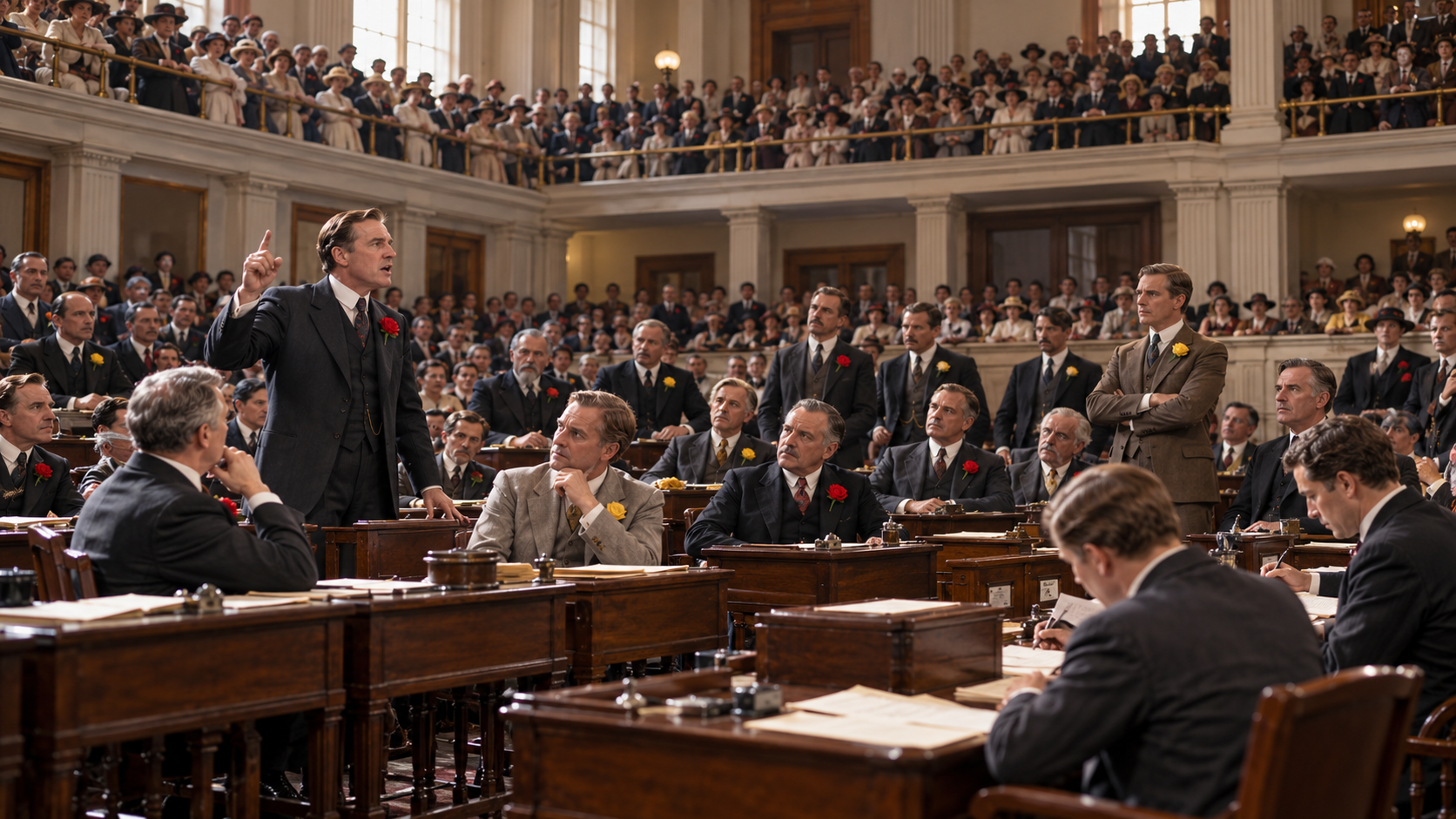
On August 18, 1920, Tennessee became the thirty-sixth state to ratify the Nineteenth Amendment, supplying the final state approval needed to add it to the U.S. Constitution. The date matters in lifestyle history because a constitutional victory changed citizenship at the polling place while exposing how rights on paper can remain unequal in practice. It was not merely a headline for institutions or specialists; it touched the settings, objects, expectations, and shared rituals through which people organized ordinary days. Inside the crowded Tennessee House chamber, legislators wearing red and yellow roses debated beneath gallery spectators while clerks prepared to record the decisive roll call. Seen at human scale, the episode shows how a public milestone becomes meaningful through repeated personal choices, conversations, and memories.
The statehouse vote followed intense lobbying by suffragists and opponents identified by yellow roses and red roses. Representative Harry Burn changed his expected vote after receiving a letter from his mother urging him to support ratification. Federal certification followed on August 26, guaranteeing that voting rights could not be denied on account of sex. The setting is essential to understanding why the event attracted attention. New ideas rarely arrive in isolation: they meet existing technology, commerce, custom, law, and desire. Contemporary newspapers, public spaces, shops, schools, workplaces, or homes carried the story outward, giving people practical ways to interpret it. Some welcomed the change, others doubted it, and many first encountered it indirectly. That mixture of novelty and familiarity helped the moment travel from a single date into a broader change in behavior.
The amendment crowned generations of organizing, speaking, publishing, petitioning, civil disobedience, and political negotiation. Yet it did not erase poll taxes, literacy tests, violence, citizenship restrictions, or state barriers that continued to exclude many Black, Native, Asian American, and Latina women. In daily life, the consequences appeared through altered routines, new expectations, and different ways of spending time or money. Women entered elections in greater numbers and expanded their work within parties, civic groups, public office, and movements for equal rights. The anniversary now highlights both the constitutional achievement and the unfinished struggle for equal access to the ballot. The benefits were never the whole story; major changes also exposed questions about access, responsibility, fairness, cost, and who had power to define progress. Those tensions deserve a place beside the celebration because they show how culture actually develops. The event mattered not because everyone experienced it in the same way, but because it opened a durable argument about how people wanted to live.
Today, the legacy remains visible: voting remains both a routine civic act and a contested system shaped by registration, districting, identification rules, language access, disability access, election administration, and public confidence. Familiarity can make that inheritance easy to overlook, yet the practices surrounding it were built through years of experimentation, adaptation, criticism, and use. Looking back does more than celebrate an anniversary. It reveals the chain between public decisions and private habits, between ambitious ideas and the small acts that make them ordinary. On this day, one historical moment became part of the texture of modern life. Remembering the full setting lets the milestone feel less like a frozen fact and more like a living part of experience.
On August 18, 1920, Tennessee became the thirty-sixth state to ratify the Nineteenth Amendment, supplying the final state approval needed to add it to the U.S. Constitution.
The statehouse vote followed intense lobbying by suffragists and opponents identified by yellow roses and red roses. Representative Harry Burn changed his expected vote after receiving a letter from his mother urging him to support ratification. Federal certification followed on August 26, guaranteeing that voting rights could not be denied on account of sex.
The amendment crowned generations of organizing, speaking, publishing, petitioning, civil disobedience, and political negotiation. Yet it did not erase poll taxes, literacy tests, violence, citizenship restrictions, or state barriers that continued to exclude many Black, Native, Asian American, and Latina women.
The event matters in lifestyle history because a constitutional victory changed citizenship at the polling place while exposing how rights on paper can remain unequal in practice.
Women entered elections in greater numbers and expanded their work within parties, civic groups, public office, and movements for equal rights. The anniversary now highlights both the constitutional achievement and the unfinished struggle for equal access to the ballot.
The legacy remains visible today: voting remains both a routine civic act and a contested system shaped by registration, districting, identification rules, language access, disability access, election administration, and public confidence.
Explore more of “This Day in Lifestyles”
Discover more moments in everyday life, design, education, travel, food, fashion, and culture. Each story connects a calendar date with an event that changed how people lived.