

On This Day in News: January 3, 1961
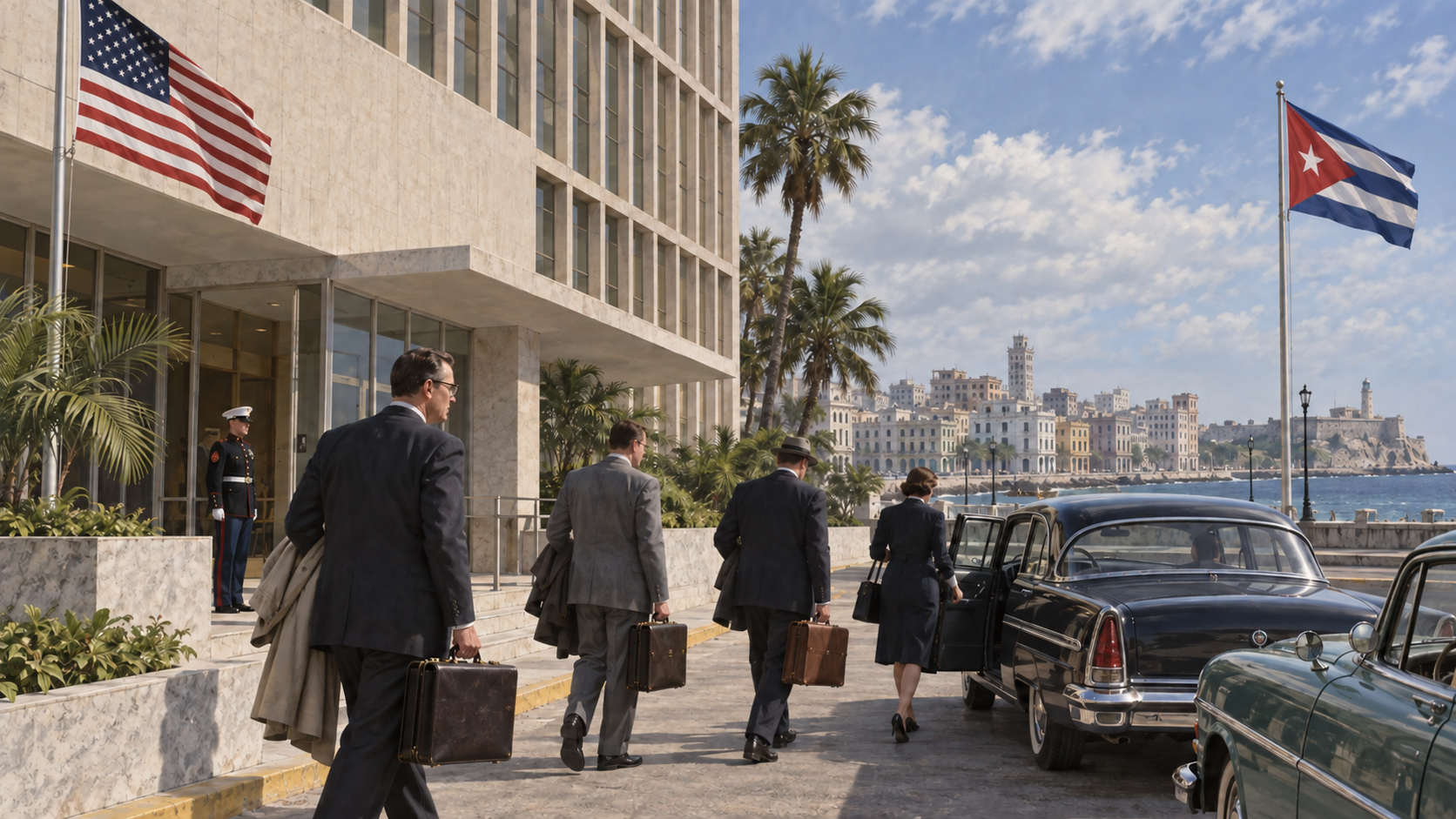
On January 3, 1961, officials in Washington and Havana carried out a decisive break in relations between the United States and Cuba. President Dwight D. Eisenhower directed Secretary of State Christian Herter to terminate diplomatic and consular ties after the Cuban government ordered the American Embassy in Havana to reduce its staff to eleven people within forty-eight hours. U.S. officials argued that the restriction made normal embassy work impossible. That evening, the State Department delivered a formal note to Cuba’s chargé d’affaires announcing that the United States would withdraw its remaining personnel and asking Cuba to remove its diplomatic and consular employees from the United States.
The rupture followed two years of rapidly worsening relations after Fulgencio Batista fled Cuba and Fidel Castro’s revolutionary movement took power in January 1959. Washington initially recognized the new government, but disputes soon grew over political repression, Cuba’s seizure of American-owned property, and the island’s increasingly close relationship with the Soviet Union. The Eisenhower administration imposed broad export controls in October 1960, while Cuba accused the United States of supporting efforts to overthrow the new government. By late 1960, both embassies were already operating without ambassadors, and the diplomatic channel had become increasingly fragile.
The immediate trigger was Cuba’s January 2 demand that the U.S. mission reduce its presence sharply. Eisenhower convened senior national-security officials the next morning and approved the break. The American note was delivered at 8:30 p.m. on January 3. Switzerland was asked to protect U.S. diplomatic and consular interests in Cuba, an arrangement that remained important during the long absence of normal relations. American personnel then closed normal embassy and consular operations while arranging the departure of staff and safeguarding official property. The decision did not alter the legal status of the U.S. naval base at Guantanamo Bay, which the administration treated as a separate treaty matter.
Ending relations did not create the conflict between the two governments, but it removed one of the few formal channels available to manage it. The Bay of Pigs invasion followed in April 1961, and the Cuban Missile Crisis brought the two countries close to nuclear war in October 1962. Limited interests sections opened in Havana and Washington in 1977, allowing some official contact without full diplomatic recognition. The United States and Cuba restored diplomatic relations in July 2015 and reopened embassies, more than fifty-four years after the January 3 break. The event remains a reminder that an embassy closure can both reflect a crisis and make later crises harder to contain.
The United States recognized Cuba’s revolutionary government in January 1959, but the relationship deteriorated as the new leadership consolidated power, nationalized property, and moved closer to the Soviet Union.
By the end of 1960, the United States had recalled its ambassador and restricted most exports to Cuba. Cuba, meanwhile, charged Washington with hostility and interference, leaving the remaining diplomatic staffs under intense pressure.
The January 3 note closed the embassies and consulates as normal diplomatic channels. Switzerland later represented U.S. interests in Cuba, preserving a limited mechanism for official communication and consular matters.
The break did not end every legal or practical connection. The U.S. naval base at Guantanamo Bay remained in operation, and both governments continued to affect each other through migration, trade controls, intelligence activity, and third-party intermediaries.
The absence of normal relations framed decades of confrontation that included the Bay of Pigs, the Cuban Missile Crisis, a comprehensive U.S. embargo, migration disputes, and repeated covert and diplomatic clashes.
Interests sections opened in 1977, but full diplomatic relations were not restored until 2015. The long interval demonstrated how difficult it can be to rebuild routine communication once formal ties have been severed.
Explore more of "On This Day ..."
Discover more events from the same date across news, politics, technology, sports, and other fields. Each link highlights significant moments that shaped history on different fronts.