

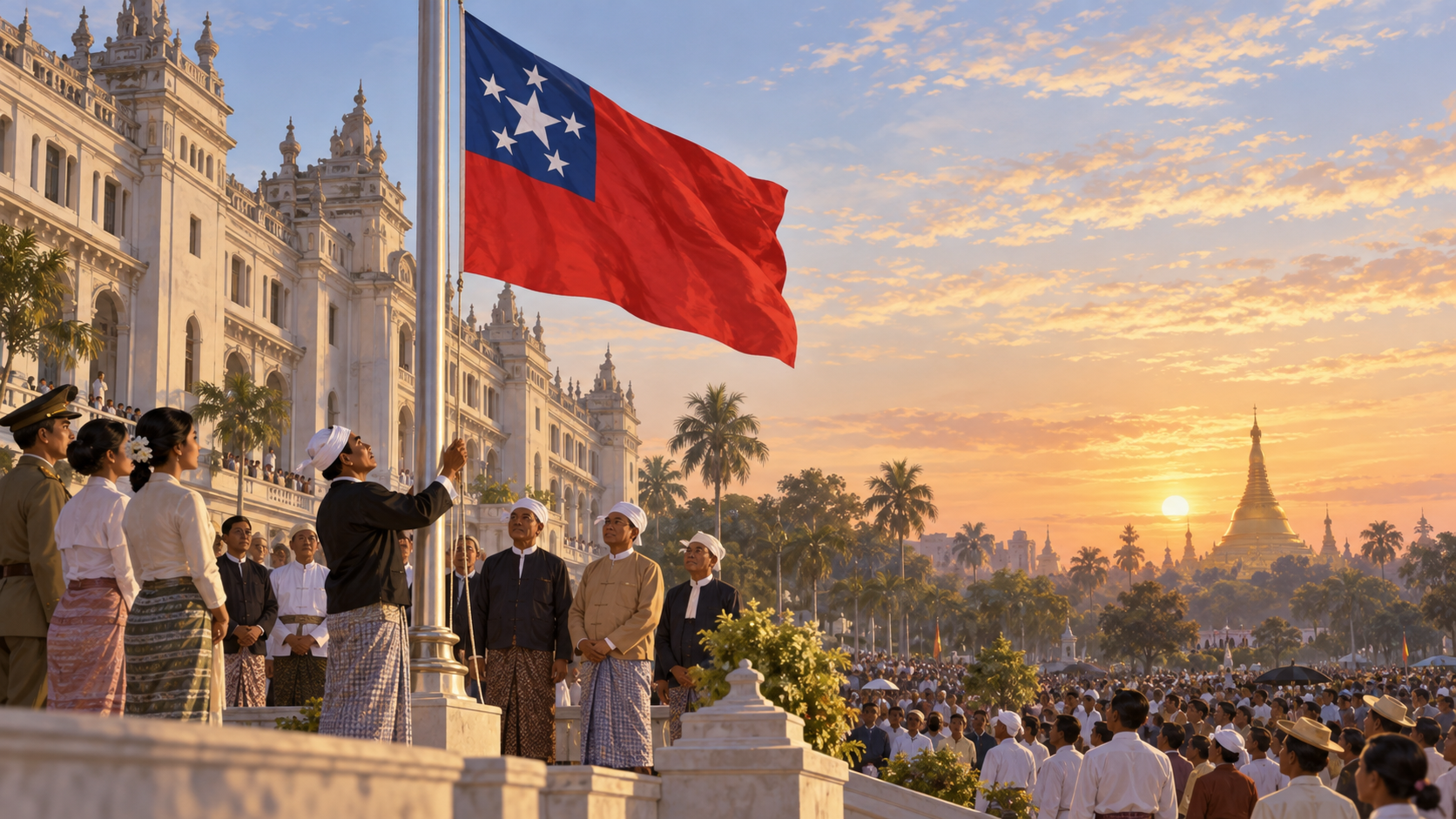
On This Day in News: January 4, 1948
On this day, the former British colony of Burma officially declared its independence, achieving sovereignty after years of nationalist struggle. The transfer of power reflected both the rising tide of decolonization after World War II and the determination of Burmese leaders and people to chart their own destiny. For the first time, the government and symbol of authority in Burma would be Burmese-run, marking a momentous shift in the country’s political and social life.
Following independence, the fledgling nation faced immediate challenges of building governance institutions, unifying diverse ethnic groups, and charting economic and foreign-policy paths without colonial oversight. Independence signaled hope and possibility: a chance for Burma to define its identity, culture, and future free from foreign rule. Yet it also meant confronting the responsibilities of leadership — from establishing diplomatic relationships, managing social reforms, to addressing long-standing ethnic tensions that had simmered under colonial rule.
In its early years as an independent republic, Burma had to balance aspirations of democracy with pressures from internal divisions and external geopolitical shifts. The moment of independence on January 4 was more than symbolic — it represented a foundational pivot toward national self-determination and dignity. Across the region and world, Burma’s independence was closely watched as part of a broader wave of decolonization reshaping Asia and Africa after the war.
Today, the anniversary of that moment remains a reminder of both the promise and complexity of nation-building. The memory of January 4, 1948 echoes in ongoing discussions about national identity, governance, and the long legacies of colonialism — underscoring how pivotal events in history continue to cast long shadows over present-day realities.
By January 4, 1948, Burma (now Myanmar) had spent decades under British colonial rule, formally becoming a British colony in the late 19th century after a series of Anglo–Burmese wars. The experience of World War II, including Japanese occupation and the emergence of organized Burmese resistance, intensified demands for self-determination and pushed nationalist leaders to negotiate a clear path toward independence.
Talks between Burmese leaders, including Aung San and later U Nu, and British officials produced agreements that laid out a timetable and framework for self-government. These negotiations culminated in the decision that Burma would leave the British Empire entirely, rather than join the British Commonwealth, making January 4, 1948 the date when full sovereignty would formally begin.
Independence meant that political authority transferred from British colonial administrators to a Burmese government based in Rangoon (Yangon). The new Union of Burma gained control over its domestic affairs and foreign policy, joined the United Nations as a sovereign state, and began establishing diplomatic relations with other countries on its own terms.
At the same time, the young state faced serious internal challenges. Ethnic and political tensions, some of which had been shaped or exacerbated by colonial policies, quickly tested national unity. Armed conflicts broke out in several regions, and the government had to balance long-stated ideals of democracy and federalism with the practical pressures of maintaining order, building institutions, and managing a fragile post-war economy.
Over the long term, the events of January 4, 1948 became a central reference point in Burma’s modern history. Independence placed questions of governance, ethnic representation, and constitutional design squarely in Burmese hands. Subsequent political shifts, including military coups and changing constitutions, all unfolded against the backdrop of the original promise and expectations of that independence moment.
The anniversary of independence continues to be a powerful symbol in national life, highlighting both pride in the end of colonial rule and reflection on the difficulties of building a stable, inclusive political system. Debates about federalism, minority rights, and the role of the military are often framed in relation to the aspirations articulated around 1948, showing how this single day remains deeply connected to ongoing struggles over identity, power, and the future direction of the country.
Explore more of "On This Day ..."
Discover more events from the same date across news, politics, technology, sports, and other fields. Each link highlights significant moments that shaped history on different fronts.