

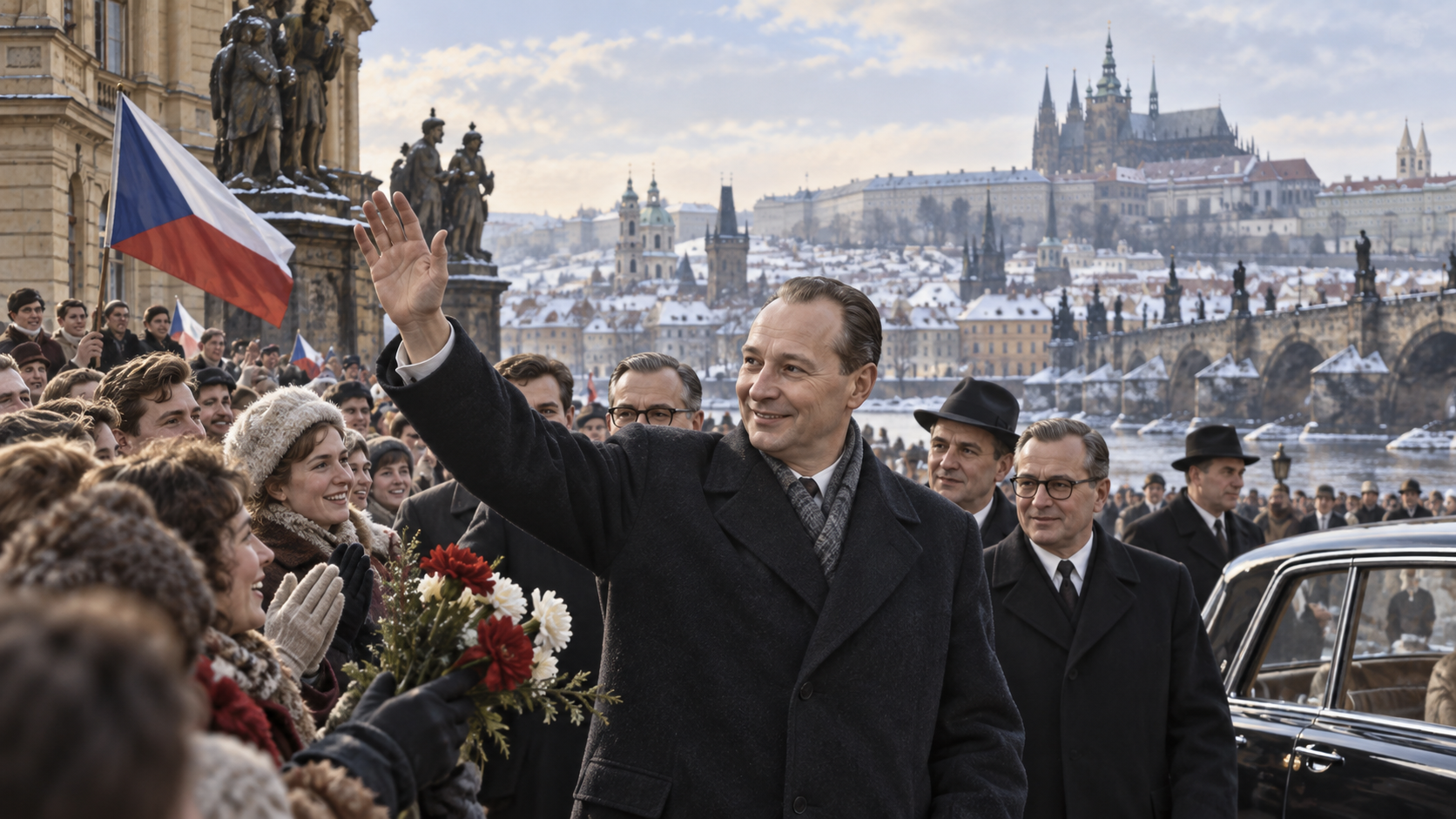
On This Day in News: January 5, 1968
In the winter of 1968, Czechoslovakia was a tightly controlled socialist state, governed for years by the hardline leadership of Antonín Novotný. Economic stagnation, political repression and public frustration had eroded confidence in the regime, even within the ruling Communist Party. On January 5, 1968, the party’s Central Committee chose Alexander Dubček, a Slovak reformer, to replace Novotný as first secretary. That leadership change, seemingly an internal party matter, would soon grow into a broad attempt to reshape socialism itself. Dubček quickly became the face of a new experiment: building “socialism with a human face.
Dubček’s early months in office brought a rapid loosening of controls that had defined life in Czechoslovakia since the late 1940s. Censorship was relaxed, allowing newspapers, writers and broadcasters to criticize past injustices and debate the country’s future. Political prisoners were rehabilitated, and discussions began on decentralizing economic decision-making to improve living standards. Reformers drafted an “Action Programme” that proposed greater freedom of speech and movement, more responsive government and a limited opening toward a more plural political system, while still keeping the Communist Party in a leading role. For many citizens, it was the first time in decades that public life seemed open, hopeful and responsive.
Outside Czechoslovakia, however, the changes were watched with increasing alarm by leaders of the Soviet Union and other Warsaw Pact states. They feared that Czechoslovakia’s experiment might encourage similar pressures for reform elsewhere in Eastern Europe, weakening the bloc during the Cold War. Through the spring and summer of 1968, Moscow exerted growing pressure on Dubček to reverse course, combining negotiations with public criticism and military signaling. Despite this, many Czechoslovaks believed the reforms could be preserved within the socialist camp, and Dubček himself tried to reassure allies that the country would not leave the alliance system.
Those hopes ended abruptly on August 21, 1968, when Soviet-led Warsaw Pact forces invaded Czechoslovakia, occupying major cities and forcing the leadership to roll back the reforms. Dubček was eventually removed and replaced by Gustáv Husák, who presided over a period of “normalization” that restored strict political controls. Yet the memory of January 5 and the Prague Spring outlasted the tanks that suppressed it. For many people inside and outside the region, Dubček’s attempt to combine socialism with political openness foreshadowed later movements for reform, including the challenges that would help bring down communist rule across Eastern Europe two decades later.
By early 1968, Czechoslovakia was a tightly controlled socialist state facing economic stagnation, political frustration, and growing public discontent. The long-time party leader Antonín Novotný had lost support not only among citizens but also within the Czechoslovak Communist Party itself.
On January 5, 1968, the party’s Central Committee chose Alexander Dubček as first secretary, replacing Novotný. This leadership change signaled the start of what became known as the Prague Spring, an attempt to reform the system from within and create “socialism with a human face.”
Under Dubček, censorship was relaxed, public debate flourished, and previously taboo topics such as political trials and economic mismanagement were openly discussed. Reformers drafted plans to decentralize the economy, expand civil liberties, and make government more accountable while keeping the Communist Party in a leading role.
These changes energized students, intellectuals, and workers, but alarmed leaders in the Soviet Union and other Warsaw Pact states. As the reforms unfolded through the spring and summer of 1968, Moscow increased diplomatic and military pressure on Czechoslovakia, warning that the experiment risked destabilizing the Eastern Bloc.
In August 1968, Soviet-led Warsaw Pact forces invaded Czechoslovakia, occupying major cities and forcing the rollback of Dubček’s reforms. The period that followed, known as “normalization,” restored strict political controls and removed many reformers from power.
Despite its suppression, the Prague Spring left a lasting imprint on Czechoslovak and European history. It became a symbol of the desire for political openness, national sovereignty, and human rights within the socialist world, influencing dissident movements and later reform efforts that contributed to the end of communist rule in Eastern Europe.
Explore more of "On This Day ..."
Discover more events from the same date across news, politics, technology, sports, and other fields. Each link highlights significant moments that shaped history on different fronts.