

On This Day in News: January 10, 1946
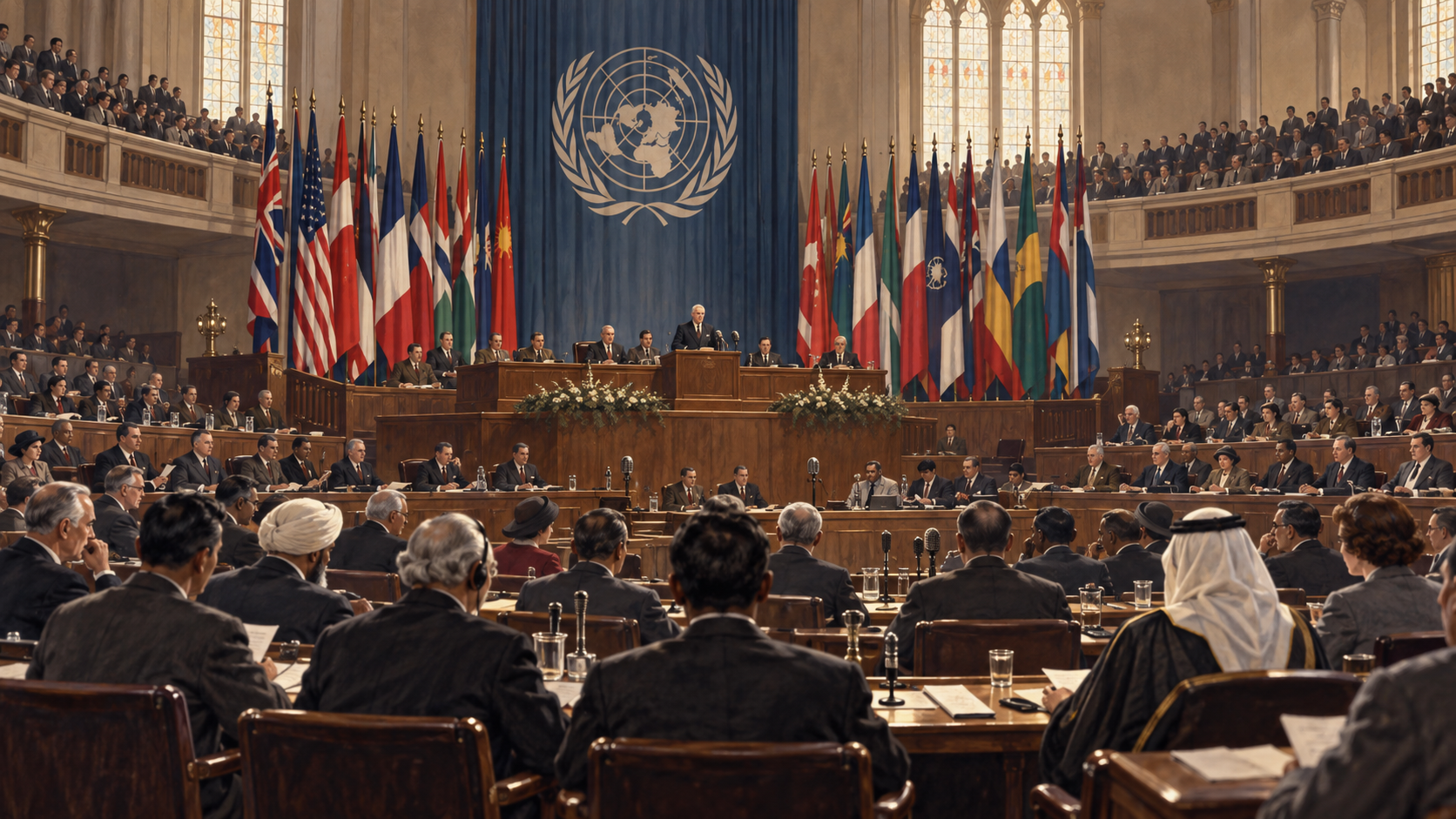
When delegates from 51 nations filed into Westminster’s Methodist Central Hall on January 10, 1946, they were walking through a city still pockmarked by bomb craters and ration lines. Inside, however, the mood was cautiously hopeful. The first session of the United Nations General Assembly was about to begin, less than four months after the UN Charter formally came into force. British Prime Minister Clement Attlee welcomed the representatives and urged them to bring the same urgency to building peace that they had brought to fighting the Second World War. The new assembly was intended to be the most representative forum in history, giving every member state — large or small — a single, equal vote.
The symbolism of the venue and the timing was hard to miss. London had endured years of aerial bombardment during the Blitz, and the Methodist Central Hall itself had served as a place of shelter and worship. Transforming it into a diplomatic chamber, with makeshift translation booths and rows of desks under a hastily hung UN emblem, underscored the idea that the world was trying to rebuild not just its cities but its rules. Within days, the General Assembly elected Belgian statesman Paul-Henri Spaak as its first president after a closely watched secret ballot, and began debating issues that reflected both immediate postwar concerns and longer-term aspirations.
Much of the early agenda revolved around the legacy of the war and the new age of nuclear weapons. Later that month, the Assembly adopted its first formal resolution, calling for international control of atomic energy for peaceful purposes and for the elimination of atomic and other weapons of mass destruction. Delegates also grappled with the status of former enemy states, the fate of refugees and prisoners of war, and the handover of responsibilities from the League of Nations, which would dissolve a few months later. Although the Assembly lacked binding enforcement powers, it served as a visible stage on which newly independent countries and smaller powers could speak alongside the victorious Allies.
The first meeting in London set patterns that still define the United Nations today. The General Assembly became the place where global norms on decolonization, human rights and development were articulated, even as real power over war and peace remained concentrated in the smaller Security Council with its permanent members and vetoes. On that winter day in 1946, however, the emphasis was on possibility: the hope that a more inclusive, rules-based body could help prevent another world war. The challenges and disagreements that have marked the UN’s history were already evident, but so too was the basic idea that international problems required international debate — an idea that continues to shape diplomacy on the same date each year.
By January 10, 1946, the world was emerging from the devastation of World War II and searching for new ways to prevent another global conflict. The League of Nations was in the process of winding down after failing to stop the slide into war in the 1930s, and millions of people were still displaced across Europe and Asia.
The United Nations Charter had come into force only a few months earlier, in October 1945. When delegates from 51 member states gathered in London’s Methodist Central Hall for the first session of the UN General Assembly, they were inaugurating a new forum where every member, large or small, would have an equal vote and a platform to address the world.
The opening session quickly moved from ceremony to substance. Delegates elected Belgian statesman Paul-Henri Spaak as the first president of the General Assembly and began debating urgent postwar questions: the status of former enemy states, the handling of refugees, and the transfer of responsibilities from the League of Nations.
One of the Assembly’s earliest and most notable actions was its first resolution, adopted later in January 1946, which called for international control of atomic energy and the elimination of weapons of mass destruction. At the same time, the Assembly’s powers were limited: binding decisions on peace and security remained concentrated in the smaller Security Council, where the major Allied powers held permanent seats and veto rights.
Over time, the General Assembly became the main stage for global discussion on decolonization, human rights, and economic development. Later milestones — including the Universal Declaration of Human Rights in 1948 and a series of resolutions supporting self-determination — grew out of the structures and precedents established in that first London session.
Although the Assembly cannot by itself enforce its decisions, its debates and resolutions help define international norms and expectations. The first meeting on January 10, 1946, set the tone for a more inclusive, rules-oriented approach to world affairs, influencing how states present their disputes, justify their actions, and seek collective responses to global challenges.
Explore more of "On This Day ..."
Discover more events from the same date across news, politics, technology, sports, and other fields. Each link highlights significant moments that shaped history on different fronts.